


On February 14, President Xi Jinping announced to the African Union Summit that starting on May 1, China would fully implement zero-tariff treatment for 53 African countries that have established diplomatic relations with China while continuing to promote the negotiation and signing of agreements on economic partnership for shared development.
The above zero-tariff measures have now officially come into effect – and they do not require reciprocal opening-up, nor do they impose any conditions on the internal affairs of African countries. This unilateral opening-up measure is an important step in implementing the outcomes of the 2024 Beijing Summit of the Forum on China-Africa Cooperation.
By making “subtractions” in tariffs, the arrangement promotes “additions” in trade and achieves “multiplications” for people’s well-being. Through zero tariffs, China’s vast market will provide greater opportunities for African countries and inject strong momentum into the shared pursuit of modernisation by China and Africa.
I. Effectively reducing bilateral trade barriers
Zero-tariff measures represent the most direct “subtraction” of trade barriers and the most practical “addition” to trade facilitation. According to the implementation guidelines, tariffs on 8 949 tariff lines of African exports to China have been reduced to zero for two years.
Alongside the “elimination” of tariffs, China has also upgraded supporting measures, such as the “green channel” for African products exported to China, further reducing non-tariff barriers. Competitive South African products – including wine, citrus fruits, pecans, automotive components, and other manufactured goods – will enter the Chinese market at lower cost and with stronger competitiveness, thereby enjoying tangible benefits.
At the same time, teams from China and South Africa are actively advancing negotiations on early harvest arrangements under the Economic Partnership Agreement for Shared Development, striving to establish institutional guarantees for the long-term and stable implementation of zero-tariff measures and laying a solid foundation for South African exporters to access a stable and high-quality market.
II. Strongly promoting the industrial and supply chain upgrades
Zero-tariff measures facilitate the flow of goods and help drive the upgrading of industrial and supply chains. South Africa enjoys rich natural resources, has well-developed financial and legal systems, maintains solid infrastructure in communications, transportation, and energy, and boasts a complete range of manufacturing sectors with advanced technology. As such, South Africa is well positioned to become a regional hub within China-Africa supply chains.
Companies investing and establishing production facilities in South Africa can leverage local resources to produce high value-added manufactured goods, which can then enter the Chinese market duty-free, forming a closed-loop value chain of “resources–manufacturing–market”. This will help create jobs, promote technology transfer, and drive innovation-led development.
III. Firmly supporting Africa’s modernisation
Zero-tariff measures represent China’s firm commitment to supporting Africa’s modernisation and serve as a concrete practice in upholding multilateralism. President Xi Jinping has pointed out that “there will be no global modernisation without the modernisation of China and Africa”.
At present, the tide of deglobalisation continues to spread, and geopolitical conflicts are intensifying, exerting significant impact on the global economic and trade system and order and posing serious challenges to developing countries, especially those in Africa.
These measures not only help boost confidence in Africa’s economic growth but also contribute to maintaining the stability of the global economic and trade system.
Zero-tariff measures break down trade barriers, unlock industrial potential, and bring the peoples of the two countries closer together. This year marks the 70th anniversary of the establishment of diplomatic relations between China and Africa. China stands ready to work with South Africa to jointly implement the zero-tariff measures, build a high-level China–South Africa community with a shared future, advance the China–South Africa All-Round Strategic Cooperative Partnership in the New Era, and together write a new chapter in China–South Africa modernisation.
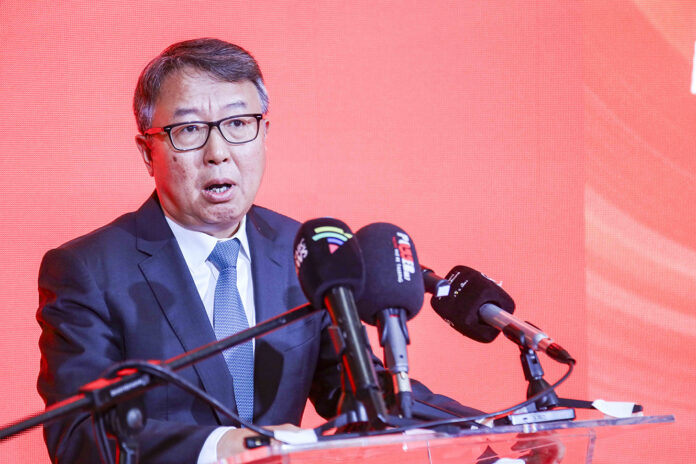
• Peng is China’s ambassador to South Africa.
- Starting May 1, China fully implements zero-tariff treatment for 53 African countries, removing tariffs on 8,949 African export lines to China for two years without requiring reciprocal concessions.
- The initiative reduces trade barriers and non-tariff obstacles, benefiting competitive African products like South African wine, citrus, pecans, and automotive components by enhancing market access and cost competitiveness.
- Zero-tariff policies support upgrading industrial and supply chains by encouraging investment and manufacturing in South Africa, fostering a value chain from resources to market, promoting job creation, technology transfer, and innovation.
- The measures reinforce China’s commitment to Africa’s modernization amid global economic challenges and deglobalization trends, aiming to boost Africa’s economic confidence and maintain global trade stability.
- Marking 70 years of China-Africa diplomatic relations, China and South Africa will collaborate to institutionalize these zero-tariff policies, strengthen bilateral cooperation, and advance a shared future and strategic partnership.


