


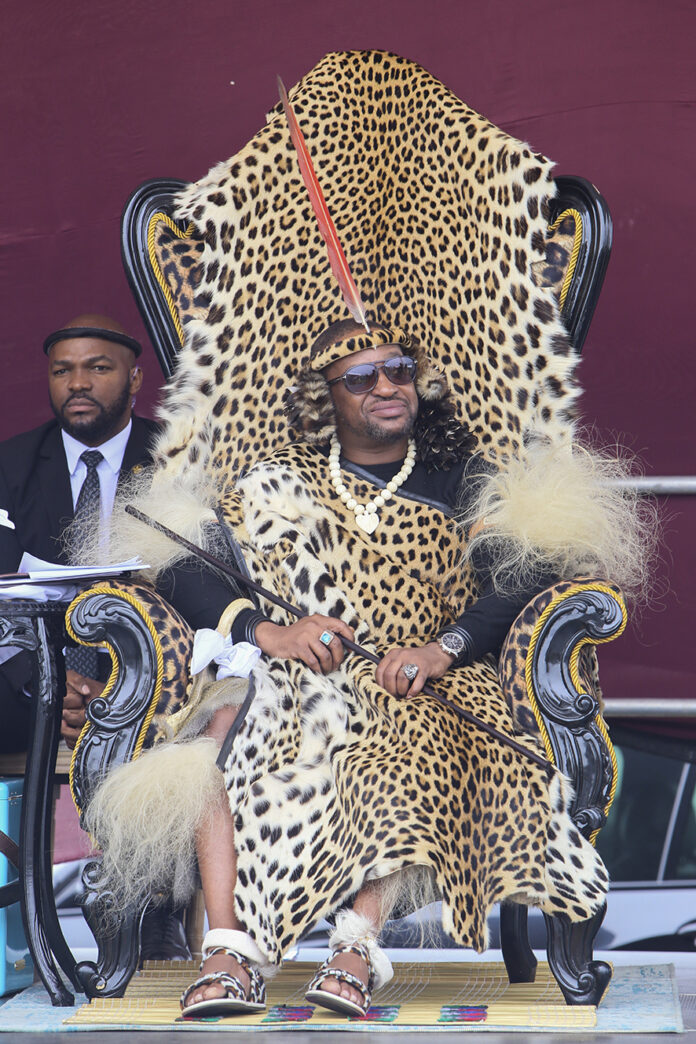
A Call to Action for South Africa’s Royal Leaders
Crowns were never meant to be worn in isolation. Royal institutions breathe – and ultimately survive – through the living, breathing connection between rulers and the ruled.
Traditional events are not mere ceremonial theatre; they are the sacred spaces where heritage is remembered, culture is passed on, language is kept alive, and ancestral land is honoured. It is in these moments that royal leaders cease to be symbols and become shepherds – present, visible, and bound to the struggles and stories of their people.
AmaZulu are seen as one highly organised and respected nation – an international recognition that extends beyond South Africa’s borders. This is no accident. It is the product of deliberate, sustained effort: the Zulu monarchy’s far-reaching programmes have kept its people anchored to a shared identity and purpose. Speak to any Zulu, and they will tell you without hesitation who their King is – not merely as a historical figure, but as a living voice whose word carries direction, meaning and authority on matters that shape the nation.
‘When Monarchs withdraw, they leave a vacuum’
When Monarchs withdraw from the broader currents of society, they do not simply step back – they leave a vacuum. And vacuums are never left unfilled.
That distance between a King and his people becomes an opening, an invitation for others to step in and define the space that rightfully belongs to the nation.
This is precisely what unfolded in Gompo, East London, territory that falls under the King of AmaXhosa. A group of Nigerians took it upon themselves to “install an Igwe of East London,” an act that is not a cultural expression but a calculated act of disregard – for the King, for the nation, and for the land in which they reside.
‘Kings were the ultimate arbiters of identity and sovereignty’
History reminds us what Monarchs are for. In the colonial era, Kings did not watch from a distance; they stood at the front lines, resisting invasion and preserving what made their nations whole: culture, tradition, language, custom and land. When wars scattered people across borders, it was the Kings who received the displaced, granted them land, and set the terms of belonging.
They were the ultimate arbiters of identity and sovereignty.
The Igwe incident is not an isolated provocation. A British immigrant, Phil Craig, has also started a movement calling for the cessation of the Western Cape from South Africa. There are also no-go areas for South Africans across our cities, which foreigners inhabit. These are all signals; the behaviour of people who are not settling, but advancing agendas.
‘Gaps are created by absence’
This must be a moment of honest reflection for every Royal leader on this soil. The question must be asked, and answered, without flinching: why did the Nigerian Igwe dissidents feel emboldened enough to install their King in East London?
The answer is uncomfortable but unavoidable. They saw a gap. And gaps do not appear from nowhere – they are created by absence.
Our Royal leaders must rise to the occasion. The culture, traditions, customs and land of their nations are not relics to be admired – they are living inheritances to be defended.
‘It will cease to matter’
A monarchy that does not actively guard what it holds will not simply lose influence. It will cease to matter.
For too long, some of our Royal leaders have traded their authority for proximity to political power – surrendering their independence to the ANC and, in doing so, allowing themselves to be reduced to ceremonial figureheads. Leaders without authority over the very land their forefathers bled for.
But the crisis runs deeper than politics. There are Kings and chiefs who preside over communities with no clean water, no dignified services, no relief from poverty – yet they sit at tables with the same politicians who have failed those communities for decades, raising glasses while their people raise hands begging for the basics.
‘Betrayal does not go unnoticed’
That betrayal does not go unnoticed. When Royal leaders are seen drinking champagne with those who trade water for votes, they forfeit the moral authority that makes a monarchy meaningful.
And when that authority is gone, others feel no obligation to respect the boundaries of the land.
This is why Royal leaders must step into the breach where government has failed. Not as politicians, but as something greater – supreme councillors of their people. Advocates. Protectors. The voice that cannot be bought or traded away at a party conference.
King Hintsa died for this land. iNkosi Jongumsobomvu Maqoma died for this land. They did not lay down their lives so that their descendants could be stripped of sovereign authority – so hollowed out by political accommodation that a foreign group could plant a foreign King in their territory, in broad daylight, without consequence.
That is not heritage. That is surrender. And it is time our Royal leaders choose differently.
Vuyo Zungula
ATM Party Leader in Parliament
- A Call to Action for South Africa’s Royal Leaders Crowns were never meant to be worn in isolation.
- Royal institutions breathe – and ultimately survive – through the living, breathing connection between rulers and the ruled.
- Traditional events are not mere ceremonial theatre; they are the sacred spaces where heritage is remembered, culture is passed on, language is kept alive, and ancestral land is honoured.
- It is in these moments that royal leaders cease to be symbols and become shepherds – present, visible, and bound to the struggles and stories of their people.
- AmaZulu are seen as one highly organised and respected nation – an international recognition that extends beyond South Africa’s borders.


