


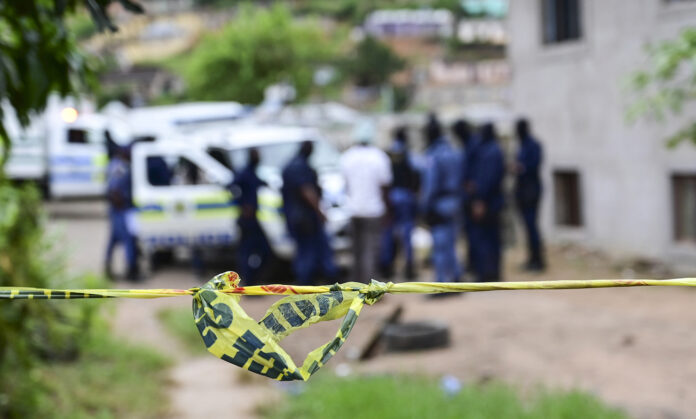
President Cyril Ramaphosa’s recent address to the nation sent a clear signal: crime and corruption will no longer be tolerated in South Africa. Speaking with determination, he outlined concrete steps to tackle violent gangs, organised crime, and corrupt officials. While his tone was firm, citizens will be watching closely to see if the promises translate into tangible results.
Ramaphosa described organised crime as “the most immediate threat” to public safety. He pointed to gang violence in urban areas, illegal mining operations, and attacks on vulnerable groups, including women and children.
Crime stats still paint worrisome picture
The South African Police Service (SAPS) recently reported a 4.9% drop in serious crimes for the second quarter of 2025, covering July to September, with 361, 560 cases recorded. Yet, while some crimes fell, others climbed sharply. Contact sexual offences surged by 12.4%, and attempted sexual offences rose by 8.8%. This is highlighting the complexity of the country’s crime landscape.
To counter these threats, Ramaphosa announced the deployment of special law enforcement units tasked with dismantling criminal networks. He also promised stricter gun control measures and the recruitment of 5, 500 additional police officers this year, on top of the 20, 000 already planned. These moves signal a serious intent to tackle crime, though implementation will be key.
Equally concerning, the president warned, is corruption. “It erodes trust in government, slows economic growth, and keeps services from reaching those who need them most,” he said.
To address this, Ramaphosa outlined measures aimed at holding officials accountable, including lifestyle audits for senior government and police leaders, tougher vetting procedures, and the establishment of a fully independent anti-corruption unit. Protections for whistle-blowers would be strengthened, with harsher penalties for anyone who attacks them.
Corruption fight set to boost investment
Ramaphosa linked crime and corruption to economic growth. He argued that reducing both would attract investment, create jobs, and improve essential services such as water, electricity, and sanitation. By connecting public safety and good governance to economic development, he framed anti-crime measures as central to the country’s future rather than as isolated policies.
At the municipal level, the president placed a strong focus on service delivery. He warned municipal managers that mismanagement or theft of public funds could have personal consequences. If enforced, this approach could make anti-corruption efforts visible to ordinary citizens and help restore confidence in local government.
Still, challenges remain. South Africa’s criminal networks are sophisticated and sometimes protected by influential individuals, including politicians. Corruption is deeply entrenched and often hidden behind layers of bureaucracy.
Transparency International’s 2025 Corruption Perceptions Index reflects these difficulties. It shows a decline in South Africa’s regional standing. The country now ranks 12th in Sub-Saharan Africa, having slipped out of the top 10 in recent years.
Past anti-corruption efforts have often fallen short, leaving the public skeptical. For promises to become reality, strong political will, efficient execution, and oversight will be essential.
Proof in implementation
Words alone cannot change the situation on the ground. South Africans will need to see violent crime decrease, corrupt officials successfully prosecuted, and public services improve before the president’s plans can be judged effective.
Citizens will be watching law enforcement agencies, municipal managers, and the courts to see if reforms are implemented and enforced.
Until measurable results are seen, Ramaphosa’s address remains a statement of intent. However, the proof will be in the implementation.


