


In the gritty reality of South African life: local government is not some distant abstraction. It is the water tap that runs dry, the refuse that festers uncollected, the pothole that swallows a taxi, the streetlight that stays dark for months. Here, at the coalface of daily existence, the constitutional promise of redress collides with lived failures.
As Jean-Jacques Rousseau observed in The Social Contract, the legislative power is the heart of the state and the executive its brain. When either falters, the entire body politic risks collapse. In post-apartheid South Africa, municipalities function as both heart and frontline brain. When they fail, the democratic organism itself faces cardiac arrest.
The fuel behind voter participation
This is no rhetorical flourish. It is the lived experience of millions. And it raises a question we must confront with brutal and unflinching honesty: Does municipal governance performance inspire voter participation? Or does persistent failure accelerate political decay, breeding cynicism, apathy and democratic disengagement?
My core thesis is unambiguous: municipal governance performance does not inspire voter participation. On the contrary, audit failures, financial mismanagement, service-delivery collapse and the broader socio-economic malaise erode public trust, deepen disillusionment and drive declining electoral engagement.
Three interlocking realities sustain this claim.
First, the Auditor-General’s MFMA Consolidated General Reports paint an ugly picture of institutional frailty bordering on systemic collapse. In the 2023-24 financial year, only 41 of 257 municipalities – just 16% – achieved clean audits. This is a marginal uptick from 13% the previous year, yet the trajectory remains bleak. Between 2021 and 2024 alone, municipalities racked up R87.03-billion in irregular expenditure, R17.65-billion in fruitless and wasteful spending, and R81.59-billion in unauthorised expenditure.
Root causes are structural: 53% failed to investigate irregular spending, critical posts remain vacant, over-reliance on consultants is rife, and supply-chain non-compliance afflicts 83% of municipalities.
Citizens feel the pinch
These are not sterile accounting entries. Citizens experience them as polluted rivers, water rationing, electricity loadshedding and load reduction, collapsing infrastructure and delayed projects. Lack of accountability and poor financial management impede service delivery the Auditor-General reminds us adnauseum.
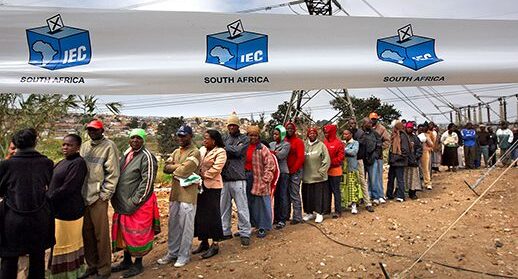
Second, the data on voter behaviour tell a story of quiet withdrawal. Registered voters have grown steadily—from 18.5 million in 2000 to 26.2 million in 2021—yet turnout in local government elections has collapsed. After modest peaks of 57.6% in 2011 and 57.9% in 2016, it plunged to a historic low of 45.86% in 2021.
Voter apathy
Meanwhile, the Human Sciences Research Council’s Voter Participation Surveys reveal democratic satisfaction has plummeted to 17% (from 69% confidence in 2004). Over 70% of citizens believe their vote “doesn’t make a difference”. Nearly 50% of eligible voters remain unregistered for the upcoming 2026 elections. Service-delivery dissatisfaction is a statistically significant predictor of abstention, especially among women and youth. Voter turnout fell in 201 of 205 municipalities in 2021 – precisely those with the worst audit outcomes. In councils plagued by repeated disclaimers, apathy was most pronounced.
Compounding this is the surge in service-delivery protests tracked by Municipal IQ: from 34 nationally in 2000 to 194 in 2021, with many of these protests turning violent. Citizens are not apathetic by nature; they are protesting because formal channels feel futile. Unemployment, hovering in the mid-20s before spiking to 34% by 2021, adds fuel to the fire. The youth who are the most affected by unemployment have nothing to show as their divided of the democratic dispensation.
Political decay
These trends are no coincidence. They embody Francis Fukuyama’s theory of political decay: the original post-1994 equilibrium – forged in the inclusive negotiations of the early 1990s and sustained by Nelson Mandela’s charismatic authority and the Reconstruction and Development Programme – has been eroded. Founding actors have passed; new elites with different incentives have emerged and have repurposed public institutions for patronage and private gain.
Fukuyama warns that political order is a dynamic equilibrium among a capable state, the rule of law and accountability. When contending forces shift, decay sets in. Cronyism, nepotism and what Chinua Achebe called the “cult of mediocrity” took root. As Achebe observed in The Trouble with Nigeria, when mediocrity triumphs, “the wheels of modernisation grind to a halt.” In his lamentations, Achebe appealed to his readers to “Look at our collapsing public utilities, our inefficient and wasteful parastatals and state-owned companies. If you want electricity, you buy your own generator, if you want water, you sink your own borehole; if you want to travel, you set up your own airline. One day soon … you will have to build your own post office to send your letters!”
Greedy vultures
The experience of the past decade, especially the Zuma years, prove that SA is not anyway better than Achebe’s Nigeria. Yet we should have taken a leaf from Franz Fanon’s counsel about post independent Algeria, where he observed “brilliant opportunists” tend to take advantage and no sooner than later “inside the new regime favours abound, corruption triumphs, and morals decline” while “the vultures” that have become “too numerous and too greedy” fends off the spoils of government.
Third, these pathologies are not mere incompetence but classic political decay – the repurposing of state institutions for factional and personal gain, the erosion of accountability, and the consequent loss of citizen trust.
For a country saddled with daunting socio-economic challenges – such as South Africa – the actions of brilliant opportunists divert national attention from the real task. The ‘brilliant opportunists’ are so brilliant that they are even capable of hijacking the ruling party, and divert it away from its strategic task, of improving the lives of ordinary people. The opportunists use their ill-gotten wealth to purchase political support for their preferred candidates whenever there are elections in the party. It gets to the dangerous stage where those without money can never hope to win an election – no matter how genuine their intensions are. This is when democracy becomes perverted, when electoral contests become money battles. Elections thus lose their reliability as a barometer of the genuine will of the electorate. The ballot box becomes not a site of empowerment but a mirror of betrayal.
Poorly-skilled leaders retard progress
The crisis is not only financial and administrative; it is profoundly human and intellectual. A 2023 skills audit by the Department of Cooperative Governance and Traditional Affairs revealed that in KwaZulu-Natal alone, 298 of 1,944 councillors could neither read nor write. How can illiterate councillors scrutinise budgets, interrogate reports or hold executives accountable?
Yet, there is a growing body of literature that establishes education as a powerful proxy for merit, competence, and effective oversight – qualities essential for councillors to fulfil their constitutional duties.
Education equips leaders with analytical rigour, the ability to process voluminous information, rhetorical competence, and the political self-confidence necessary for holding executives accountable.
The correlation between the level of education of political leaders and government effectiveness has long been established. The London School of Economics researchers, Besley et al, analysed as early as 2011 over 1,000 political leaders across the world over a century and found that replacing an educated leader with a less educated one leads to economic regression. A 2023 local government study in Norway by Rune J. Sørensen found that better-educated politicians induced higher efficiency.
Mediocrity breeds governance failures
This is no elitist argument but a pragmatic one rooted in meritocracy. The antonym of meritocracy is mediocrity, and mediocrity in municipal councils translates directly into the governance failures the Auditor-General has been reporting year in and year out. The absence of adequate education among many councillors exacerbates decay.
The evidence converges on one inescapable conclusion: municipal governance performance actively undermines voter participation. Auditor-General data document systemic crisis; HSRC surveys and election statistics reveal the human toll of historic lows in trust; service-delivery protests and high unemployment rate compound the alienation.
The result is deeper democratic decay. The heart of the state—our municipalities—is failing, and citizens are responding by disengaging. Without deliberate restoration, this spiral threatens the legitimacy of the entire post-apartheid order.
However, the time for passive observation is over. As Roberto Mangabeira Unger reminds us, “a crisis raises the temperature of politics and melts frozen definitions of interest.” But crisis can only serve as a midwife of change if and when citizens act with courage and clarity.
Revival of active citizenship
The state of South Africa’s local government calls for revived active citizenship. Three steps are critical for change to happen: First, citizens must demand accountability at the coalface. This means we must attend council meetings, scrutinise budgets, insist on consequence management for every rand of irregular expenditure.
Second, we must reclaim the vote as an instrument of redress. This requires us to register, participate, and support candidates and parties committed to professionalising the public service, ending the cult of mediocrity, and ensuring municipal office requires educational competence and skills.
Third, we must forge coalitions beyond party lines. This means civil society, academia, faith communities, youth movements and community forums must build new equilibria through fresh rules and institutions that prize competence over connection.
In doing all of these we must remember the wise counsel of former US president John Adams, who, in a letter to his son, counselled thus: “Public business must always be done by somebody… if wise men decline it others will not: if honest men refuse it, others will not.”
The collapse of municipal governance need not be our destiny. Through vigilant, informed and participatory citizenship, we can restore the heart of the state—and with it, the soul of our democracy!
- Brutus Malada is a political strategist and PhD candidate in Political Studies at the University of Johannesburg. He is the host of The Brutally Honest Show in collaboration with SW Podcast.
This Article is an extract from a public lecture delivered for the University of Venda on April 8, 2026.
- South Africa’s local governments face systemic failures with only 16% of municipalities passing clean audits in 2023-24, amid massive irregular, wasteful, and unauthorized spending, affecting essential services like water, electricity, and infrastructure.
- Rising voter apathy is linked to poor municipal governance; despite an increase in registered voters, turnout in local elections fell to a historic low of 45.86% in 2021, with public confidence in democracy plummeting to 17%.
- Political decay characterized by corruption, cronyism, and the repurposing of state institutions for personal and factional gain undermines accountability and public trust, fueled by opportunists exploiting the system.
- The crisis is exacerbated by poorly skilled and often illiterate councillors who lack the education needed for competent oversight, contributing to continued governance failures and disillusionment.
- Reviving South Africa’s democracy requires active citizenship demanding accountability, reclaiming voting as a tool for change, and building cross-sector coalitions emphasizing merit, competence, and integrity in governance.
In the gritty reality of
As Jean-Jacques Rousseau observed in
My core thesis is unambiguous: municipal governance performance does not inspire voter participation. On the contrary, audit failures, financial mismanagement, service-delivery collapse and the broader socio-economic malaise erode public trust, deepen disillusionment and drive declining electoral engagement.
First, the Auditor-General’s MFMA Consolidated General Reports paint an ugly picture of institutional frailty bordering on systemic collapse. In the 2023-24 financial year, only 41 of 257 municipalities – just 16% – achieved clean audits.
Root causes are structural: 53% failed to investigate irregular spending, critical posts remain vacant, over-reliance on consultants is rife, and supply-chain non-compliance afflicts 83% of municipalities.
Meanwhile, the Human Sciences Research Council’s Voter Participation Surveys reveal democratic satisfaction has plummeted to 17% (from 69% confidence in 2004). Over 70% of citizens believe their vote “doesn’t make a difference”. Nearly 50% of eligible voters remain unregistered for the upcoming 2026 elections. Service-delivery dissatisfaction is a statistically significant predictor of abstention, especially among women and youth. Voter turnout fell in 201 of 205 municipalities in 2021 – precisely those with the worst audit outcomes. In councils plagued by repeated disclaimers, apathy was most pronounced.
Fukuyama warns that political order is a dynamic equilibrium among a capable state, the rule of law and accountability. When contending forces shift, decay sets in.
For a country saddled with daunting socio-economic challenges – such as
Yet, there is a growing body of literature that establishes education as a powerful proxy for merit, competence, and effective oversight – qualities essential for councillors to fulfil their constitutional duties.
Education equips leaders with analytical rigour, the ability to process voluminous information, rhetorical competence, and the political self-confidence necessary for holding executives accountable.
However, the time for passive observation is over. As Roberto
In doing all of these we must remember the wise counsel of former US president John Adams, who, in a letter to his son, counselled thus: “Public business must always be done by somebody… if wise men decline it others will not: if honest men refuse it, others will not.”
- Brutus Malada is a political strategist and PhD candidate in Political Studies at the University of Johannesburg. He is the host of
The Show in collaboration with SW Podcast.