


A company has lost its bid to overturn an arbitration ruling that found the dismissal of an employee for poor work performance substantively unfair after failing to provide him with adequate training on a complex accounting and stock-control system.
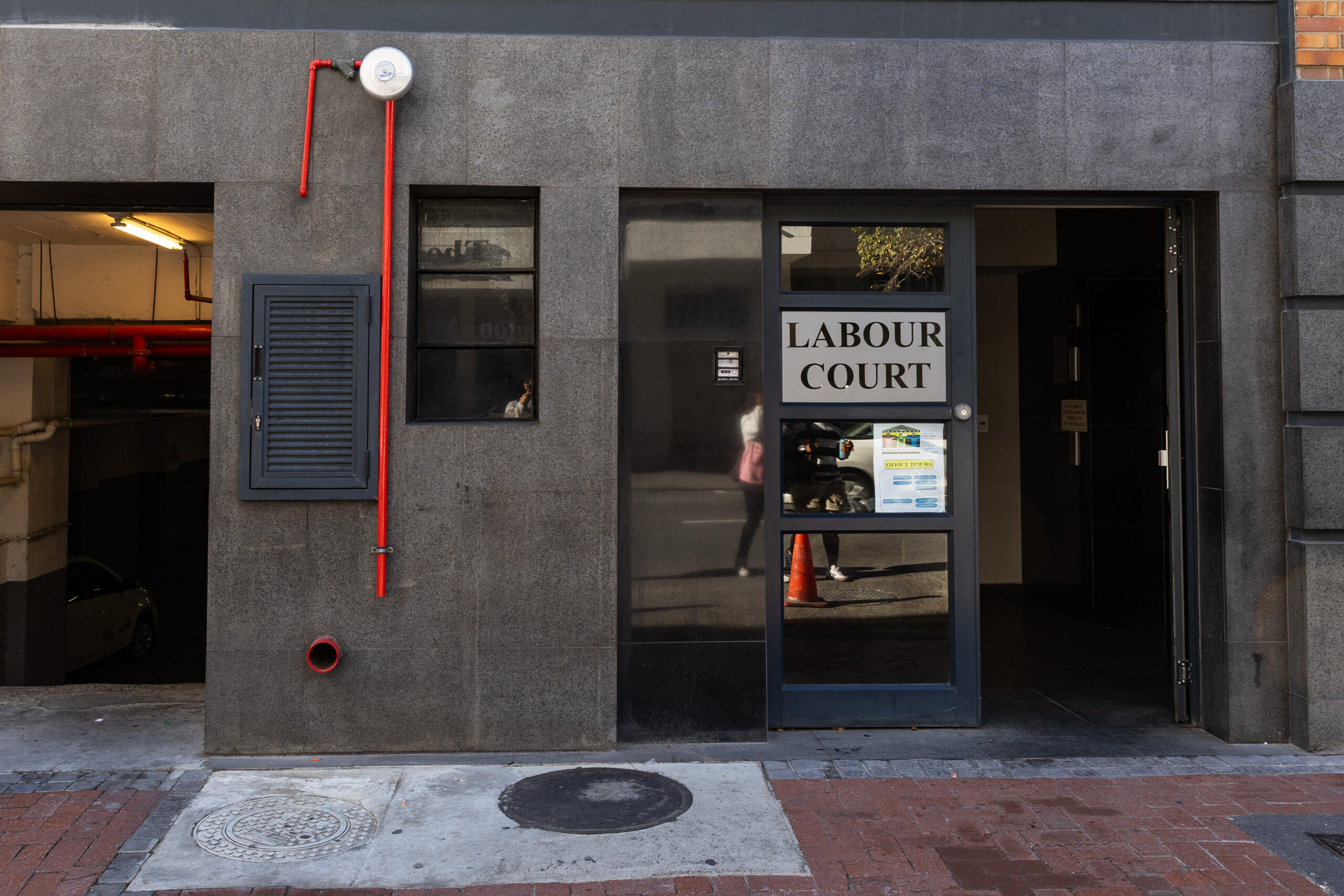
The Labour Court in Cape Town dismissed a review application brought by Intellisec Access Control (Pty) Ltd against an arbitration award in favour of its former employee, Stuart Bougaard.
In a judgment handed down by Judge R Lagrange on November 10, 2026, the court found that the employer had failed to demonstrate that Bougaard was given sufficient training, guidance and a reasonable opportunity to improve his performance before his dismissal.
The company had approached the Labour Court seeking to have the arbitration award set aside. The Commission for Conciliation, Mediation and Arbitration (CCMA) had previously found Bougaard’s dismissal substantively unfair and ordered Intellisec to pay him four months’ compensation, amounting to R116,000.
The dispute centred largely on Bougaard’s difficulties with the company’s Business Process Optimiser (BPO), a customised accounting and stock-control system.
According to evidence presented during arbitration, Bougaard started working for Intellisec on October 31, 2022, after attending three days of general training in Durban.
ALSO READ: CCMA dismisses former RAF CEO Collins Letsoalo’s R2.7m payout claim
However, his employer later acknowledged that the training had not specifically covered the complex BPO system. When Bougaard raised concerns about his ability to manage certain tasks, an administrative assistant was appointed in February 2024 to help ease his workload.
The company subsequently introduced a performance improvement plan (PIP) between May and June 2024.
As part of the intervention, the financial manager prepared two short instructional videos demonstrating certain functions of the system, while management also offered assistance through telephone calls and a WhatsApp group.
However, Bougaard maintained that the videos covered basic functions he had already mastered and did not address the more complicated tasks he struggled with, including closing purchase orders.
Sought assistance from colleagues
He also testified that he repeatedly sought assistance from colleagues in other branches because he struggled to obtain meaningful support from the financial manager.
The employer argued that the arbitrator had overlooked several performance shortcomings beyond the BPO system, including alleged failures to manage the storeroom, reduce ageing stock, conduct vehicle and tool checks and update vehicle tracking information.
But Judge Lagrange found that the company’s evidence did not sufficiently substantiate these allegations.
The judge noted that branch manager C Kotze could only identify one instance in which a tool check had not been properly conducted and admitted that he had not checked the other months.
The court also found that the company had failed to establish clear performance standards before introducing key performance indicators in May 2024.
Kotze conceded that the company had not previously had formal KPIs for Bougaard’s position and that he was unaware of any policy or guideline explaining how the indicators were to be applied.
Judge Lagrange said the employer could not simply introduce formal performance measures and use them to justify dismissal without properly explaining the standards to the employee.
On the question of training, the judge emphasised that employers have an obligation to provide meaningful assistance suited to the shortcomings identified.
The judgment found that two short videos were insufficient training for an employee expected to operate a complex accounting system without an accounting qualification.
The judge further rejected the employer’s reliance on the appointment of an assistant as evidence of adequate support, noting that Bougaard had initially been expected to train the new recruit while continuing with his own responsibilities.
In a key finding, Judge Lagrange said the employer had allowed Bougaard to work for approximately 18 months without establishing formal performance benchmarks before abruptly introducing software-heavy KPIs and placing him on an eight-week improvement plan.
The judgment stated:
“Imposing newly formalised standards on a complex platform without providing the requisite training falls within the realm of unfairness contemplated in Boss Logistics.”
The court also clarified the distinction between incapacity arising from poor work performance and misconduct, noting that an employee who lacks the necessary skills or competencies cannot automatically be treated as someone who deliberately or negligently disregards workplace standards.
Ultimately, Judge Lagrange found that the arbitrator’s decision fell within the range of reasonable outcomes and that there was no legal basis to interfere with the award.
The court dismissed Intellisec’s review application and made no order as to costs. Bougaard’s original compensation award of R116,000 therefore remains in place.
ALSO READ: CCMA issues new AI rules following scathing labour court judgment and gaffes
- A company has lost its bid to overturn an arbitration ruling that found the dismissal of an employee for poor work performance substantively unfair after failing to provide him with adequate training on a complex accounting and stock-control system.
- The Labour Court in Cape Town dismissed a review application brought by Intellisec Access Control (Pty) Ltd against an arbitration award in favour of its former employee, Stuart Bougaard.
- In a judgment handed down by Judge R Lagrange on November 10, 2026, the court found that the employer had failed to demonstrate that Bougaard was given sufficient training, guidance and a reasonable opportunity to improve his performance before his dismissal.
- The company had approached the Labour Court seeking to have the arbitration award set aside.
- The Commission for Conciliation, Mediation and Arbitration (CCMA) had previously found Bougaard’s dismissal substantively unfair and ordered Intellisec to pay him four months’ compensation, amounting to R116,000.


