


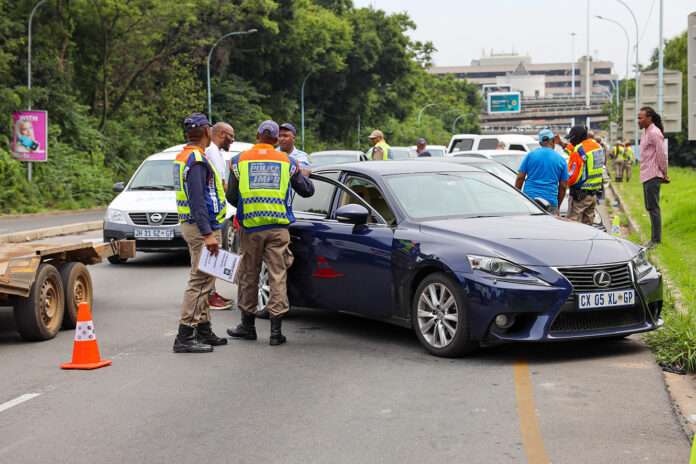
More than 26,000 arrests recorded over three years show a persistent concentration of suspected drunk-driving enforcement in the evening, raising questions about how road-safety efforts can be better targeted beyond Transport Month.
Johannesburg’s roads are seeing a persistent evening pattern in drinking-and-driving enforcement, with about four in five recorded DUI (Driving Under the Influence) arrests taking place between 18:00 and midnight.
Data from the Johannesburg Metropolitan Police Department (JMPD), reviewed jointly with alcohol-harm reduction organisation Aware.org, shows that 26,578 arrests for driving under the influence of alcohol were recorded between January 2023 and December 2025.
That amounts to an average of almost one recorded DUI arrest every hour over the three-year period. But the number of arrests is only part of the story. The timing of those arrests shows a consistent pattern that became more pronounced over the three years.
In 2023, arrests made between 18:00 and 23:59 accounted for 80% of all recorded DUI arrests. That increased to 84.7% in 2024 before reaching 85.9% in 2025. The highest volumes were consistently recorded between 20:00 and 23:00.
The figures provide an indication of when JMPD’s DUI enforcement activity is detecting the highest concentration of suspected drunk driving, while also raising questions about whether prevention campaigns and enforcement operations should be more deliberately targeted around these periods.
What the numbers can and cannot tell us
The data does not establish how many people in Johannesburg actually drink and drive. Arrest figures are influenced by enforcement activity, including where and when officers are deployed, the number of operations conducted and the roads targeted. They therefore cannot be used on their own to conclude that drinking and driving became more common between 2023 and 2025.
What the three-year data does show is the consistency of the evening concentration. For road-safety campaigners, that consistency provides a basis for looking beyond broad awareness campaigns and considering when and where interventions are most likely to be needed.
ALSO READ: Police Easter operations shut down over 500 drinking spots
Mokebe Thulo, CEO of Aware.org, said the findings reinforce the need to treat drinking and driving as a year-round road-safety issue.
“An average of one arrest every hour for three years is a reminder that drinking and driving cannot be something we focus on only in Transport Month or the festive season,” says Thulo.
“Our work with JMPD continues throughout the year, and the three-year review helps strengthen that work by giving us a clearer picture of where recorded arrests are most concentrated and where prevention and education can be better targeted.”
Why the evening matters
The period between 18:00 and midnight encompasses a range of activities associated with increased movement on the city’s roads, including after-work travel, social gatherings, restaurants, entertainment venues and nightlife.
However, the arrest data alone cannot establish which of these factors is responsible for the concentration. That is why the next question is not simply how many people are being arrested, but what is driving the pattern and whether interventions can be designed around it.
If the majority of recorded DUI enforcement occurs during a defined evening window, targeted education and enforcement could potentially complement broader road-safety campaigns throughout the year.
JMPD spokesperson Xolani Fihla says the data provides a clearer picture of when recorded DUI arrests are most concentrated.
“Our officers are on Johannesburg’s roads every day and every night of the year,” says Fihla.
“The three-year data gives us a clearer picture of when recorded DUI arrests are most concentrated. This evidence can help inform our ongoing operations and how we work with partners on prevention and education throughout the year,” he added.
The figures also highlight the importance of distinguishing enforcement patterns from road-user behaviour.
A higher proportion of arrests during particular hours does not necessarily mean that every motorist on the road during those hours is at greater risk, nor does it establish that drinking and driving is more prevalent at those times.
Instead, it identifies a period in which enforcement is consistently recording the greatest number of DUI arrests.
ALSO READ: Zero alcohol laws need more than political resolve
October’s Transport Month provides an annual opportunity to focus attention on road safety, but the three-year figures suggest that drinking and driving cannot be treated as a seasonal issue.
For Aware.org and JMPD, the data forms part of the wider Drive Sober, Stay Alive initiative, which combines enforcement, public education and prevention.
The partnership is also looking at how enforcement evidence can be used to strengthen interventions aimed at changing behaviour.
The challenge is particularly important because prevention has to happen before a driver makes the decision to get behind the wheel after drinking. Rather than relying solely on motorists to make a different decision once they have already been drinking, road-safety interventions can encourage people to make their transport plans before the first drink.
“If alcohol is part of the occasion, plan how you will get home before drinking, and keep drinking and driving separate,” is the message behind the campaign.
Thulo says planning ahead remains one of the simplest ways for motorists to reduce the risk.
“The decision about how you’re getting home should happen before the first drink. Planning ahead is one of the simplest ways we can reduce the risk of drinking and driving and make the right choice for ourselves and everyone else on the road,” she says.
The three-year review ultimately points to a broader road-safety question: if enforcement data repeatedly identifies the same high-risk period, how can that evidence be translated into prevention that reaches motorists before they make the decision to drive?
For Johannesburg, the answer is unlikely to lie in October alone. The data suggests the road-safety conversation needs to continue long after Transport Month ends.
- Johannesburg Metropolitan Police Department recorded 26,578 DUI arrests between January 2023 and December 2025, averaging almost one arrest per hour over three years.
- Approximately 80% to 85.9% of DUI arrests occurred between 18:00 and midnight each year, with the highest arrest volumes between 20:00 and 23:00.
- Arrest figures reflect enforcement efforts and cannot alone indicate whether drinking and driving increased during the period.
- Aware.org and JMPD emphasize drinking and driving as a year-round issue and advocate for targeted enforcement and education outside of Transport Month.
- Campaign messaging encourages drivers to plan their transport before drinking to reduce DUI risk, with efforts focusing on prevention prior to the decision to drive after drinking.


