


Limpopo Transport and Community Safety MEC Violet Mathye has wrapped up Women’s Month with a heartfelt acknowledgement that the system meant to protect victims of gender-based violence is still failing too many women.
Mathye penned an emotional open letter after leading a rural safety imbizo at Nyavani village near Thohoyandou on Monday.
At the centre of her letter was the plight of a young woman who was allegedly raped near where the imbizo was held.
READ: New youth education initiative tackles GBV, identity and leadership in schools
A survivor’s fear, a community’s concern
The woman did what authorities repeatedly ask victims to do. She reported the alleged rape to police and told her family.
But the man accused of raping her has since been released on bail.
According to Mathye, he now walks freely in the same community while his alleged victim and her family live in fear.
Mathye wrote:
“They close their doors early. They look over their shoulders when they go to fetch water. They are afraid to speak because they think no one will protect them.”
The account provided a sombre conclusion to Women’s Month, turning attention from celebrations of women’s achievements towards the continuing struggle to keep women safe.
“I am writing this because I want that family to know: I heard you. I came to your village because of you. You are the reason we held this Imbizo,” she said.
Nyavani is a small village in the Collins Chabane municipality in Vhembe.
It lies along the R524 linking Thohoyandou with the Punda Maria Gate of the Kruger National Park, about 31km east of Thohoyandou.
That proximity is significant because Mathye singled out the Thohoyandou policing area as a long-standing rape hotspot.
The MEC said the scale of gender-based violence should keep South Africans awake at night.
READ: Limpopo court hands down life sentence for rape of 13-year-old girl
Women still failed by the system
She cited figures showing that 50 511 GBVF cases were reported to police nationally during the 2025/26 financial year.
Of these, she said only 30 736 resulted in arrests or referrals for prosecution.
“That means thousands walk away,” Mathye said.
In Limpopo, she said 1 873 sexual offences were recorded during the first six months of 2025/26.
Another 3 691 domestic violence cases were reported during the same period, while 39 women were murdered in their homes by people they knew.
GBV Statistics Paint Grim Picture
Mathye said statistics showed that 54.3% of crimes committed against children in Limpopo involved rape.
Behind those numbers, she said, were real people such as the frightened Nyavani woman.
The grim picture echoes warnings President Cyril Ramaphosa has repeatedly sounded about South Africa’s GBVF crisis.
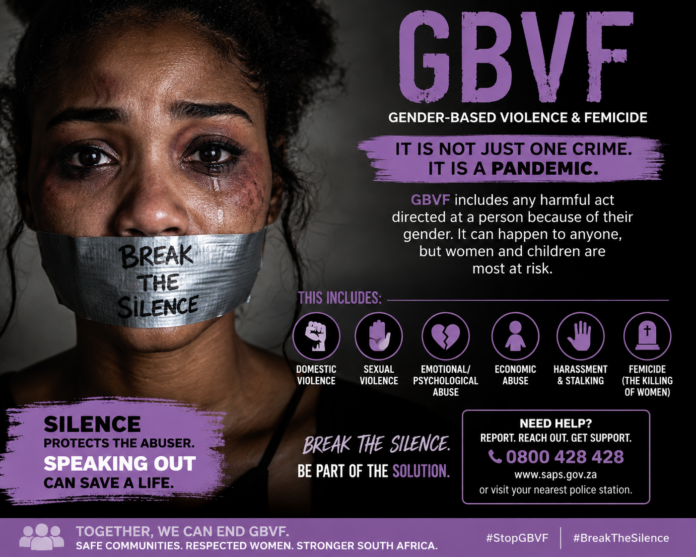
Ramaphosa previously described gender-based violence and femicide as the country’s “second pandemic”.
The crisis has since acquired an even more serious official designation.
In November 2025, the National Disaster Management Centre formally classified GBVF as a national disaster after concluding that persistent violence posed immediate threats to life.
Ramaphosa subsequently said the classification should give government a broader range of measures to intensify efforts against what he again described as a pandemic.
‘Thousands Walk Away’
Mathye’s letter, however, brought the systemic problem down from national policy to the reality inside one frightened woman’s home.
She acknowledged that victims could have legitimate reasons to fear approaching institutions meant to protect them.
“I know you are afraid that they will say you invited it, that you will be blamed, that your children will suffer, that the system will fail you again,” Mathye wrote.
However, she pleaded with victims not to remain silent.
Mathye said Limpopo had added 124 officers to police Family Violence, Child Protection and Sexual Offences units.
She said the officers secured a combined 406 years of imprisonment for offenders last year.
Her strongest words were reserved for communities that continue treating violence against women as a private family affair.
“I am asking traditional leaders to stop mediating rape. Rape is not a family matter to be negotiated with cows,” Mathye wrote.
She also challenged neighbours who dismiss domestic abuse with the expression “ke taba ya lapa” – that it is a family or household matter.
“It is not a family matter. It is a crime scene.”
A message to abusive men
Mathye also addressed abusive men directly, rejecting attempts to disguise violence as love, discipline or culture.
“What you are doing is not love. It is not discipline. It is not culture. It is a crime,” she wrote.
She urged abusive men to seek help before their violence escalated, warning that children growing up around abuse could learn that violence was how men resolved problems.
Mathye said government would strengthen patrols in hotspots including Thohoyandou and continue Phuza Weekend operations and its rural safety plan.
But she conceded that policing alone could not defeat GBVF.
‘You Are Not Alone Anymore’
“This cannot be a government fight alone. Homes remain the most dangerous place for women in South Africa. That means the fight is in our own yards,” she said.
For Mathye, Women’s Month ended not with ceremony or celebration, but with the unresolved fear of one woman in Nyavani.
“My sister near the venue of our Imbizo, if you read this, I want you to know: You are not alone anymore,” Mathye wrote.
“We see you. We believe you. And we will not rest until you can sleep peacefully in your own home again.”
- Limpopo MEC Violet Mathye highlighted during a rural safety imbizo in Nyavani that the system fails many women victims of gender-based violence, citing a local rape survivor whose alleged attacker was released on bail and remains free in the community.
- Nationally, 50,511 GBVF cases were reported in the 2025/26 financial year, but only 30,736 led to arrests or prosecutions, revealing many perpetrators walk free.
- Limpopo recorded 1,873 sexual offences, 3,691 domestic violence cases, and 39 murders of women by acquaintances in the first six months of 2025/26.
- The National Disaster Management Centre classified gender-based violence and femicide (GBVF) as a national disaster in November 2025, with President Ramaphosa calling it a "second pandemic."
- Mathye urged traditional leaders and communities to stop treating GBV as a private family matter, emphasizing that it is a crime, and called on abusive men to seek help before escalating violence.


