


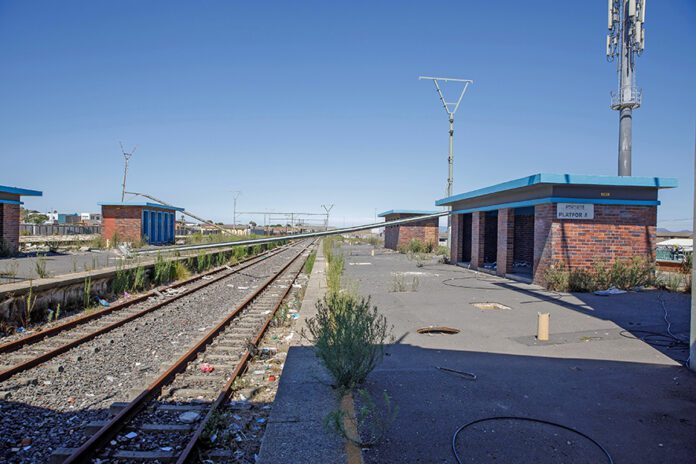
The 2023 murder of community leader Loyiso Nkohla and attacks on contractors working on the Central Line pushed Passenger Rail Agency of South Africa (PRASA) into a security operation involving intelligence gathering, South African Police Service (SAPS) engagement, and coordination with state security agencies as officials attempted to restore train services on one of the country’s most troubled rail corridors.
The incident, according to the paper trail relating to the matter, became one of the defining moments in a difficult recovery programme that required PRASA to rebuild damaged infrastructure, relocate communities living along the railway reserve, and create security conditions for contractors to return to work.
According to a submission by former PRASA chief security officer Alexio Papadopulo, the security environment surrounding the Central Line required intelligence coordination between PRASA, SAPS, Crime Intelligence, and the State Security Agency (SSA) after contractors working on the railway corridor were attacked.
Papadopulo, whose role in the security programme is now under investigation by SAPS, denies wrongdoing and says the decisions taken formed part of a lawful effort to protect infrastructure and restore rail services.
READ: The paper trail behind the R60m Prasa security probe
In his account of the project, Papadopulo says contractors attempting to work on the Central Line faced serious threats.
He stated:
“Contractors attempting to work on the Central Line were attacked, and some people lost their lives.”
He said those incidents led to the creation of a security plan involving multiple state security structures. “This led to the development of a security plan with SAPS, Crime Intelligence, SSA, and PRASA.”
He said the plan followed intelligence gathering on criminal activity affecting the recovery programme and was aimed at allowing contractors to return to damaged infrastructure.
Incidents on the Central Line caused work stoppages. SAPS instructed that no work was to be carried out until a security plan was formulated.
This plan included SAPS, Crime Intelligence, and the SSA. Multiple briefings took place with all stakeholders of the security cluster at the Neotel building at PRASA, and there was buy-in from everyone.
PRASA then increased security for the contractors via a variation order for Dipatshe, Mpande, and RNC. At the same time, PRASA was already out on the open market for a security service provider, with the tender including security services as well as ad hoc services to deal with any additional risks or requirements. The project carried presidential priority status.
The security environment was unfolding alongside efforts to rebuild trust with communities living around the railway line.
PRASA’s Central Line report records that community engagement under Operation Bhekela was interrupted after Nkohla was murdered during a meeting at Philippi Station in April 2023.
“The PSC engagement was interrupted following the murder of Mr. Loyiso Nkohla during a meeting held at Philippi Station,” the report states.
The meeting formed part of efforts to advance Operation Bhekela, the programme aimed at restoring limited rail services while longer-term rehabilitation continued.
After the murder, PRASA recorded that community consultations resumed.
READ: SIU secures order to freeze former Prasa CEO’s properties linked to R5.6 billion tender
“The community engagement process resumed thereafter,” the report states.
Operation Bhekela continued, with PRASA reporting that the section between Cape Town Central, Langa, and Nyanga was completed and reopened in July 2022.
The next phase involved extending services towards Philippi and Khayelitsha while officials worked on relocation plans for households living along the railway reserve.
The Central Line recovery was taking place in an area where PRASA faced both infrastructure and social challenges.
A report submitted to Parliament’s Standing Committee on Public Accounts recorded that about 5,195 households had settled along the Central Line, including communities around Langa, Philippi, and Khayelitsha.
Government institutions, including PRASA, the Department of Transport, the Department of Human Settlements, the Department of Public Works and Infrastructure, the Western Cape government, the City of Cape Town, and the Housing Development Agency, entered into an Implementation Protocol to coordinate relocation, funding, and rehabilitation of the railway corridor.
The security response later became part of an SAPS investigation into allegations involving subcontracting arrangements linked to the Central Line security programme.
Papadopulo has challenged the search warrants used in the investigation and denies allegations of wrongdoing.
The documents show that the security measures developed during a period when PRASA was attempting to reopen a railway line were affected by vandalism, criminal activity, community disputes, and delays in relocation.
The combination of the multi-agency security plan, increased contractor protection through the variation order, the open-market tender for security and ad-hoc services, community buy-in, involvement of councillors, and an implementation plan developed by various stakeholders enabled PRASA to return to site.
The murder of Nkohla and the attacks on contractors formed part of the security pressures surrounding a project where restoring trains depended on more than repairing tracks.
The Central Line recovery required officials to manage a combination of infrastructure damage, community negotiations, and threats against those working to reopen the railway.
- The 2023 murder of community leader Loyiso Nkohla and attacks on contractors on the Central Line led PRASA to initiate a security operation involving PRASA, SAPS, Crime Intelligence, and the State Security Agency.
- Contractors working on the Central Line faced serious threats, causing work stoppages until a multi-agency security plan was formulated and implemented.
- PRASA increased security through a variation order for security companies Dipatshe, Mpande, and RNC, and issued a tender for additional security services to protect contractors and infrastructure.
- Community engagement under Operation Bhekela was interrupted by Nkohla's murder but resumed afterward to support the restoration of limited rail services amid ongoing household relocations along the railway reserve.
- The Central Line recovery involved coordinating multiple government departments and agencies to manage infrastructure repairs, community relocations, and security challenges amid ongoing police investigations into subcontracting arrangements.


