


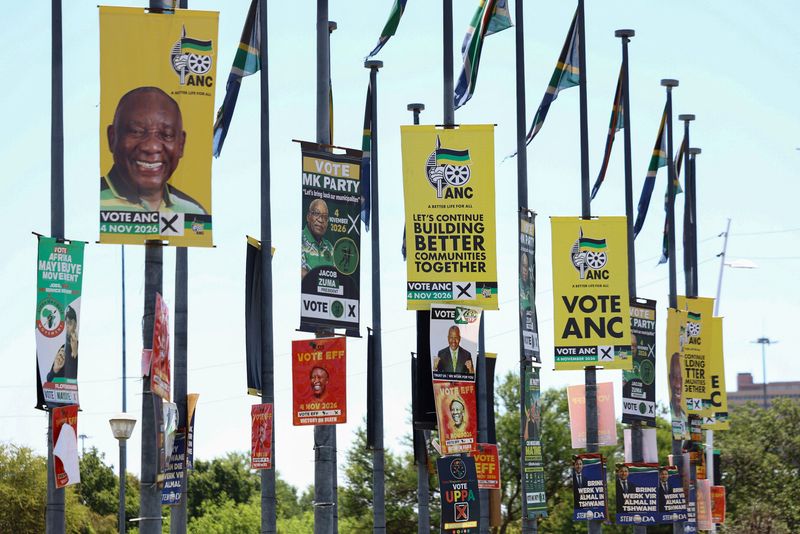
The sixth democratic local elections are now a thing of the past, with the Electoral Commission of South Africa (IEC) having recently published the names of councillors who will serve municipalities across the country.
There will be at least 138 hung councils given that the 44 district councils are also likely to have a fair spread of hung councils too. As a result, parties are now intensely involved in finalising the leadership composition and agreements to define how they aim to provide leadership to the 257 municipal councils.
READ: ANC rejects blanket DA coalition deal, adopts ‘tactical flexibility’ for hung municipalities
We have come a long way since the first democratic election in 2000 and some simple statistics are:
• The number of parties contesting each election has grown from 87 in 2000 to 521 in 2026;
• The number of parties who did not win a seat has grown from 20 in 2000 to over 292 in 2026, with 204 parties getting less than 10 seats and only 25 parties getting 10 or more seats
• The number of independents winning seats has remained minimal!
It is often argued that one of the elements of poor municipal governance arises out of the fact that most councillors who are elected have no experience of having held political office before. The overwhelming majority of councillors elected in each of our six elections are new councillors.
Unfortunately, as identity documents are not published, the basis of the comparison was on surnames and first names. Where the same first names and surname was found, we presumed that this was a returning councillor in this election. This then provides a basis on which one can measure the degree to which councillors have returned.
For example, for each of the elections:
• 2006, 64% of the councillors were new,
• 2011, 69% of the councillors were new,
• 2016, 68% of the councillors were new,
• 2021, 71% of the councillors were new, and now in
• 2026, 64% of the councillors are going to be new.
Unfortunately, this means that not only do new councillors take some time to familiarise themselves with the working of councils and their administration, including their roles and responsibilities, but that the transition from one council to the next, irrespective of any political party changes, is also affected.
This situation is exacerbated with hung councils and the rise of the “kingmakers”, small parties which are often used by larger parties to make up a majority.
ALSO READ: Council of the Left pushes ‘people-first’ coalition agenda for hung municipalities
Overall, this also means that councillors do not always take a longer-term perspective in the work they do as the likelihood is that they may not be councillors beyond their five-year term.
The following table of the councillors elected in 2026 indicates the proportion of councillors in the major and smaller parties which are returnees. As indicated above, 36% of the councillors are returnees and the Democratic Alliance (DA) and Freedom Front Plus have the highest proportion of returnees with over 50% of their councillors returning.
They are followed by the Inkatha Freedom Party (IFP) with 47,3% of the councillors returning, followed by the African National Congress (ANC) and Economic Freedom Fighters (EFF).
These parties all have a higher proportion of councillors returning:
| PARTIES | RETURNING | NEW | TOTAL | % |
| ANC | 1220 | 2067 | 3287 | 37,1 |
| DA | 882 | 838 | 1720 | 51,3 |
| UMKP | 69 | 731 | 800 | 8,6 |
| EFF | 219 | 375 | 594 | 36,9 |
| IFP | 231 | 257 | 488 | 47,3 |
| ACTIONSA | 60 | 259 | 319 | 18,8 |
| SACP | 45 | 228 | 273 | 16,5 |
| FF+ | 128 | 120 | 248 | 51,6 |
| PA | 31 | 160 | 191 | 16,2 |
| ATM | 35 | 67 | 102 | 34,3 |
| UDM | 17 | 62 | 79 | 21,5 |
| AMM | 13 | 43 | 56 | 23,2 |
| Parties with 10-45 seats | 80 | 189 | 269 | 29,7 |
| Parties with <10 seats | 129 | 254 | 383 | 33,7 |
| TOTAL | 3159 | 5650 | 8809 | 35,9 |
Breaking down the councillors elected in 2026 by metropolitan municipalities and the rest of the municipalities, one again finds significant differences across these different municipalities. For example, the City of Cape Town has over 50% of their councillors being returnees.
They are followed by the three Gauteng municipalities with between 40-45% of the councillors elected in 2026 being returnees.
However, the lowest proportion of returnees is found in eThekwini with less than 30% of the councillors being returnees.
| Municipalities | Returning | (blank) | Grand Total | %Returning |
| CPT – City of Cape Town | 128 | 107 | 235 | 54,5 |
| EKU – Ekurhuleni | 102 | 122 | 224 | 45,5 |
| NMA – Nelson Mandela Bay | 51 | 69 | 120 | 42,5 |
| JHB – City of Johannesburg | 109 | 161 | 270 | 40,4 |
| BUF – Buffalo City | 39 | 61 | 100 | 39,0 |
| TSH – City of Tshwane | 81 | 133 | 214 | 37,9 |
| MAN – Mangaung | 38 | 63 | 101 | 37,6 |
| REST | 2545 | 4777 | 7322 | 34,8 |
| ETH – eThekwini | 66 | 157 | 223 | 29,6 |
| Grand Total | 3159 | 5650 | 8809 | 35,9 |
Whilst discussions continue around what to do about governance in the more than 138 “hung” councils, it is likely that one of the issues to be considered is the degree to which councillors are able to “hit the ground running”.
Only time will tell how quickly municipalities will be able to implement the delivery so sorely required by the people they serve.
• Dr Sutcliffe is co-director of City Insight, a firm that provides information and advice on development issues. He’s a former city manager of eThekwini Metro
• Bannister is co-director of City Insight and a development consultant with experience in urban planning and policy development
• McGahey has over 20 years’ experience in planning and development and project management.
- The sixth democratic local elections are now a thing of the past, with the Electoral Commission of South Africa (IEC) having recently published the names of councillors who will serve municipalities across the country.
- There will be at least 138 hung councils given that the 44 district councils are also likely to have a fair spread of hung councils too.
- As a result, parties are now intensely involved in finalising the leadership composition and agreements to define how they aim to provide leadership to the 257 municipal councils.
- READ: ANC rejects blanket DA coalition deal, adopts ‘tactical flexibility’ for hung municipalities We have come a long way since the first democratic election in 2000 and some simple statistics are: • The number of parties contesting each election has grown from 87 in 2000 to 521 in 2026; • The number of parties who did not win a seat has grown from 20 in 2000 to over 292 in 2026, with 204 parties getting less than 10 seats and only 25 parties getting 10 or more seats • The number of independents winning seats has remained minimal!
- It is often argued that one of the elements of poor municipal governance arises out of the fact that most councillors who are elected have no experience of having held political office before.


