


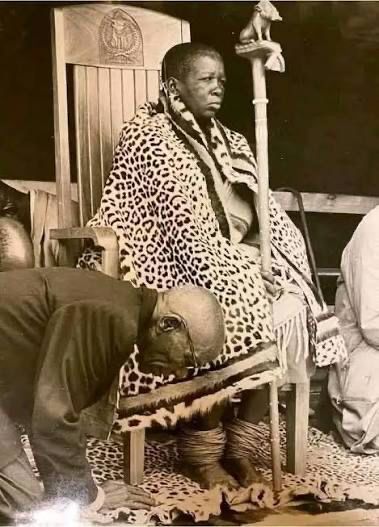
Women’s Day is usually remembered through the political struggles of the 20th century. The 1956 march on the Union Buildings remains central to that history, as it should.
Yet the political authority of women in Southern Africa reaches much further back.
Before colonial borders hardened across the region, before the mineral economy reorganised land and labour and before European rule reduced African sovereignty, women governed kingdoms, directed diplomacy, protected succession and led their people through war and displacement. Their political lives rarely occupy the same space in public memory as the men who ruled beside them.
Europe possessed its own histories of female sovereignty, so colonial officials understood that women could rule. They withheld equivalent recognition from African royal women because imperial ideology depicted African societies as politically undeveloped.
Queen Nonesi kaFaku, born into the amaMpondo royal house around 1810, was the daughter of King Faku and Queen Nokweya. Her marriage to King Ngubengcuka joined the amaMpondo and abaThembu royal houses as British power expanded across the Eastern Cape. Mthikrakra, the child of a supporting wife, entered her house as its recognised heir.
When Ngubengcuka died in 1830, Nonesi exercised authority during the political struggle surrounding Mthikrakra’s minority. She later governed during the minority of her grandson, Ngangelizwe.
Nonesi rejected Nongqawuse’s prophecy during the cattle-killing movement of 1856 and 1857 and tried to prevent the destruction of the cattle upon which her people depended. She understood that famine would expose African communities to deeper colonial control over land and labour.
During the 1860s, colonial officials attempted to remove the western abaThembu from the territory they occupied around present-day Lady Frere. Nonesi refused. The Cape government responded by banishing her to Pondoland.
Further north, the Modjadji queens of the Balobedu governed through one of Southern Africa’s most enduring institutions of female rule. The title “Modjadji” belonged to a dynasty rather than a single ruler. Each rain queen inherited an office carrying political, economic and spiritual authority.
Rainmaking strengthened that power. Neighbouring rulers sought the rain queen’s assistance during drought, while the queens received tribute. Colonial observers often reduced their authority to ritual and overlooked the system of government surrounding it.
Queen Mmanthatisi led the Batlokwa through a different historical crisis. She assumed authority after the death of her husband, Kgosi Mokotjo, while their son, Sekonyela, remained young. Her regency coincided with wars, migrations and competition over land during the early 19th century.
Queen Lozikeyi Dlodlo emerged as a central figure in the Ndebele kingdom after the disappearance of King Lobengula during the British South Africa Company’s conquest of Matabeleland.
During the 1896 uprising against company rule, she confronted land seizure, forced labour and colonial violence.
Queen Labotsibeni Mdluli guided eSwatini through colonial encroachment and the growing power of the South African state. Her influence extended to her financial support for Abantu-Batho, an important platform for black political thought during the early 20th century.
The queens governed within distinct constitutional traditions. Their histories challenge the narrow chronology through which women’s political leadership is remembered. The women who marched in 1956 inherited a region shaped by generations of women who had governed, negotiated, resisted and defended their people.
Women’s Day should carry their names into national memory.
• Schutte is a writer, filmmaker and political analyst
- Women’s political authority in Southern Africa predates 20th-century struggles, with female rulers governing kingdoms and leading through war and displacement before colonial rule.
- Queen Nonesi kaFaku exercised authority during regencies in the 19th century and opposed the cattle-killing movement, understanding its detrimental effects.
- The Modjadji queens of the Balobedu held political, economic, and spiritual power through their rainmaking dynasty, which was often underestimated by colonial observers.
- Queen Mmanthatisi and Queen Lozikeyi Dlodlo led their people through crises involving war, migration, and colonial conquest in the early 19th and late 19th centuries, respectively.
- Queen Labotsibeni Mdluli influenced eSwatini’s resistance to colonial encroachment and supported black political thought via Abantu-Batho in the early 20th century.


