In his seminal work, The Republic, ancient Greek philosopher Plato makes this observation of those reluctant to take up public office: “But the chief penalty is to be governed by someone worse if a man will not himself hold office and rule.”
This quote has evolved over centuries, with the most common modern phrase revised to, “One of the penalties for refusing to participate in politics is that you end up being governed by your inferiors.”
But a more dangerous option than being led by inferiors is governance by bloodthirsty populists.
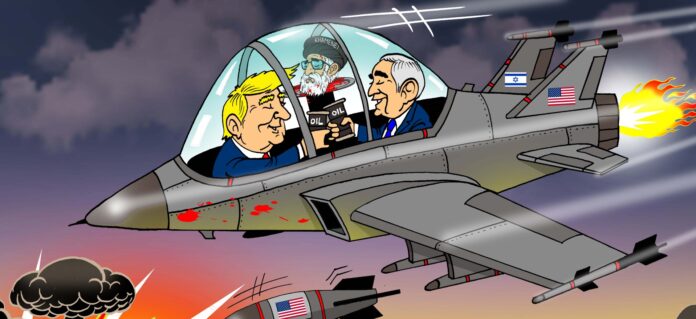
In the theatre of global politics, the ongoing military campaign against Iran, orchestrated by Israeli Prime Minister Benjamin Netanyahu and greenlit by the Donald Trump administration, stands as a stark monument to consequence. It is a war decades in the making, but one that required a specific catalyst to ignite: the abdication of American institutional wisdom at the ballot box.
For South Africans, watching plumes of smoke rise over the Middle East from a safe distance, the tendency might be to view this as someone else’s tragedy. We would be wrong. The lessons for South Africa, a country grappling with coalition politics, populist rhetoric and ailing state capacity, are urgent and profound.
The first lesson is the fragility of institutional guardrails. In a healthy democracy, a strike on Iran would have required a consensus among intelligence agencies, diplomatic corps and military strategists. Yet, the Trump presidency proved that if a leader is sufficiently charismatic and populist, they can bypass these checks and balances. Trump’s “America First” was never about policy; it was about loyalty. By purging dissent, he created an echo chamber that amplified Netanyahu’s long-standing alarmism regarding the Iranian nuclear threat.
For South Africa, this is a warning about cadre deployment and the hollowing out of the public service. When we place political loyalty above professional competence, we build the same kind of brittle infrastructure that collapsed in Wahington. Second, the alliance demonstrates how leaders manufacture perpetual crises to mask domestic failure. Netanyahu, indicted for corruption, has long used security threats as a political lifeline. Trump, facing impeachment and legal jeopardy, found that nothing unifies a fractured base like the image of a strongman striking foreign soil. The war becomes a shield against accountability.
South Africans are no strangers to this tactic. We have watched politicians wave the flag of “radical economic transformation” to distract from state capture and invoke “white monopoly capital” to explain away failed service delivery.
The Netanyahu model shows where this ends: when a leader’s survival depends on external conflict, they will eventually manufacture that conflict. Our own political discourse, currently simmering with coalition instability, must guard against this temptation.
This war is a monument to the consequences of electoral negligence. Trump did not emerge from a vacuum. American voters believed that the guardrails of the Constitution would contain him. They were wrong.
South Africans must take note for when they next vote.
Visit the SW YouTube Channel for our video content