


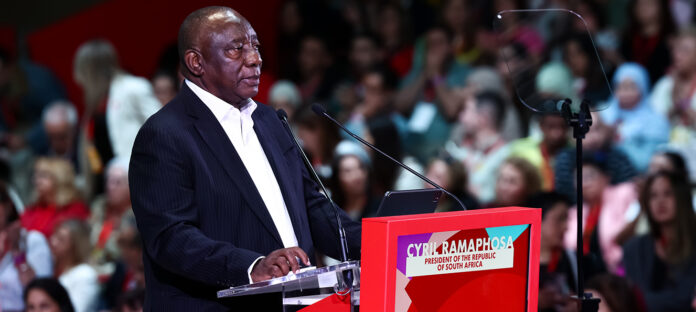
With the Cyril Ramaphosa impeachment saga unfolding, I want to state from the very beginning that this Phala Phala matter, as far as I’m concerned, is a none-matter. There, I said it.
Why do I say that? Because the president made it clear to us all when he got elected that he had reorganised his business interests in such a way that they will not interfere with his duties to the country. Ringfence it and have others manage it on his behalf, but that obviously does not mean that these businesses are off limits to him and his family. As such, the president occasionally enjoys his time at the said farm, and one can imagine that the farm manager would take the opportunity to brief him on what has been the ongoings over time.
Nothing wrong with this. When a crime is committed at said farm, and since you are the president, you can choose to report it to the police or not. We all have that right. He informed his VIP protection people and had expected that they would obviously take the matter forward. Not an unreasonable expectation.
Lastly, since I’m on a roll, various reputable institutions separately and independently looked into this matter and found that the president does not have anything to answer for. The Public Protector, the Reserve Bank, Sars and the Hawks think that no wrongdoing took place on the part of Ramaphosa. But no, the political parties in our Parliament have cast aspersions on all these institutions and felt it important that they, who are in opposition to this man and his party, must also have a look at the matter. There must be a snake in the grass.
The Speaker of the House set up an independent Section 89 panel to investigate and make recommendations. The report concluded that the president does have a case to answer and that Parliament consider instituting impeachment proceedings. As permitted by National Legislature, Rule 129i permits a majority vote to halt such a recommendation.
We all thought that is the end of that.
I hear many stating that the ANC abused its majority vote to protect its president when in fact that is precisely what the rules permitted at that time.
The Concourt has just rapped Parliament over the knuckles and said, don’t be naughty, follow the correct procedures that ensures accountability and transparency. Subject this report and process to scrutiny so that an impeachment committee may determine whether the president should or should not be impeached.
The big question everyone is wondering about is whether the president wants to subject himself to such a process. Not because he fears he might be found guilty but because such a process will undoubtedly be used to settle much more than just the Phala Phala score.
It is the opposition parties after all. It will delve into his private life and that of his family. It will delve into his various businesses. It will, of course, delve into past business decisions that have nothing to do with the current matter at hand. These are but a few considerations the president took into account when deciding on his next move. And finally, he thought of his legacy, and how this will go down as possibly the defining moment of his entire Presidency.
The courts will now be the final arbitrator on this matter since Ramaphosa decided to challenge the Section 89 report, and by extension the impeachment process. It makes for interesting times in our body politic. One thing is certain, this will not bode well for the ANC going into the upcoming local government elections, come November. But I doubt this is uppermost on the mind of our president.
- Dr Van Heerden is a senior research fellow at the Centre for African Diplomacy and Leadership at UJ
Visit SW YouTube Channel for our video content
- President Cyril Ramaphosa’s Phala Phala farm incident is deemed by the author as a non-issue, with no wrongdoing found by several reputable institutions like the Public Protector, Reserve Bank, SARS, and Hawks.
- The President informed his VIP protection about the crime at the farm, expecting them to act, which is within his rights, and claims that business interests are managed separately from his presidential duties.
- Opposition parties in Parliament challenged these findings, leading to an independent Section 89 panel investigating, which recommended impeachment proceedings; however, Parliament initially voted to halt this using Rule 129i.
- The Constitutional Court has criticized Parliament and mandated a transparent process for scrutiny of the report, allowing the impeachment committee to decide on the President’s potential impeachment.
- Ramaphosa is challenging the impeachment process in court, a move that may affect the ANC’s standing ahead of local government elections but reflects his concerns about political attacks on his legacy and private affairs.


