


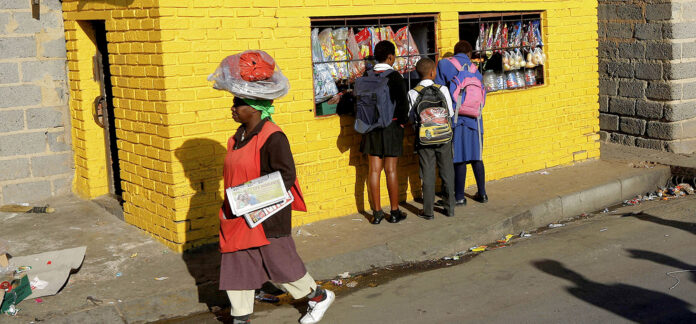
When South Africans speak about the economy, the conversation usually centres around big corporations, the JSE, investment summits, and political promises about job creation. Yet for millions of ordinary citizens, the real economy is not found in Sandton boardrooms or government conferences. It is found in township streets, crowded taxi ranks, and small neighbourhood spaza shops that keep communities going every single day.
In many parts of South Africa, spaza shops have quietly become one of the country’s most reliable survival systems.
Spaza shops provide something large retailers often cannot: accessibility, flexibility, and human connection. Community members buy groceries in smaller quantities because that is what they can afford. Parents send children to buy bread, milk, or cooking oil without needing transport money to travel to large shopping centres.
During difficult months, many shop owners quietly allow trusted customers to buy essentials on credit until payday arrives. These may seem like small acts, but in struggling communities, they make a massive difference.
Spaza shops also play a major role in keeping money circulating within local communities. They create jobs for local youth, support nearby suppliers, and help families survive in areas where unemployment is high.
While politicians continue debating economic reform, informal traders are already creating opportunities for themselves and others with little to no assistance.
Yet, despite their economic contribution, informal traders are still too often treated like a nuisance rather than an asset.
Traders continue facing permit delays, inconsistent municipal bylaws, poor trading infrastructure, and increasing safety risks.
The reality is that many spaza shop owners are doing what government programmes have struggled to achieve for years.
They are creating income, supporting families, reducing hunger in communities, and building local economic ecosystems without waiting for permission or rescue.
South Africa needs to change the way it speaks about the informal economy.
These are not “backward” businesses. They are entrepreneurs responding to a broken economy with innovation, resilience, and determination.
- Dusani is a graduate in public relations and communications from UJ. She is interning at Decode, a Pan-African communications agency based in Johannesburg.
- Spaza shops in South African townships serve as crucial local economies, providing accessible groceries and extending credit to struggling families.
- These informal shops foster local economic circulation by creating jobs, supporting suppliers, and helping communities survive high unemployment.
- Despite their positive impact, informal traders face challenges like permit delays, inconsistent bylaws, poor infrastructure, and safety risks.
- Spaza shop owners operate as resilient entrepreneurs, achieving income generation and community support where government programs have often failed.
- There is a need for South Africa to shift its perception of the informal economy, recognizing these businesses as innovative and vital economic contributors rather than nuisances.


