


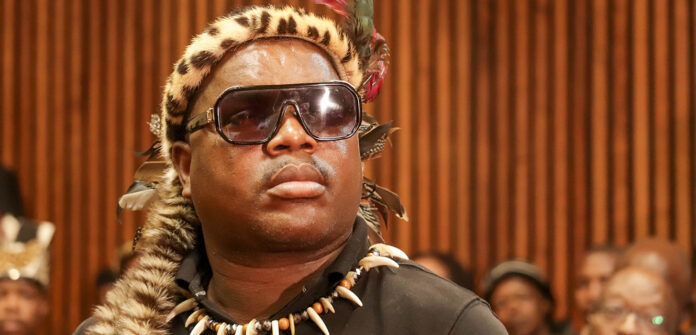
As South Africa approaches the local government elections in November, tensions between cultural commentator Ngizwe Mchunu and Julius Malema could have greater political consequences for the EFF than many realise.
Although the dispute appears personal or legal on the surface, it reflects deeper issues involving cultural identity, political perception, and the EFF’s positioning in provinces such as KwaZulu-Natal and Gauteng, both home to large isiZulu-speaking populations.
South African politics has always been shaped not only by ideology and policy, but also by identity, culture, and symbolism. This is particularly true in KwaZulu-Natal, where Zulu identity remains influential.
Mchunu may not hold political office, but his influence should not be underestimated.
Through social media activism, cultural commentary, and outspoken defence of Zulu identity, he has built credibility, especially among younger people who feel disconnected from mainstream political institutions. In modern politics, cultural personalities can shape public opinion as effectively as politicians.
While the EFF has established itself nationally as a major opposition force, its future growth depends heavily on gaining support in provinces where identity politics remain important. KwaZulu-Natal represents both an opportunity and a challenge.
For the EFF to make meaningful electoral gains in KZN, economic rhetoric alone may not be enough. The party also needs cultural sensitivity and strategic engagement with influential voices within Zulu society. Any perception that the party is hostile or disrespectful toward cultural figures could come at serious political cost.
This is why tensions with Mchunu matter politically.
While not all Zulu-speaking people support Mchunu, cultural solidarity often emerges when influential figures are perceived to be attacked. If Malema succeeds against Mchunu in court, it may strengthen his authority in the short term. However, some sections of the Zulu-speaking public could interpret such a victory as hostility toward Zulu identity itself.
The issue is further complicated by Gauteng’s demographics. Although Gauteng is South Africa’s economic hub, it is also home to large numbers of Zulu-speaking residents.
If tensions between Malema and Mchunu continue escalating publicly, the EFF risks alienating parts of these communities at a crucial moment when broad-based support will be essential ahead of local elections.
The dispute also risks undermining the EFF’s own political messaging. The party regularly presents itself as a champion of African dignity, decolonisation, and indigenous identity.
Conflict with a figure widely seen as defending the Zulu culture creates an apparent contradiction that opponents could exploit.
At another level, the Malema-Mchunu tensions reflect a broader transformation in South African politics: the rise of non-political influencers as political actors. Their influence is particularly strong among younger citizens who consume politics through social media rather than party structures.
Mchunu represents this growing category of influencers. The EFF, therefore, faces a delicate balancing act. While the party has every right to defend itself and its leadership, it must also recognise the broader cultural and political environment in which these disputes occur.
Political maturity requires understanding the difference between legal rights and political wisdom. Ultimately, the confrontation between Julius Malema and Mchunu is about more than two outspoken public figures. It reflects the growing influence of cultural actors in politics and raises important questions about how political parties engage with identity in a rapidly changing society.
- Tenza is a PhD student at the Wits School of Governance
- Tensions between cultural commentator Ngizwe Mchunu and EFF leader Julius Malema are highlighting deeper issues of cultural identity and political positioning ahead of South Africa's local elections, especially in KwaZulu-Natal and Gauteng.
- Mchunu, influential through social media and cultural activism among younger Zulu-speaking populations, symbolizes the rising power of non-political influencers in shaping political opinion.
- The EFF’s future growth in provinces with strong Zulu identity relies not only on economic policies but also on cultural sensitivity and respectful engagement with cultural figures like Mchunu.
- A legal or public conflict between Malema and Mchunu risks alienating Zulu-speaking communities and undermining the EFF’s messaging about African dignity and indigenous identity.
- The dispute exemplifies a broader political shift where cultural identity and influencer activism increasingly intersect with traditional politics, demanding strategic wisdom and nuanced engagement from political parties.


