


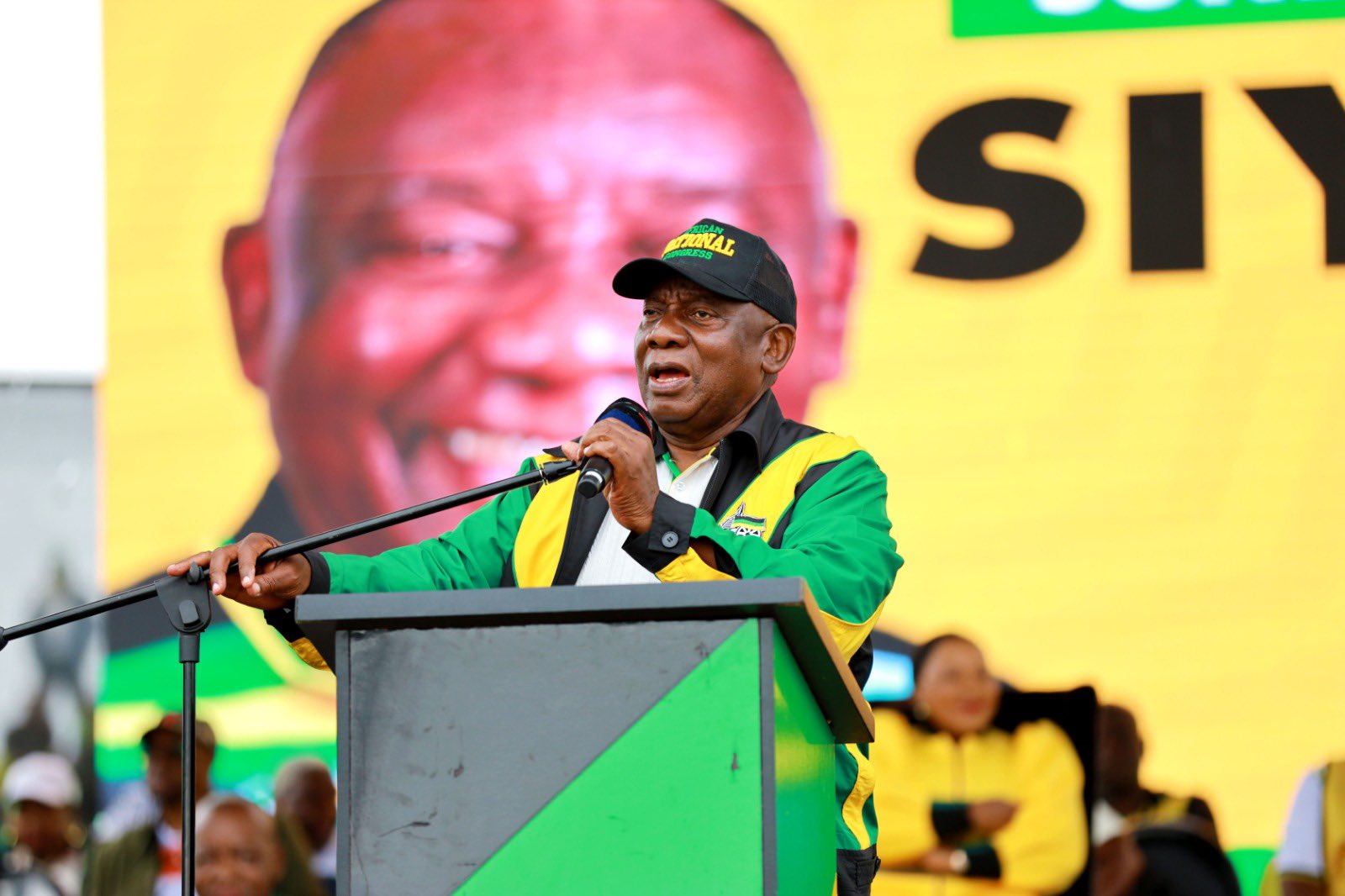
African National Congress (ANC) President Cyril Ramaphosa has acknowledged that the party is failing municipalities, that young people are losing faith in the governing party and that its record in government is far from perfect. But with voters heading to the polls on Wednesday, the question is whether the governing party has the courage to do more than admit its mistakes.
After more than three decades in power, the ANC cannot keep asking South Africans to understand its challenges, sympathise with its shortcomings and give it another opportunity to get things right. It needs to demonstrate that it is prepared to take drastic action, even if that means confronting its own failures and holding some of its most powerful members accountable.
Ramaphosa’s address at Sunday’s Siyanqoba rally in Mdantsane, KuGompo City was notable for how openly he acknowledged the party’s governance problems. In a speech intended to persuade voters to give the ANC another mandate, the president effectively conceded that the party has not delivered on some of its most basic responsibilities.
“We know that many municipalities do not work as they should. Today, we are openly acknowledging our weaknesses. But we are not only acknowledging them. We are correcting them,” he said.
READ: Elections 2026 | Battleground metros to watch
It is an admission that carries considerable political weight. For millions of residents, dysfunctional municipalities are not simply a campaign talking point. They are a lived reality of dry taps, deteriorating roads, overflowing refuse and unreliable electricity. These are failures that have persisted despite years of government interventions, promises and election campaigns.
Ramaphosa further acknowledged that some families have gone without water for days, while others have endured shortages for weeks. His reference to communities experiencing such prolonged deprivation is particularly telling because access to clean water is among the most basic responsibilities of government.
The proposed National Water Action Plan may offer a framework for addressing the crisis, but South Africans need more than another government plan. It needs functioning infrastructure, competent municipal administrations and consequences for those who have allowed essential services to deteriorate.
The ANC’s problem is not simply that some of the municipalities it runs are struggling. It is that the party has repeatedly failed to demonstrate that poor governance will have consequences for those responsible.
Ramaphosa appeared to recognise this when he promised that every ANC mayor and councillor would sign a Public Performance Agreement and a Code of Ethical Conduct. He warned that “those who failed to honour these commitments would be removed”.
He also committed to giving councillors 100 days to demonstrate tangible progress on issues affecting their communities.
These promises sound decisive, but the real test will be whether the ANC follows through when accountability threatens internal dynamics. Performance agreements will mean very little if underperforming leaders continue to enjoy protection from party structures or are simply moved from one position to another.
The governing party needs to abandon the culture of political protection and demonstrate that holding office is a responsibility, not an entitlement. Municipal leadership should be determined by competence and the ability to deliver, not loyalty to influential party figures.
But the ANC’s crisis is not confined to municipal governance. Perhaps more damaging for its long-term political survival is the growing disconnect between the party and a generation that has no personal memory of the struggle against apartheid and increasingly judges democracy by what it has delivered in their lifetime.
Ramaphosa made a striking admission when he acknowledged that young people were questioning whether democracy had been meant for them and whether the ANC still listened to their concerns.
“Some of you have started to ask whether this democracy was ever meant for you, and whether our ANC movement still listens.”
He also spoke about graduates who have completed their studies, submitted countless CVs and waited for employment opportunities that never materialised.
This highlighted the sad reality of young South Africans who are often believed to display voter apathy.
It is an uncomfortable reality for a party that has traditionally relied on its liberation credentials to maintain political loyalty. The younger generation cannot be expected to remain emotionally invested in the ANC’s history while struggling to secure employment and access reliable services.
His promise of one million work, training and enterprise opportunities over the next term will need to translate into measurable, sustainable opportunities rather than another election commitment.
READ: Crowded ballots, hung councils and kingmakers: Navigating South Africa’s local elections
Perhaps the most revealing part of the president’s address was his insistence that the ANC should not pretend that everything is fine.
“This is a call for us to do better, not to look away and pretend nothing is wrong,” he said.
But the party must now confront the uncomfortable possibility that acknowledging its failures has become easier than correcting them.
There was another significant moment when Ramaphosa told voters that their support was not a debt owed to the ANC because of its role in securing democracy.
“It might sometimes sound like we are holding this over you, as if your vote is a debt you owe us. It is not.”
The ANC has spent this campaign listening to residents, acknowledging their frustrations and promising to correct its shortcomings. That may be politically necessary, but it is no longer sufficient.
READ: IEC ready to for local elections later this year
Apologies will not repair broken water pipes, revive failing municipalities or create jobs for unemployed graduates. Nor will another round of promises restore public confidence in a party that has had ample time to address many of these problems.
South Africans have heard enough apologies. It is time the ANC gave them something to believe in beyond promises.
- ANC President Cyril Ramaphosa acknowledged the party's failure in municipal governance and the loss of faith among young South Africans during his speech at the Siyanqoba rally in Mdantsane.
- Ramaphosa admitted that many municipalities are dysfunctional, leading to basic service delivery failures such as water shortages lasting days or weeks.
- He pledged that all ANC mayors and councillors would sign Public Performance Agreements and a Code of Ethical Conduct, with a warning that those failing to meet commitments would be removed.
- Ramaphosa recognized that young people are increasingly skeptical about whether democracy and the ANC still address their concerns, highlighting graduate unemployment and voter apathy.
- The ANC promised one million work, training, and enterprise opportunities over the next term, emphasizing the need to translate this commitment into tangible outcomes.
African National Congress (ANC) President Cyril Ramaphosa has acknowledged that the party is failing municipalities, that young people are losing faith in the governing party and that its record in government is far from perfect. But with voters heading to the polls on Wednesday, the question is whether the governing party has the courage to do more than admit its mistakes.
After more than three decades in power, the ANC cannot keep asking South Africans to understand its challenges, sympathise with its shortcomings and give it another opportunity to get things right. It needs to demonstrate that it is prepared to take drastic action, even if that means confronting its own failures and holding some of its most powerful members accountable.
Ramaphosa's address at Sunday's Siyanqoba rally in Mdantsane, KuGompo City was notable for how openly he acknowledged the party's governance problems. In a speech intended to persuade voters to give the ANC another mandate, the president effectively conceded that the party has not delivered on some of its most basic responsibilities.
"We know that many municipalities do not work as they should. Today, we are openly acknowledging our weaknesses. But we are not only acknowledging them. We are correcting them," he said.
READ: Elections 2026 | Battleground metros to watch
It is an admission that carries considerable political weight. For millions of residents, dysfunctional municipalities are not simply a campaign talking point. They are a lived reality of dry taps, deteriorating roads, overflowing refuse and unreliable electricity. These are failures that have persisted despite years of government interventions, promises and election campaigns.
Ramaphosa further acknowledged that some families have gone without water for days, while others have endured shortages for weeks. His reference to communities experiencing such prolonged deprivation is particularly telling because access to clean water is among the most basic responsibilities of government.
The proposed National Water Action Plan may offer a framework for addressing the crisis, but South Africans need more than another government plan. It needs functioning infrastructure, competent municipal administrations and consequences for those who have allowed essential services to deteriorate.
The ANC's problem is not simply that some of the municipalities it runs are struggling. It is that the party has repeatedly failed to demonstrate that poor governance will have consequences for those responsible.
Ramaphosa appeared to recognise this when he promised that every ANC mayor and councillor would sign a Public Performance Agreement and a Code of Ethical Conduct. He warned that "those who failed to honour these commitments would be removed".
He also committed to giving councillors 100 days to demonstrate tangible progress on issues affecting their communities.
These promises sound decisive, but the real test will be whether the ANC follows through when accountability threatens internal dynamics. Performance agreements will mean very little if underperforming leaders continue to enjoy protection from party structures or are simply moved from one position to another.
The governing party needs to abandon the culture of political protection and demonstrate that holding office is a responsibility, not an entitlement. Municipal leadership should be determined by competence and the ability to deliver, not loyalty to influential party figures.
But the ANC's crisis is not confined to municipal governance. Perhaps more damaging for its long-term political survival is the growing disconnect between the party and a generation that has no personal memory of the struggle against apartheid and increasingly judges democracy by what it has delivered in their lifetime.
Ramaphosa made a striking admission when he acknowledged that young people were questioning whether democracy had been meant for them and whether the ANC still ed to their concerns.
"Some of you have started to ask whether this democracy was ever meant for you, and whether our ANC movement still s."
He also spoke about graduates who have completed their studies, submitted countless CVs and waited for employment opportunities that never materialised.
This highlighted the sad reality of young South Africans who are often believed to display voter apathy.
It is an uncomfortable reality for a party that has traditionally relied on its liberation credentials to maintain political loyalty. The younger generation cannot be expected to remain emotionally invested in the ANC's history while struggling to secure employment and access reliable services.
His promise of one million work, training and enterprise opportunities over the next term will need to translate into measurable, sustainable opportunities rather than another election commitment.
READ: Crowded ballots, hung councils and kingmakers: Navigating South Africa’s local elections
Perhaps the most revealing part of the president's address was his insistence that the ANC should not pretend that everything is fine.
"This is a call for us to do better, not to look away and pretend nothing is wrong," he said.
But the party must now confront the uncomfortable possibility that acknowledging its failures has become easier than correcting them.
There was another significant moment when Ramaphosa told voters that their support was not a debt owed to the ANC because of its role in securing democracy.
"It might sometimes sound like we are holding this over you, as if your vote is a debt you owe us. It is not."
The ANC has spent this campaign ing to residents, acknowledging their frustrations and promising to correct its shortcomings. That may be politically necessary, but it is no longer sufficient.
READ: IEC ready to for local elections later this year
Apologies will not repair broken water pipes, revive failing municipalities or create jobs for unemployed graduates. Nor will another round of promises restore public confidence in a party that has had ample time to address many of these problems.
South Africans have heard enough apologies. It is time the ANC gave them something to believe in beyond promises.


