


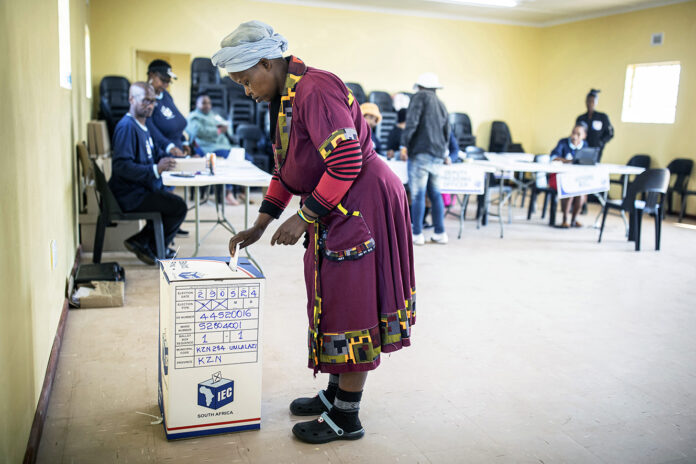
The Electoral Commission of South Africa (IEC) has prepared its National Results Operations Centre (ROC) at Gallagher Convention Centre in Midrand ahead of the local government elections scheduled for November 4 2026.
The IEC confirmed that the national centre would be launched on October 28, with additional Results Operations Centres established in all nine provinces. The commission said the locations of both the national and provincial centres had been finalised as part of its election-readiness preparations.
But what happens inside these centres, who works there, what information is displayed, and how will political parties and the media follow the results?
Election command centre
According to the IEC’s National and Provincial Elections Report, the Results Operations Centre serves as a central hub for coordinating election operations and providing political parties, independent candidates, observers and the media with access to election information.
The commission’s report identifies the national centre at Gallagher Convention Centre in Midrand as the principal management hub, supported by provincial results centres.
For the November 2026 elections, the IEC has confirmed that the national centre will be in Midrand. The provincial centres will be in East London, Bloemfontein, Johannesburg, Durban, Polokwane, White River, Kimberley, Mahikeng and Cape Town, according to the commission.
READ: We are voting for a change in our lives
Who works inside the ROC?
The election report stated that electoral commissioners, the Chief Electoral Officer and senior commission executives are among those using the national centre to coordinate election operations.
It also identifies political contestants, independent observers and media organisations among the stakeholders accommodated at the centre.
The IEC’s preparations for the 2026 elections also include the recruitment and training of electoral officials who will administer voting and counting.
In its October 14 statement, the commission said it was recruiting approximately 188,500 electoral officials, including presiding officers, deputy presiding officers, area managers and electoral officers.
READ MORE: What the IEC should learn from the Constitutional Court ruling
The report explains that results are captured after voting-station counting, checked by auditors and released to the public only after the relevant verification process. The system also provides information to political contestants, media organisations and other stakeholders through electronic data feeds and the commission’s election platforms.
Journalists can report on official briefings, published results and information supplied by authorised electoral officials. The commission’s published media-access notice confirms the facilities available to journalists, although it does not specify the individual working arrangements of every newsroom or broadcaster.
The IEC’s election results platforms allow members of the public to follow results as they are released.
- The Electoral Commission of South Africa (IEC) has prepared its National Results Operations Centre (ROC) at Gallagher Convention Centre in Midrand ahead of the local government elections scheduled for November 4 2026.
- The IEC confirmed that the national centre would be launched on October 28, with additional Results Operations Centres established in all nine provinces.
- The commission said the locations of both the national and provincial centres had been finalised as part of its election-readiness preparations.
- But what happens inside these centres, who works there, what information is displayed, and how will political parties and the media follow the results?
- Election command centre According to the IEC’s National and Provincial Elections Report, the Results Operations Centre serves as a central hub for coordinating election operations and providing political parties, independent candidates, observers and the media with access to election information.


