


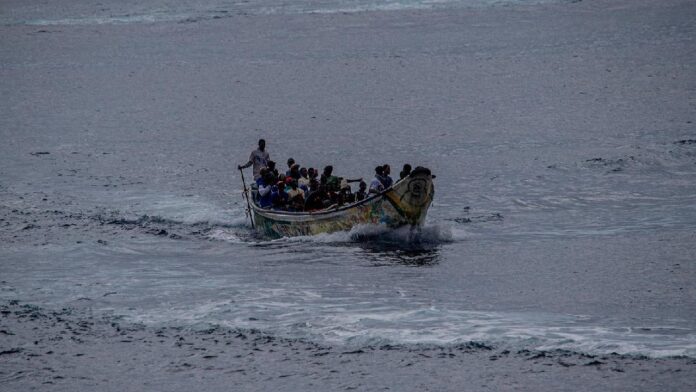
Hundreds of thousands of migrants attempt the dangerous journey from Africa to Europe every year, driven by the hope of better economic opportunities or the need to escape conflict, violence, and instability in their home countries.
For many, the journey begins with a perilous crossing of the Sahara Desert, where extreme conditions and criminal networks pose constant threats. Migration experts describe the trans-Saharan routes as some of the world’s most dangerous migration corridors.
The routes include three main pathways: the Western Atlantic corridor from West Africa through Mauritania to Western Sahara and southern Morocco; a route running through Mali, Algeria and Morocco; and a third corridor stretching from Niger through Algeria to Libya.
According to Bram Frouws, director of the Migration Center in The Hague, migrants face a range of dangers including extortion at checkpoints, arbitrary detention, kidnapping, physical and sexual violence, forced labour, and arrest. Some are reportedly abandoned in remote desert areas after being intercepted by authorities.
Thousands lost along the way
The true number of lives lost on these routes remains unknown, with many deaths going undocumented in remote desert regions.
The International Organization for Migration’s Missing Migrants Project has recorded more than 2 000 deaths in the Sahara since 2014. However, migration specialists believe the actual toll is far higher due to the difficulty of tracking incidents across vast and isolated areas.
Many families are never informed about the fate of relatives who disappear during the journey, leaving countless deaths unrecorded.
Mediterranean crossing brings new risks
For migrants who survive the desert trek, the journey often becomes even more dangerous as they seek to cross the Mediterranean Sea into Europe.
Some rely on human smugglers to organize crossings, while many others attempt the voyage independently because they cannot afford the high fees charged by smuggling networks.
Miriyam Aouragh, a professor of digital anthropology in Morocco, said smuggling is not always a feature of migration routes and often only becomes relevant at the final stage of reaching Europe.
She noted that many migrants who cannot afford smugglers resort to organizing crossings themselves using small boats, significantly increasing the risks of drowning or becoming stranded at sea.
Others attempt to enter Europe through Spain’s North African enclave of Ceuta by crossing the heavily fortified border separating it from Morocco. Earlier this month, authorities struggled to contain a surge of migrants attempting the crossing, prompting Spain to deploy additional police and military personnel.
Crackdowns fuel smuggling profits
Experts say European efforts to curb irregular migration may be having unintended consequences.
Frouws argues that tighter border controls are increasing demand for smuggling services, allowing criminal networks to charge higher prices and generate greater profits.
As legal and physical barriers to migration grow, migrants often find themselves with fewer options, making them more dependent on smugglers to facilitate their journeys.
“Because of the increased efforts by Europe to reduce or stop migration, their profits are increasing, the demand for their services is increasing, the prices they can charge for their smuggling services are increasing,” Frouws said.
Calls for safer migration pathways
Migration experts contend that creating more legal and regulated routes for migration could help reduce deaths and weaken criminal smuggling networks.
They argue that expanding labour migration opportunities and safe travel channels would provide viable alternatives for people seeking employment and security in Europe, reducing the need to undertake life-threatening journeys across deserts and seas.
With migration pressures expected to continue, advocates say long-term solutions will require balancing border management with policies that address the economic and humanitarian factors driving people to leave their homes.
- Hundreds of thousands of migrants attempt the journey from Africa to Europe annually, often crossing the Sahara Desert via three main routes through West Africa, Mali, Algeria, Morocco, Niger, and Libya.
- Migrants face dangers including extortion, arbitrary detention, kidnapping, violence, forced labor, and abandonment in remote desert areas, with over 2,000 deaths recorded in the Sahara since 2014 by the IOM's Missing Migrants Project.
- Those surviving the desert trek face additional risks crossing the Mediterranean Sea, often relying on human smugglers or attempting dangerous independent crossings, including entering Spain's enclave of Ceuta.
- European crackdowns on irregular migration have increased demand and prices for smuggling services, benefiting criminal networks and leaving migrants with fewer options.
- Experts advocate for more legal migration routes and labor opportunities to reduce deaths and smuggling profits by providing safer alternatives to risky migration journeys.


