


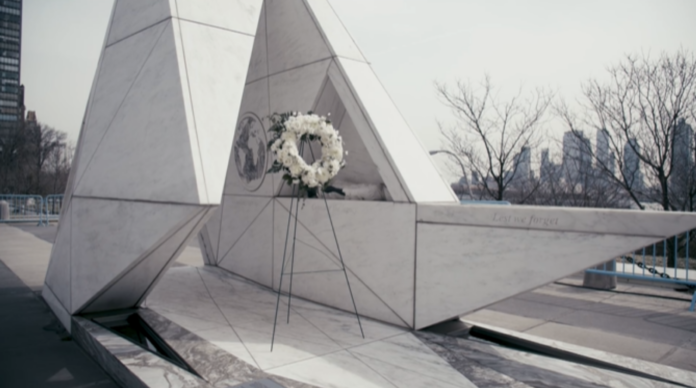
The United Nations General Assembly has reached a historic watershed, overwhelmingly adopting a resolution that designates the transatlantic slave trade as the “gravest crime against humanity.” Spearheaded by Ghana and championed by the African Union and Caribbean nations, the resolution secured 123 votes, with 52 nations – including the UK and EU members – abstaining. Only the US, Israel, and Argentina stood in direct opposition.
This landmark proclamation transcends mere symbolism. It issues a direct mandate for reparatory justice, encompassing formal apologies, financial restitution, and the return of plundered cultural artifacts. Though non-binding, the declaration wields immense moral and diplomatic weight, dismantling centuries of systemic denial to place justice at the center of the global agenda.
A new legal and moral compass
“By officially designating the transatlantic slave trade as the gravest crime in history, the international community has reached a turning point that fundamentally redefines the pursuit of global justice,” said Professor Godwin Sikanku, a leading scholar at the University of Media Arts and Communication in Ghana.
Dorbrene O’Marde, vice-chairperson of the CARICOM Reparations Commission, noted that this declaration anchors the movement within established international law while injecting a vital ethical dimension.
“It forces a global reckoning for nations currently evading their legal obligations to African descendants,” O’Marde asserted.
A living instrument for justice
Kenyan advocate and legal lecturer Evans Ogola argued that the resolution functions as critical “soft law”. He contended that it provides a “robust legal foundation for future arguments in international courts”, ensuring the document remains a living instrument for justice.
This achievement marks the climax of a decades-long journey from the Organization of African Unity (OAU) to the African Union. Under the leadership of President John Mahama, Ghana transformed continental discourse into a formalized global movement. This, according to Prof Sikanku, is a definitive template: “Maintaining a ‘one voice’ strategy is essential for transforming collective moral strength into structural change.”
Challenging the hierarchy of atrocities
Ogola highlighted a stark double standard in international justice, questioning why the world readily compensates Holocaust victims while remaining hesitant toward those of African descent.
“If the international community can rectify the horrors of the 20th century, there is no ethical excuse for denying justice to those enduring the legacy of the slave trade,” he noted.
He further argued that international law has long maintained a “hierarchy of crimes,” prioritizing genocide and war crimes while ignoring the systemic imbalances born from stolen labor.
O’Marde clarified that the UNGA decision does not create a new hierarchy of rights, but rather “recognizes the existing hierarchy of wrongs” that must finally be addressed.
Practical pathways for reparations
Looking forward, Prof. Sikanku envisioned an era of “negotiation as a unified bloc,” where reparations are linked to climate financing, debt restructuring, and trade.
O’Marde added that the movement is now moving toward a “full quantification” of compensation, addressing both the original crime and the “continuation of harms” following abolition.
Beyond financial claims, Ogola emphasised the urgency of restitution, utilising bilateral agreements and UNESCO mechanisms to recover ancestral remains and sacred objects from European museums.
Taking note of the commencement of the AU Decade of Reparations (2026–2036), Prof Sikanku called for a final pivot: shifting from a narrative of victimhood to one of strategic partnership. By anchoring justice in a Continental Reparative Fund, Africa can leverage its new “soft power” to demand the tech transfer and market access necessary to transform historical loss into a future of sustainable development.
A dark chapter in history
The transatlantic slave trade was one of the most brutal systems of forced migration in human history, spanning from the 16th to the 19th century. European powers transported more than 12-million Africans across the Atlantic Ocean to the Americas, where they were enslaved and subjected to inhumane conditions. This system was closely tied to the so-called Triangular Trade, a commercial network linking Europe, Africa, and the Americas: manufactured goods were shipped to Africa, enslaved people to the Americas, and raw materials such as sugar, cotton, and tobacco back to Europe.
The consequences were profound and long-lasting. Entire African societies were destabilized, with populations depleted and economies disrupted, while the wealth generated helped fuel industrial growth in Europe and the Americas. The legacy of slavery continues to shape global inequalities, racial injustices, and social divisions to this day.
- The UN General Assembly passed a landmark resolution designating the transatlantic slave trade as the "gravest crime against humanity," with 123 votes for, 52 abstentions, and only 3 opposing votes (US, Israel, Argentina).
- The resolution calls for reparatory justice including apologies, financial compensation, and the return of stolen cultural artifacts, carrying significant moral and diplomatic influence despite being non-binding.
- Advocates emphasize the resolution provides a new legal and ethical framework to challenge historical denial, promote reparations, and address a perceived double standard in international justice compared to other atrocities like the Holocaust.
- Future reparations discussions are expected to link issues such as climate finance, debt restructuring, and trade, while also focusing on cultural restitution via bilateral agreements and UNESCO.
- The resolution culminates decades of advocacy led by African and Caribbean nations and signals a shift towards strategic global partnerships to transform historic injustices into sustainable development opportunities.


