


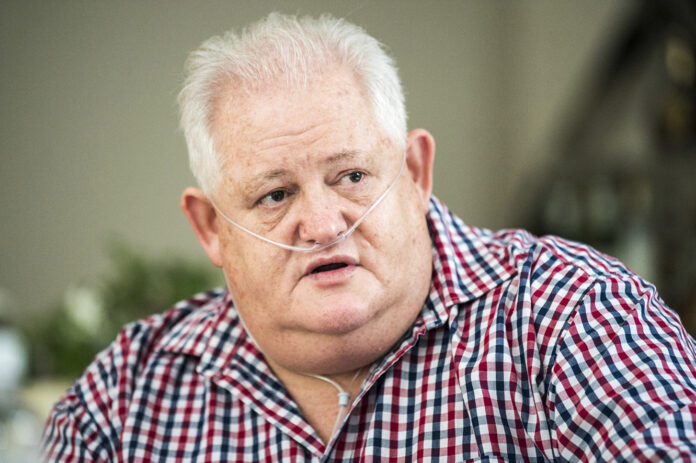
Angelo Agrizzi has accused the state of using his confession and cooperation to make him financially responsible for Bosasa’s entire criminal enterprise while politically connected figures escape prosecution.
Agrizzi said the R1.66-billion confiscation order granted against him represented Bosasa’s government contract turnover, rather than the proceeds he personally received from criminal activity.
His statement reveals a former insider who believes the state used the evidence he supplied to secure an extraordinary order against him, while failing to pursue powerful people he helped expose.
“The politically connected escape accountability, while the person who came forward takes the full brunt,” Agrizzi said.
“The whistleblower has become the scapegoat.”
Judge Mohamed Mosopa granted the confiscation order on October 29. Agrizzi announced that he would apply for leave to appeal against the judgment.
Agrizzi did not use the proposed appeal to disown his participation in Bosasa’s corruption or challenge the conviction flowing from his plea agreement.
“I do not dispute my conviction. I pleaded guilty, and I gave evidence before the Zondo Commission,” he said.
“The appeal concerns one question: how much money I actually received.”
Agrizzi said the state had effectively placed the financial consequences of Bosasa’s entire operation at the feet of an employee who neither owned shares nor served as a director.
Bosasa received the money
Agrizzi said the R1,666,582,825.73 represented the value of contracts awarded to Bosasa by the Department of Correctional Services.
“The R1,666,582,825.73 is not money I received,” he said.
“The State’s own heads of argument describe it as the value of the contracts the Department of Correctional Services awarded to Bosasa.”
Agrizzi served as Bosasa’s chief operating officer but said the government paid the contract revenue to the company, rather than to him personally.
“I was Bosasa’s chief operating officer, an employee. I was never a director or a shareholder of Bosasa,” he said.
“The contract payments were made to the company, not to me.”
Agrizzi said the National Prosecuting Authority (NPA)’s own statement confirmed that prosecutors asked the court to attribute the proceeds generated by the enterprise to him.
READ MORE: Court orders Agrizzi to pay R1.66 billion in Bosasa corruption proceeds
The NPA said the state had argued against “limiting the enquiry to amounts he personally retained”.
Agrizzi contends that the Prevention of Organised Crime Act limits confiscation to the value of the proceeds obtained by the defendant.
He said the figures presented by the state demonstrated the distance between his identified criminal benefit and the order ultimately granted.
The state valued the offences covered by his convictions at R1.43 million and placed the “known value” of his criminal activities at R7.12 million.
The curator placed the value of his entire realisable property at R26.75-million.
“The NPA itself acknowledges that the order does not mean R1.66-billion has been recovered,” Agrizzi said.
“It cannot be recovered from me, because I never had it.”
Insider who gave the state its evidence
Agrizzi’s broader complaint concerns what happened after he opened Bosasa’s internal operations to investigators and the Zondo Commission.
He said his November 2025 plea and sentence agreement rested on his continued cooperation with the Investigating Directorate Against Corruption.
His imprisonment was suspended on condition that he assisted the state with prosecutions arising from the Bosasa corruption network.
“I have honoured that agreement,” Agrizzi said.
“I prepared detailed evidence for the State, and I have given evidence in the prosecution of others.”
READ MORE: Former Bosasa boss Angelo Agrizzi pleads guilty in graft case, sentenced to 10 years
Agrizzi said he had repeatedly approached justice ministers, prosecutors, the investigating directorate and the National Director of Public Prosecutions since 2024.
He raised concerns about continuing delays and asked whether the authorities had issued Interpol Red Notices for people identified in the Bosasa investigations.
“The contemporaneous record speaks for itself. Sadly, there has been little or no follow-up action,” he said.
Agrizzi said he was recently informed that evidence he had prepared and handed to the authorities had been damaged.
The allegation raises questions about the preservation of evidence intended for outstanding Bosasa-related prosecutions and the progress made against other identified figures.
Politically connected remain untouched
Agrizzi said the Zondo Commission had recommended investigations into politically connected people, office-bearers and individuals linked to Bosasa and the Watson family.
However, he said the most senior politically connected people identified through the process had not been charged almost eight years after his initial testimony.
“The only convictions I am aware of have come through plea agreements,” he said.
Agrizzi said a former Bosasa director whom the commission recommended for investigation had since joined the board of a provincial government agency.
He said other former Bosasa executives implicated in the commission’s findings remained employed by companies that took over Bosasa’s operations.
READ MORE: Justice minister probes missing Bosasa evidence after documents destroyed in fire
Against that background, Agrizzi presents the confiscation order as more than a dispute about the calculation of criminal proceeds.
He argues that it represents an accountability system concentrating the consequences of Bosasa’s corruption on the insider who confessed while struggling to reach the network he exposed.
“As far as I am aware, I am the only person who has been ordered to account in this way,” he said.
Agrizzi maintained that he supported the recovery of criminal proceeds but wanted the confiscation order limited to the benefit he actually received.
“I ask only that a confiscation order reflect what I actually received, as the law requires,” he said.
- Angelo Agrizzi has challenged a R1.66 billion confiscation order, arguing it represents Bosasa’s contract turnover, not the criminal proceeds he personally received.
- The confiscation order was granted by Judge Mohamed Mosopa on October 29, and Agrizzi intends to appeal specifically on the amount he is held financially responsible for.
- Agrizzi admitted his guilt through a plea agreement, cooperated with the Zondo Commission, and provided evidence against others in the Bosasa corruption network.
- He claims politically connected individuals linked to Bosasa identified by the Zondo Commission remain uncharged and have avoided prosecution nearly eight years after his testimony.
- Agrizzi alleges evidence he prepared for further prosecutions has been damaged and criticizes the justice system for focusing accountability on him while more influential figures evade consequences.
Angelo Agrizzi has accused the state of using his confession and cooperation to make him financially responsible for Bosasa’s entire criminal enterprise while politically connected figures escape prosecution.
Agrizzi said the R1.66-billion confiscation order granted against him represented Bosasa’s government contract turnover, rather than the proceeds he personally received from criminal activity.
His statement reveals a former insider who believes the state used the evidence he supplied to secure an extraordinary order against him, while failing to pursue powerful people he helped expose.
“The politically connected escape accountability, while the person who came forward takes the full brunt,” Agrizzi said.
“The whistleblower has become the scapegoat.”
Judge Mohamed Mosopa granted the confiscation order on October 29. Agrizzi announced that he would apply for leave to appeal against the judgment.
Agrizzi did not use the proposed appeal to disown his participation in Bosasa’s corruption or challenge the conviction flowing from his plea agreement.
“I do not dispute my conviction. I pleaded guilty, and I gave evidence before the Zondo Commission,” he said.
“The appeal concerns one question: how much money I actually received.”
Agrizzi said the state had effectively placed the financial consequences of Bosasa’s entire operation at the feet of an employee who neither owned shares nor served as a director.
Agrizzi said the R1,666,582,825.73 represented the value of contracts awarded to Bosasa by the Department of Correctional Services.
“The R1,666,582,825.73 is not money I received,” he said.
“The State’s own heads of argument describe it as the value of the contracts the Department of Correctional Services awarded to Bosasa.”
Agrizzi served as Bosasa’s chief operating officer but said the government paid the contract revenue to the company, rather than to him personally.
“I was Bosasa’s chief operating officer, an employee. I was never a director or a shareholder of Bosasa,” he said.
“The contract payments were made to the company, not to me.”
Agrizzi said the National Prosecuting Authority (NPA)'s own statement confirmed that prosecutors asked the court to attribute the proceeds generated by the enterprise to him.
READ MORE: Court orders Agrizzi to pay R1.66 billion in Bosasa corruption proceeds
The NPA said the state had argued against “limiting the enquiry to amounts he personally retained”.
Agrizzi contends that the Prevention of Organised Crime Act limits confiscation to the value of the proceeds obtained by the defendant.
He said the figures presented by the state demonstrated the distance between his identified criminal benefit and the order ultimately granted.
The state valued the offences covered by his convictions at R1.43 million and placed the “known value” of his criminal activities at R7.12 million.
The curator placed the value of his entire realisable property at R26.75-million.
“The NPA itself acknowledges that the order does not mean R1.66-billion has been recovered,” Agrizzi said.
“It cannot be recovered from me, because I never had it.”
Agrizzi’s broader complaint concerns what happened after he opened Bosasa’s internal operations to investigators and the Zondo Commission.
He said his November 2025 plea and sentence agreement rested on his continued cooperation with the Investigating Directorate Against Corruption.
His imprisonment was suspended on condition that he assisted the state with prosecutions arising from the Bosasa corruption network.
“I have honoured that agreement,” Agrizzi said.
“I prepared detailed evidence for the State, and I have given evidence in the prosecution of others.”
READ MORE: Former Bosasa boss Angelo Agrizzi pleads guilty in graft case, sentenced to 10 years
Agrizzi said he had repeatedly approached justice ministers, prosecutors, the investigating directorate and the National Director of Public Prosecutions since 2024.
He raised concerns about continuing delays and asked whether the authorities had issued Interpol Red Notices for people identified in the Bosasa investigations.
“The contemporaneous record speaks for itself. Sadly, there has been little or no follow-up action,” he said.
Agrizzi said he was recently informed that evidence he had prepared and handed to the authorities had been damaged.
The allegation raises questions about the preservation of evidence intended for outstanding Bosasa-related prosecutions and the progress made against other identified figures.
Agrizzi said the Zondo Commission had recommended investigations into politically connected people, office-bearers and individuals linked to Bosasa and the Watson family.
However, he said the most senior politically connected people identified through the process had not been charged almost eight years after his initial testimony.
“The only convictions I am aware of have come through plea agreements,” he said.
Agrizzi said a former Bosasa director whom the commission recommended for investigation had since joined the board of a provincial government agency.
He said other former Bosasa executives implicated in the commission’s findings remained employed by companies that took over Bosasa’s operations.
READ MORE: Justice minister probes missing Bosasa evidence after documents destroyed in fire
Against that background, Agrizzi presents the confiscation order as more than a dispute about the calculation of criminal proceeds.
He argues that it represents an accountability system concentrating the consequences of Bosasa’s corruption on the insider who confessed while struggling to reach the network he exposed.
“As far as I am aware, I am the only person who has been ordered to account in this way,” he said.
Agrizzi maintained that he supported the recovery of criminal proceeds but wanted the confiscation order limited to the benefit he actually received.
“I ask only that a confiscation order reflect what I actually received, as the law requires,” he said.


