


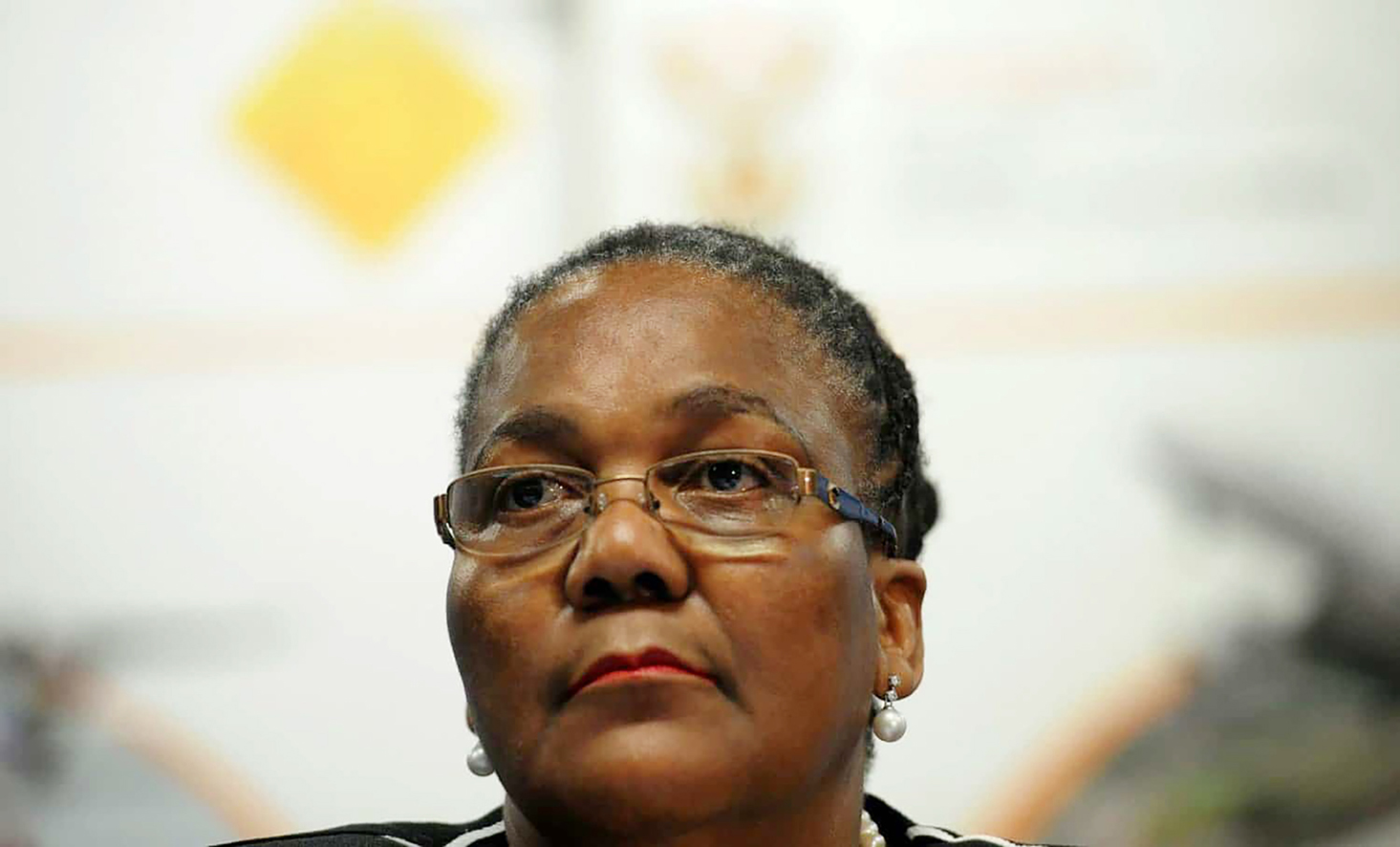
Sol Plaatje Municipality Speaker Dipuo Peters has pointed to a funding crisis and administrative lapses to explain Kimberley’s failing services, saying the blame for the city’s shortcomings cannot be placed only on the ANC.
This is despite the party governing the city with a majority for 27 years before losing control of the council in 2021.
Peters, redeployed by the ANC about 20 months ago to help stabilise the council amid internal tensions, said: “I don’t want to say the ANC alone [is responsible for service delivery failures].
“Remember there are committees of council where the MMCs sit with different councillors. That’s where decisions are made. And the input of all the councillors, irrespective of whether they are ward councillors or PR [party representatives] they need to make input so as to be able to make sure that we churn out the decisions and programmes that we need.”
The ANC now holds 32 of the council’s 65 seats, one short of an outright majority. The DA has 14 seats, the EFF six, the Patriotic Alliance four, the Sol Plaatjie Service Delivery Forum and VF Plus three each, GOOD two and the ACDP one. The ANC is in a coalition with the PA.
Budget under pressure
Peters said the municipality’s annual budget of about R3.7-billion was under pressure, with almost the equivalent owed to it by households, businesses and government departments and entities. National and provincial government departments alone owed more than R1-billion.
Residents face water interruptions, sewage spills, potholes and electricity outages, while much of the city’s infrastructure is more than 50 years old.
Peters said the municipality had secured more than R2.5-billion through the National Budget Facility for Infrastructure for water projects, which she expects to improve supply and quality once completed.
Service delivery problems
Kimberley residents have faced severe water interruptions for close to a decade. And they have had to buy drinking water over fears that tap water is not suitable for consumption.
Sanitation remains a major concern, with ageing pipes contributing to blockages and sewage spills. The municipality has applied for national funding for infrastructure, including a proposed second major wastewater treatment plant, but the application has not yet been approved.
Road repairs are also constrained by limited funding. Peters said about R20-million had been allocated for resurfacing, pothole repairs and upgrades in the 2026/27 financial year.
She also cited a 46% vacancy rate in the water and sanitation division, saying shortages of engineers and other technical specialists were affecting the ability to maintain infrastructure.
Peters said councillors lack basic admin support, including personal assistants (PAs), making it difficult for them to carry out their duties effectively.
“The poor councillor works from his or her home. No office, nothing,” she said. She suggested that administrative support could be shared, with one PA assisting four or five councillors.
Peters, however, acknowledged that the ANC needed to improve its relationship with communities and pay greater attention to the people it selected to represent residents.
“Our people say they love the African National Congress, but the people that the ANC sent to go and do work on behalf of the ANC – it’s what is a problem.”
‘ANC will never die’
Asked about perceptions that the ANC was in decline, Peters said “the ANC will never die”, arguing that it remained responsible for tackling unemployment, economic growth and historical inequalities.
Her remarks come as residents demand reliable basic services and accountable leadership in a city struggling to overcome longstanding challenges.
Tebogo Obusitse, touted as the party’s mayoral candidate, is associated with the Operation Wanya Tsotsi initiative and is eighth on the ANC’s proportional representation list. Mayor Martha Bartlett does not feature as a nominee.
The ANC faces a crowded contest in Sol Plaatje, where 25 parties are vying for positions on the 65-seat council.
The municipality enters the election period after a turbulent spell marked by disputes over the municipal manager’s suspension and provincial government intervention aimed at addressing governance difficulties.
“Most of the time in this council, we have seen eye-to-eye on many things,” Peters said. “The only thing was … how to manage the people in the administration, the relationship between the councillors and the MMCs, [and] the interpersonal relations between the councillors.”
- Sol Plaatje Municipality Speaker Dipuo Peters attributed Kimberley's service failures to funding crises and administrative lapses, rather than solely blaming the ANC.
- The ANC holds 32 of the 65 council seats and is in coalition with the Patriotic Alliance, while the city's annual budget is about R3.7 billion with over R1 billion owed by government departments.
- Kimberley has faced nearly a decade of severe water interruptions, sewage spills, and ageing infrastructure, with a 46% vacancy rate in the water and sanitation division impairing maintenance.
- About R20 million was allocated for road repairs in the 2026/27 financial year, and over R2.5 billion was secured for water projects expected to improve supply and quality.
- The ANC's mayoral candidate is Tebogo Obusitse, while current mayor Martha Bartlett is not nominated; the municipality is preparing for elections with 25 parties contesting 65 council seats.


