


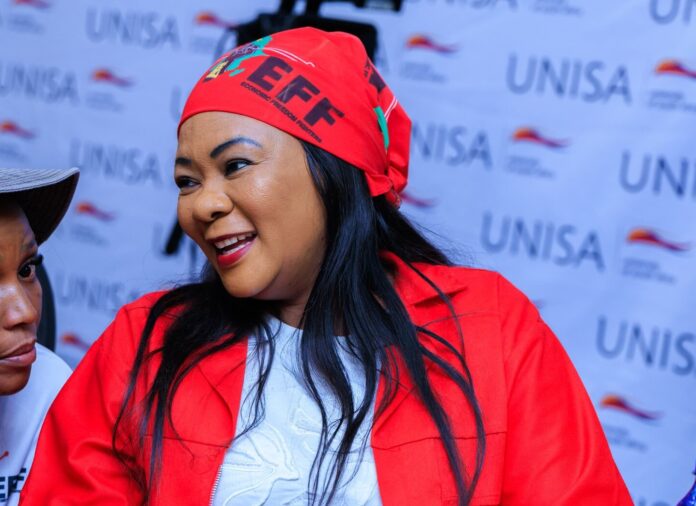
Economic Freedom Fighters (EFF) mayoral candidate Omphile Maotwe and her African National Congress (ANC) counterpart, Tlangi Mogale, have challenged patriarchal attitudes towards women in leadership, pushing back against gendered questioning during a Tshwane mayoral debate.
This was during a debate held at the University of South Africa (Unisa) in Pretoria on Wednesday evening ahead of the November 4 local elections.
The topic was prompted after Senior Lecturer of Media and Communications at Unisa, Dr Trevor Hlungwani directed a question about voter engagement and unemployment specifically to the female mayoral candidates, asking what women residents were telling them as they campaigned ahead of the November 4 local government elections.
He cited figures suggesting that Tshwane had about four million residents, approximately 1.5 million registered voters are women.
READ: Tshwane gastrointestinal illness cases rise to 833, confirms Water Minister
“I want the female mayoral candidates to respond to this one. As you engage with voters, one of the things that they say they’re voting for. So, the context of the unemployment rate in the city, the second quarter survey shows that about 34% of city residents are unemployed. What are the things that are coming out as we engage with the voters?” he further probed.
Maotwe, who is campaigning for the red berets to take control of the City of Tshwane, was particularly blunt in her response, describing the question as sexist and questioning why candidates who are men were not subjected to similar scrutiny about their readiness to lead.
“It’s a very sexist question, once to say women. The question earlier on was, are the women ready to lead? No one is asking a question, are males ready to lead?” she said.
“We are here because we are capable, not because we are balancing gender.”
Her remarks challenged the suggestion that women candidates should have to justify their leadership ambitions through the lens of gender, rather than their policies and ability to address the city’s problems.
Mogale echoed Maotwe’s concerns, saying the discussion around gender was problematic and that society needed to move away from patriarchal attitudes.
“I must echo the same sentiments that as far as gender, that discussion is very problematic,” Mogale said.
“We need to move away from such patriarchal attitudes.”
The exchange came as candidates were asked about the concerns of Tshwane residents, including unemployment and the delivery of basic services.
Maotwe used her response to highlight the plight of residents living in informal settlements, arguing that the city’s service delivery failures had left communities without the dignity and opportunities enjoyed by residents in more affluent areas.
She pointed to the more than 500 informal settlements in Tshwane, arguing that some communities had waited decades for formalisation and reliable basic services.
Winterveld, she said, had remained a settlement for more than 30 years without being properly formalised.
Maotwe argued that residents in an area such as Winterveld deserved access to water, sanitation, electricity and investment, just as residents in wealthier areas such as Silver Lakes, Menlyn and Waterkloof did.
READ: Tshwane boss escapes most charges as metro woes deepens
She said the city needed to confront the inequality that continued to shape residents’ daily lives, insisting that communities could not be left behind while other parts of the capital enjoyed better services and infrastructure.
For Mogale, the debate also presented an opportunity to outline the ANC’s plans to tackle unemployment and broaden economic opportunities.
She said the party’s economic revitalisation strategy was intended to stimulate growth and create jobs, while the city’s youth unit needed to be revived to better support young people.
Mogale also called for procurement opportunities to be directed towards young people, women and local businesses, arguing that municipal spending should contribute to economic empowerment.
She said the Tshwane Economic Development Agency should strengthen its programmes to help more residents and businesses participate in the local economy.
The debate also featured candidates from the Freedom Front Plus, the Democratic Alliance and ActionSA. The full replay of the debate can be watched below:
- EFF mayoral candidate Omphile Maotwe and ANC counterpart Tlangi Mogale challenged patriarchal attitudes and gendered questioning during a Tshwane mayoral debate at Unisa ahead of the November 4 local elections.
- The female candidates were asked specifically about voter engagement and unemployment among women residents by Dr Trevor Hlungwani, citing Tshwane's approximately 1.5 million registered female voters out of four million residents.
- Maotwe described the question as sexist and argued women are in the race because they are capable, not to balance gender, while Mogale critiqued the patriarchal framing of the discussion.
- Maotwe highlighted the plight of more than 500 informal settlements in Tshwane, emphasizing inequalities in service delivery compared to wealthier areas like Silver Lakes, Menlyn, and Waterkloof.
- Mogale outlined the ANC’s strategy to tackle unemployment through economic revitalisation, youth unit revival, promoting procurement for women, youth, and local businesses, and strengthening the Tshwane Economic Development Agency’s programs.
Economic Freedom Fighters (EFF) mayoral candidate Omphile Maotwe and her African National Congress (ANC) counterpart, Tlangi Mogale, have challenged patriarchal attitudes towards women in leadership, pushing back against gendered questioning during a Tshwane mayoral debate.
This was during a debate held at the University of South Africa (Unisa) in Pretoria on Wednesday evening ahead of the November 4 local elections.
The topic was prompted after Senior Lecturer of Media and Communications at Unisa, Dr Trevor Hlungwani directed a question about voter engagement and unemployment specifically to the female mayoral candidates, asking what women residents were telling them as they campaigned ahead of the November 4 local government elections.
He cited figures suggesting that Tshwane had about four million residents, approximately 1.5 million registered voters are women.
READ: Tshwane gastrointestinal illness cases rise to 833, confirms Water Minister
"I want the female mayoral candidates to respond to this one. As you engage with voters, one of the things that they say they're voting for. So, the context of the unemployment rate in the city, the second quarter survey shows that about 34% of city residents are unemployed. What are the things that are coming out as we engage with the voters?" he further probed.
Maotwe, who is campaigning for the red berets to take control of the City of Tshwane, was particularly blunt in her response, describing the question as sexist and questioning why candidates who are men were not subjected to similar scrutiny about their readiness to lead.
“It’s a very sexist question, once to say women. The question earlier on was, are the women ready to lead? No one is asking a question, are males ready to lead?” she said.
“We are here because we are capable, not because we are balancing gender.”
Her remarks challenged the suggestion that women candidates should have to justify their leadership ambitions through the lens of gender, rather than their policies and ability to address the city’s problems.
Mogale echoed Maotwe’s concerns, saying the discussion around gender was problematic and that society needed to move away from patriarchal attitudes.
“I must echo the same sentiments that as far as gender, that discussion is very problematic,” Mogale said.
“We need to move away from such patriarchal attitudes.”
The exchange came as candidates were asked about the concerns of Tshwane residents, including unemployment and the delivery of basic services.
Maotwe used her response to highlight the plight of residents living in informal settlements, arguing that the city’s service delivery failures had left communities without the dignity and opportunities enjoyed by residents in more affluent areas.
She pointed to the more than 500 informal settlements in Tshwane, arguing that some communities had waited decades for formalisation and reliable basic services.
Winterveld, she said, had remained a settlement for more than 30 years without being properly formalised.
Maotwe argued that residents in an area such as Winterveld deserved access to water, sanitation, electricity and investment, just as residents in wealthier areas such as Silver Lakes, Menlyn and Waterkloof did.
READ: Tshwane boss escapes most charges as metro woes deepens
She said the city needed to confront the inequality that continued to shape residents’ daily lives, insisting that communities could not be left behind while other parts of the capital enjoyed better services and infrastructure.
For Mogale, the debate also presented an opportunity to outline the ANC’s plans to tackle unemployment and broaden economic opportunities.
She said the party’s economic revitalisation strategy was intended to stimulate growth and create jobs, while the city’s youth unit needed to be revived to better support young people.
Mogale also called for procurement opportunities to be directed towards young people, women and local businesses, arguing that municipal spending should contribute to economic empowerment.
She said the Tshwane Economic Development Agency should strengthen its programmes to help more residents and businesses participate in the local economy.
The debate also featured candidates from the Freedom Front Plus, the Democratic Alliance and ActionSA. The full replay of the debate can be watched below:


