


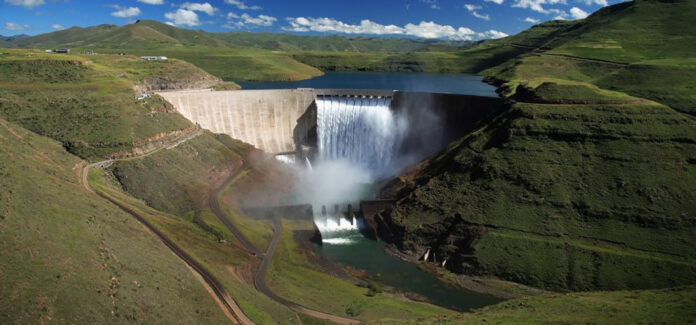
President Cyril Ramaphosa’s State of the Nation address (Sona) moved to prioritise Gauteng’s water crisis, but senior officials inside the system say the deeper structural problem demanding his urgent attention is the continued delay of the multibillion-rand Lesotho Highlands Water Project and how it has paralysed plans to expand supply to South Africa’s economic hub.
Speaking anonymously to Sunday World, officials said the stalled project has blocked municipalities and bulk suppliers from increasing capacity because new licences to expand supply can only be issued if there is a confirmed additional source of raw water. With the Lesotho project incomplete, that source does not exist.
“The source of all Gauteng water problems is the continued delay of the Lesotho Highlands Water Project,” one official said. “Every water strategy for Gauteng is centred around that project.”
The warning comes as water shortages intensify across Gauteng and nationally. Just hours before Ramaphosa delivered his 2026 Sona, the South African Human Rights Commission called for the deepening water crisis to be declared a national disaster, warning that persistent shortages now threaten dignity, health, education and economic activity.
Johannesburg – the country’s economic engine – has in recent weeks been hit by widespread outages, fuelling protests and public anger.
Ramaphosa used his address to elevate water to the centre of the national agenda, describing it as a flashpoint for social instability and instructing ministers responsible for water and cooperative governance to skip Sona and focus on stabilising
Gauteng’s system.
“In addition to crime, water is now the single most important issue for many people in South Africa,” Ramaphosa said.
But while the government has emphasised governance failures and neglected infrastructure, the senior official said the structural constraint lies in the absence of new bulk supply into Gauteng.
The Lesotho Highlands Water Project – a partnership between South Africa and Lesotho to transfer water from the Orange-Senqu River basin to Gauteng while generating hydropower for Lesotho – is designed to significantly increase supply to the region.
The project aims to raise annual water delivery to about 1.26-billion cubic metres and is estimated to cost roughly R53-billion.
A spat between Lesotho and Namibia over access to the Orange River could further delay Phase 2 of the project.
The project was previously expected to be completed around 2024, but revised timelines now point to about 2030.
“That is another six-year delay. It compromises everything else that municipalities and bulk suppliers such as Joburg Water and Rand Water would be doing. You simply can’t survive without that additional supply,” the official said.
The delay has created a structural bottleneck across the system because utilities cannot expand supply without approval from the Department of Water and Sanitation – and that approval depends on available raw water.
“Gauteng’s population continues to grow, but Rand Water and Joburg Water cannot expand the amount of water they provide because that requires a licence from the department,” said the official.
“That licence is only granted when there is a confirmed source of water from which you can draw to expand.
“At the moment, because the Lesotho Highlands project is incomplete, there is no additional water coming into the system. So nobody can apply for expansion licences.”
This has left the province trapped between rising demand and static supply.
“On the one side, the population keeps growing. On the other side, supply cannot grow because the source of additional water has not been completed. That is the main driver of what we are currently experiencing,” the person said.
Maintenance and operational disruptions, often blamed for outages, are being worsened by the absence of reserve water in the system, another source added.
“When maintenance is done, there must be sufficient water in the reservoirs to carry residents through that period. But because there is no reserve water in the system, when they shut down for maintenance, everything is cut,” the official said.
“When pumping resumes, it takes time to refill the reservoirs and stabilise supply. That is why residents experience prolonged outages even after maintenance is completed.”
Ramaphosa acknowledged that the crisis is deeply rooted and warned there was “no silver bullet” after years of infrastructure neglect.
He announced a National Water Crisis Committee, which he will chair, and signalled tougher accountability measures, including the possibility of criminal charges against municipalities and officials who fail to deliver a reliable supply.
Visit SW YouTube Channel for our video content


