


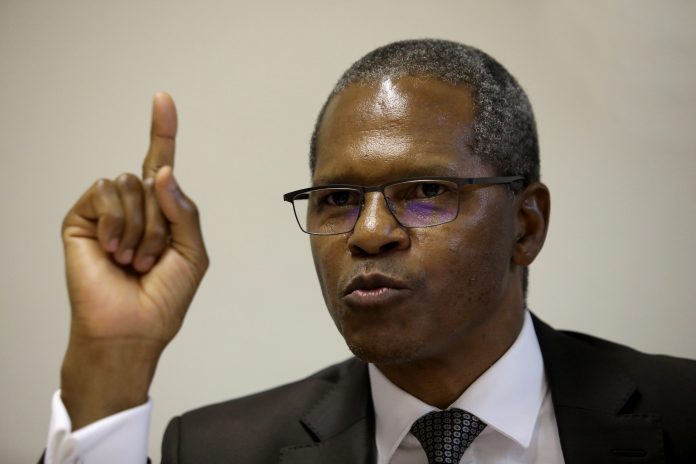
Cooperative Governance Minister Velenkosini Hlabisa wants competency standards for municipal political office-bearers, warning that professional administrators cannot rescue councils led by politicians who cannot master laws, budgets and plans.
Hlabisa said the revised White Paper on Local Government already embraced professionalisation in municipal administrations. Government must now apply a similar principle to the mayors, speakers and other politicians who direct them.
“Introduce certain competency levels for office-bearers so that you ensure that you have competent people to occupy the leadership position in council,” he said.
He said capable politicians should “complement professionalised staff” and hold officials accountable.
READ MORE: Nearly two-thirds of South Africa’s 2026 councillors are new to office
Hlabisa made the proposal during a Sunday World and National Press Club discussion on making coalitions and municipalities work.
He said political leaders needed enough education to read and understand the laws governing councils. They must also interrogate technical documents and make informed decisions.
However, he stopped short of demanding degrees for every councillor.
Hlabisa said:
He argued that imposing a formal academic qualification could violate constitutional political rights.
Degrees cannot guarantee clean government
Hlabisa said qualifications alone could not produce ethical leadership or prevent theft.
He said:
“We have many educated people who are corrupt, with degrees, robbing the public.”
He instead called for leaders who combine literacy, judgment, integrity and a commitment to public service.
“An enlightened councillor is a better public representative,” Hlabisa said.
He urged elected representatives to use their knowledge “not to rob our people, but to benefit our people”. Hlabisa placed the main screening duty on political parties because they choose candidates and nominate council office-bearers.
“The onus lies with political parties,” he said. “The people whom they deploy must be people they know are going to serve our people.”
READ MORE: ANC set matric and clean-record requirements for prospective councillors
He said parties should select leaders capable of understanding council documents and planning far beyond an electoral term.
“The right mayor knows that he or she has five years, but must lay the groundwork for the next 30 years,” Hlabisa said.
Salga president Bheki Stofile went further, saying political parties carry most responsibility for councillors’ conduct.
“The ethical behaviour must start from political parties,” Stofile said.
He said the deploying party “must bear 70% of the responsibility” for ethical leadership and lawful government.
Unspent money betrays communities
The debate connected weak political leadership directly to municipal underspending and collapsing services.
National Press Club chairperson Lizelle de Bruin said repeated Auditor-General findings exposed an accountability failure, not simply a shortage of money.
“There was money available. It was just not spent,” she said, referring to councils that returned infrastructure funds while residents endured broken services.
De Bruin warned that persistent failure could leave people “losing faith in democracy”. Hlabisa said stronger municipal funding would achieve little without capable leaders.
“You can give them money, but if they are not competent, it will go back to Treasury,” he said.
READ MORE: Ten North West municipalities ask to carry over unspent grants
Stofile rejected any suggestion that returning unspent allocations showed financial discipline.
“It is not an achievement. It is a disservice to communities,” he said.
He described returned money as evidence of weak oversight and a failure to ensure that funding reached its intended communities. Together, their argument turns competency from an abstract hiring principle into a service-delivery test. Councils must spend available money lawfully, oversee professional officials and build infrastructure that residents can see and use.
His proposal leaves political parties with an immediate test. They must show whether the people they place in control of councils can understand public money, challenge officials and turn five-year mandates into long-term municipal plans.
- Cooperative Governance Minister Velenkosini Hlabisa advocates for competency standards for municipal political office-bearers to ensure they understand laws, budgets, and plans.
- Hlabisa believes competent politicians should complement professional administrators and hold them accountable, but he opposes imposing formal academic degrees on all councillors.
- Political parties are primarily responsible for selecting leaders who are capable of understanding council documents and planning beyond electoral terms, according to Hlabisa.
- Weak political leadership is linked to municipal underspending and service collapse, with returned unspent funds seen as a failure to deliver services to communities.
- Salga president Bheki Stofile states that political parties bear 70% responsibility for ethical leadership and lawful governance in municipalities.
Cooperative Governance Minister Velenkosini Hlabisa wants competency standards for municipal political office-bearers, warning that professional administrators cannot rescue councils led by politicians who cannot master laws, budgets and plans.
Hlabisa said the revised White Paper on Local Government already embraced professionalisation in municipal administrations. Government must now apply a similar principle to the mayors, speakers and other politicians who direct them.
“Introduce certain competency levels for office-bearers so that you ensure that you have competent people to occupy the leadership position in council,” he said.
He said capable politicians should “complement professionalised staff” and hold officials accountable.
READ MORE: Nearly two-thirds of South Africa’s 2026 councillors are new to office
Hlabisa made the proposal during a Sunday World and National Press Club discussion on making coalitions and municipalities work.
He said political leaders needed enough education to read and understand the laws governing councils. They must also interrogate technical documents and make informed decisions.
However, he stopped short of demanding degrees for every councillor.
Hlabisa said:
He argued that imposing a formal academic qualification could violate constitutional political rights.
Hlabisa said qualifications alone could not produce ethical leadership or prevent theft.
He said:
“We have many educated people who are corrupt, with degrees, robbing the public.”
He instead called for leaders who combine literacy, judgment, integrity and a commitment to public service.
“An enlightened councillor is a better public representative,” Hlabisa said.
He urged elected representatives to use their knowledge “not to rob our people, but to benefit our people”. Hlabisa placed the main screening duty on political parties because they choose candidates and nominate council office-bearers.
“The onus lies with political parties,” he said. “The people whom they deploy must be people they know are going to serve our people.”
READ MORE: ANC set matric and clean-record requirements for prospective councillors
He said parties should select leaders capable of understanding council documents and planning far beyond an electoral term.
“The right mayor knows that he or she has five years, but must lay the groundwork for the next 30 years,” Hlabisa said.
Salga president Bheki Stofile went further, saying political parties carry most responsibility for councillors’ conduct.
“The ethical behaviour must start from political parties,” Stofile said.
He said the deploying party “must bear 70% of the responsibility” for ethical leadership and lawful government.
The debate connected weak political leadership directly to municipal underspending and collapsing services.
National Press Club chairperson Lizelle de Bruin said repeated Auditor-General findings exposed an accountability failure, not simply a shortage of money.
“There was money available. It was just not spent,” she said, referring to councils that returned infrastructure funds while residents endured broken services.
De Bruin warned that persistent failure could leave people “losing faith in democracy”. Hlabisa said stronger municipal funding would achieve little without capable leaders.
“You can give them money, but if they are not competent, it will go back to Treasury,” he said.
READ MORE: Ten North West municipalities ask to carry over unspent grants
Stofile rejected any suggestion that returning unspent allocations showed financial discipline.
“It is not an achievement. It is a disservice to communities,” he said.
He described returned money as evidence of weak oversight and a failure to ensure that funding reached its intended communities. Together, their argument turns competency from an abstract hiring principle into a service-delivery test. Councils must spend available money lawfully, oversee professional officials and build infrastructure that residents can see and use.
His proposal leaves political parties with an immediate test. They must show whether the people they place in control of councils can understand public money, challenge officials and turn five-year mandates into long-term municipal plans.


