


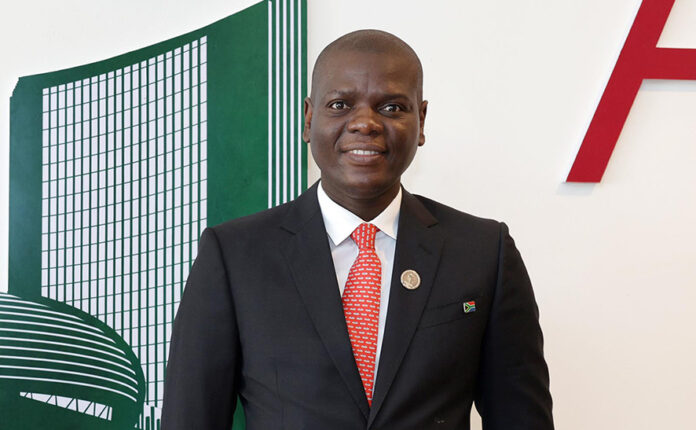
South Africa’s push for a permanent African seat on the United Nations Security Council (UNSC) is not simply about feeling included at the diplomatic table.
For International Relations and Cooperation Minister Ronald Lamola, it is about putting the continent that bears much of the burden of the world’s conflicts in the room where decisions about them are made.
Speaking during discussion by the Council on Foreign Relations on the sidelines of the UN General Assembly in New York on Wednesday, Lamola argued that Africa’s absence from the permanent membership of the Security Council was increasingly difficult to justify.
“Most of those conflicts, and one of the biggest humanitarian crises, Sudan, DRC, and many parts of the continent, are what constitutes the agenda of the UN Security Council,” Lamola said.
“That’s why we need to be there so that it can have the legitimacy. It can have the currency of relevancy by people who are affected being there offering solutions.”
The issue has gained renewed momentum as countries debate whether an institution created after the Second World War still reflects the geopolitical realities of the modern world.
The UN Secretary-General has previously pointed out that most African countries were still under colonial rule when the Security Council was established in 1945 and had no voice in international affairs.
The UN’s 2024 Pact for the Future subsequently identified addressing Africa’s historical under-representation as a priority in Security Council reform. The agreement calls for a Council that is more representative, inclusive, transparent, effective and accountable.
Lamola acknowledged that the UN Security Council has been criticised for its failures to resolve some of the world’s most persistent conflicts, while the African Union has increasingly been called upon to respond to crises on the continent.
That raises a fundamental question: if African institutions are already doing much of the peacekeeping work, why should the continent continue investing political and financial resources in a global institution that does not give it permanent representation?
Lamola pushes for collaboration
Lamola’s answer is that the solution is not to abandon multilateralism.
Instead, South Africa wants both the UN and African institutions to work more effectively.
“The world is fractured, and we’re still running after the Security Council, when the African Union and the Africa Continental Free Trade Agreement and African institutions are right there to be empowered by African states,” he said.
South Africa wants stronger African institutions while simultaneously pushing for reform of global institutions.
Lamola said South Africa’s participation in African Union peace missions demonstrated why the continent needed greater influence over the international system.
“We support, we work with the African Union, including to contribute not only with our resources, but also with the expertise diplomatically, and if necessary, through our peacekeeping missions,” he said.
Lamola said African countries had often carried the cost of peacekeeping operations themselves, sometimes drawing on their national budgets, while UN-backed missions elsewhere could receive funding through the international system.
He pointed to a recent UN resolution on financing and reimbursing African-led peacekeeping missions as an example of why Africa needs a stronger voice within the Security Council.
“We have been carrying them on our own, at our own cost,” he said.
The argument fits into South Africa’s broader foreign policy push for a more representative multilateral system.
The African Union’s current position calls for at least two permanent African seats on an expanded Security Council, with the veto extended to new permanent members if the veto is retained.
Africa already makes up 28% of UN membership, while the continent has no permanent member on the 15-member Security Council.
During a 2024 high-level debate, UN officials and African leaders described this as a longstanding imbalance, with African states calling for two permanent seats and additional non-permanent representation.
The African model was formally submitted to the UN in 2026.
- South Africa is advocating for a permanent African seat on the United Nations Security Council to ensure the continent affected by many conflicts has a voice in decision-making.
- Minister Ronald Lamola highlighted that Africa's absence from permanent UNSC membership is difficult to justify, given the continent's involvement in many of the Council's conflict agendas such as Sudan and DRC.
- The UN's 2024 Pact for the Future prioritizes addressing Africa's historical under-representation on the Security Council, calling for a more inclusive and representative body.
- South Africa supports strengthening African institutions like the African Union alongside pushing for reforms in global institutions to enhance cooperation and influence.
- The African Union advocates for at least two permanent African seats on an expanded Security Council, including veto rights if retained, reflecting Africa's 28% share of UN membership but absence from permanent UNSC seats.
South Africa’s push for a permanent African seat on the United Nations Security Council (UNSC) is not simply about feeling included at the diplomatic table.
For International Relations and Cooperation Minister Ronald Lamola, it is about putting the continent that bears much of the burden of the world’s conflicts in the room where decisions about them are made.
Speaking during discussion by the Council on Foreign Relations on the sidelines of the UN General Assembly in New York on Wednesday, Lamola argued that Africa’s absence from the permanent membership of the Security Council was increasingly difficult to justify.
“Most of those conflicts, and one of the biggest humanitarian crises, Sudan, DRC, and many parts of the continent, are what constitutes the agenda of the UN Security Council,” Lamola said.
“That’s why we need to be there so that it can have the legitimacy. It can have the currency of relevancy by people who are affected being there offering solutions.”
The issue has gained renewed momentum as countries debate whether an institution created after the Second World War still reflects the geopolitical realities of the modern world.
The UN Secretary-General has previously pointed out that most African countries were still under colonial rule when the Security Council was established in 1945 and had no voice in international affairs.
The UN’s 2024 Pact for the Future subsequently identified addressing Africa’s historical under-representation as a priority in Security Council reform. The agreement calls for a Council that is more representative, inclusive, transparent, effective and accountable.
Lamola acknowledged that the UN Security Council has been criticised for its failures to resolve some of the world’s most persistent conflicts, while the African Union has increasingly been called upon to respond to crises on the continent.
That raises a fundamental question: if African institutions are already doing much of the peacekeeping work, why should the continent continue investing political and financial resources in a global institution that does not give it permanent representation?
Lamola’s answer is that the solution is not to abandon multilateralism.
Instead, South Africa wants both the UN and African institutions to work more effectively.
“The world is fractured, and we’re still running after the Security Council, when the African Union and the Africa Continental Free Trade Agreement and African institutions are right there to be empowered by African states,” he said.
South Africa wants stronger African institutions while simultaneously pushing for reform of global institutions.
Lamola said South Africa’s participation in African Union peace missions demonstrated why the continent needed greater influence over the international system.
“We support, we work with the African Union, including to contribute not only with our resources, but also with the expertise diplomatically, and if necessary, through our peacekeeping missions,” he said.
Lamola said African countries had often carried the cost of peacekeeping operations themselves, sometimes drawing on their national budgets, while UN-backed missions elsewhere could receive funding through the international system.
He pointed to a recent UN resolution on financing and reimbursing African-led peacekeeping missions as an example of why Africa needs a stronger voice within the Security Council.
“We have been carrying them on our own, at our own cost,” he said.
The argument fits into South Africa’s broader foreign policy push for a more representative multilateral system.
The African Union’s current position calls for at least two permanent African seats on an expanded Security Council, with the veto extended to new permanent members if the veto is retained.
Africa already makes up 28% of UN membership, while the continent has no permanent member on the 15-member Security Council.
During a 2024 high-level debate, UN officials and African leaders described this as a longstanding imbalance, with African states calling for two permanent seats and additional non-permanent representation.
The African model was formally submitted to the UN in 2026.


