


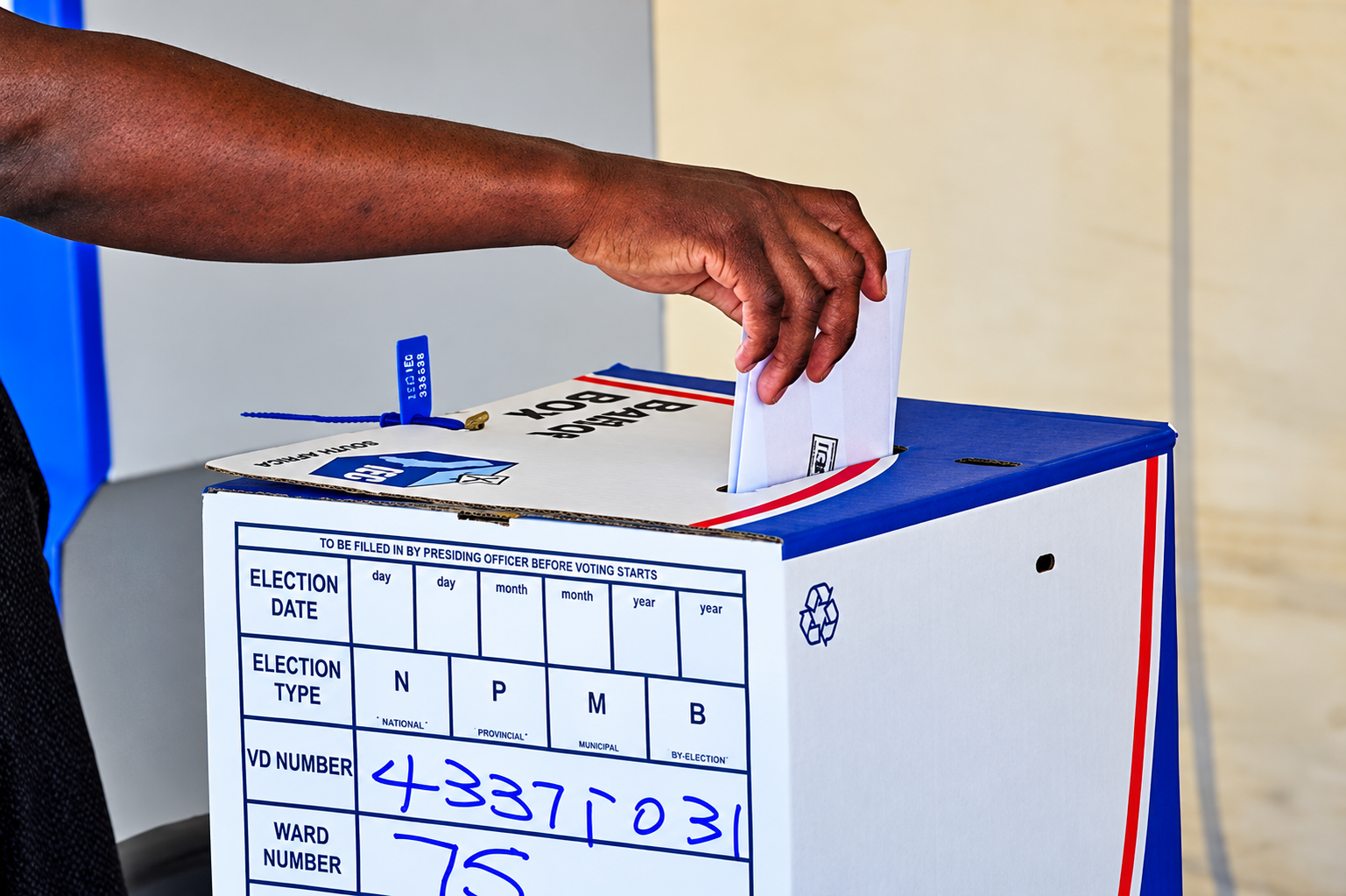
As South Africans prepare for the November 4 2026 Local Government Elections, the IEC’s published procedures on results-system testing explain how votes move from polling stations to the official results.
The Electoral Commission of South Africa (IEC) has confirmed that it completed an independent external audit of its Election Results System and gave political parties access to assess its functionality, security and reliability.
In a statement published in October, the commission said parties accessed the system from October 5 to 12 after the audit and implementation of remedial measures. The system captures and collates results and allocates seats to contestants.
From ballot box to counting table
The IEC’s election procedures and the Municipal Electoral Act govern the counting, recording and verification of votes. The Commission’s published materials state that ballots are counted at voting stations after voting closes, recorded on official results slips and later captured in the results system.
According to the IEC’s procedures, officials first account for the ballot boxes and check that their seals are intact. They then open the boxes and count the ballots in the presence of authorised party agents and accredited observers.
READ: ANC orders forensic audit over candidate list changes before IEC deadline
Officials determine whether ballots are valid under electoral legislation and the Commission’s procedures.
Ballots that do not meet the requirements, including those marked in a way that makes the voter’s intention unclear, are rejected.
Valid ballots are sorted and counted according to the relevant election.
“In local government elections, this may include ballots for political parties and ward candidates, depending on the municipality and elections being conducted.”
The count is based on physical ballots at the voting station.
Physical count remains the primary record
The electronic system is used later to capture and collate the figures recorded on the official results documents.
After counting, officials reconcile the results with the voting station’s ballot-accounting records.
“The IEC’s procedures require them to account for ballots received, used, unused, spoilt and counted.”
This reconciliation is intended to identify discrepancies and ensure that the station’s records are complete.
The results are then recorded on official results slips.
READ MORE: We are voting for a change in our lives
The counting officer and authorised party or candidate agents sign the slips according to the prescribed procedures, and a copy is displayed at the voting station.
The results slip provides the official station record against which electronically captured figures can be checked.
“The physical count and electronic capture are therefore separate stages; the count establishes the votes, while the results slip documents the outcome for verification and collation.”
How results enter the electronic system
The IEC confirmed that its Election Results System captures and collates results and allocates seats to contestants.
After the station count, the results documentation is sent to the relevant IEC office.
Figures from the official results slips are captured into the electronic system and checked against the source documents.
- The IEC completed an independent external audit of its Election Results System before the November 4, 2026 Local Government Elections.
- Political parties accessed the Election Results System from October 5 to 12 after the audit and remedial measures were implemented.
- Ballots are counted at voting stations after voting closes, with ballot boxes checked for intact seals, and counting done in the presence of authorised agents and observers.
- Official results slips documenting the physical count are signed by the counting officer and authorised agents and displayed at the voting station for verification.
- Results from the official slips are later captured into the IEC's electronic system, which collates results and allocates seats to contestants.


