


Trade between South Africa and China has surged to R642-billion, but the government wants the growing relationship to deliver more jobs and factories at home as a new zero-tariff arrangement opens up the Chinese market to local exporters.
Trade, Industry and Competition Minister Parks Tau says South African businesses must seize the opportunity to sell more goods to China instead of allowing the country’s imports to continue outpacing its exports.
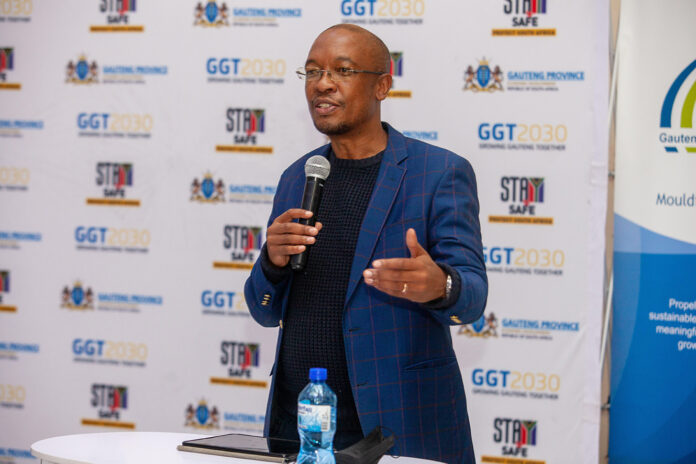
“That is what we want: not only more trade, but more factories, more processing and more jobs here at home,” Tau said at a briefing on China’s zero-tariff policy in Pretoria on Thursday.
Figures presented by Tau show that bilateral trade increased from R483-billion in 2021 to R642-billion in 2025.
But the growth has not been evenly shared. South Africa’s exports to China rose from R198-billion to R222-billion over the four-year period, while imports from the Asian economic powerhouse jumped from R284-billion to R420-billion.
READ: Watch: Why is BRICS called ‘golden bricks’ in China?
Zero-tariff window opens opportunities
The government is hoping the zero-tariff arrangement will help local companies narrow the gap by making their products more competitive in the Chinese market.
Announced by Chinese President Xi Jinping in February, the arrangement took effect for qualifying South African goods on June 1 after amendments to the Customs and Excise Act.
The deal runs until April 2028, allowing eligible products to enter China without customs duties, provided they meet the applicable rules of origin. Forty-seven tariff lines are subject to tariff-rate quotas.
Tau said the South African Revenue Service had issued certificates of origin between June and August, while customs declarations have increased. The certificates enable exporters to prove that their products qualify for duty-free treatment.
Talks underway to secure long-term market access
Tau and China’s Minister of Commerce, Wang Wentao, signed a framework agreement on economic partnership in February. The two countries are now negotiating an Early Harvest Agreement through the Southern African Customs Union, with officials in Beijing this week to advance the talks.
“Our aim is to give exporters certainty beyond 2028, with safeguards that protect South African industry and jobs,” Tau said.
The government has identified 100 value-added products it wants to promote in China, including processed agricultural goods, beverages, chemicals, pharmaceuticals, machinery, medical equipment and automotive products.
It plans to use trade exhibitions, export missions and meetings with prospective buyers to help local businesses enter the market.
READ: EFF takes fight to Parks Tau over awarding of lucrative lottery licence
Chinese investment expands local manufacturing
Chinese companies are also expanding their footprint in the country manufacturing sector.
BAIC manufactures and assembles vehicles locally through a partnership with the Industrial Development Corporation (IDC), while Chery acquired Nissan’s manufacturing plant in Rosslyn, Pretoria, which officially opened in July.
The IDC is also supporting a feasibility study into local battery-cell manufacturing, alongside efforts to develop battery-mineral processing, components and energy-storage systems.
Exporters urged to capitalise on the deal
Local exporters will have another opportunity to meet Chinese buyers at the China-Africa Economic and Trade Expo South Africa Session, scheduled for November 19 to 21 at the Sandton Convention Centre. Fruit, wine, agricultural products, minerals and jewellery will be showcased to prospective buyers.
Tau urged businesses to take advantage of the arrangement and ensure they have the necessary documentation to qualify.
“If you export or plan to export to China, get your SARS certificate of origin and use the preference,” he said.
- Trade between South Africa and China grew from R483 billion in 2021 to R642 billion in 2025, with exports rising from R198 billion to R222 billion and imports increasing from R284 billion to R420 billion.
- South Africa’s new zero-tariff arrangement with China, effective June 1, allows qualifying local goods to enter China duty-free until April 2028, subject to rules of origin and tariff-rate quotas on 47 tariff lines.
- Trade, Industry and Competition Minister Parks Tau emphasized that the government aims for the trade relationship to create more jobs, factories, and value-added industries in South Africa.
- Chinese firms BAIC and Chery have expanded manufacturing in South Africa, with BAIC partnering with the IDC for vehicle assembly and Chery acquiring Nissan’s Rosslyn plant, which reopened in July.
- Upcoming events to promote South African exports include the China-Africa Economic and Trade Expo South Africa Session from November 19 to 21 in Johannesburg, focusing on products like fruit, wine, minerals, and jewellery.


