


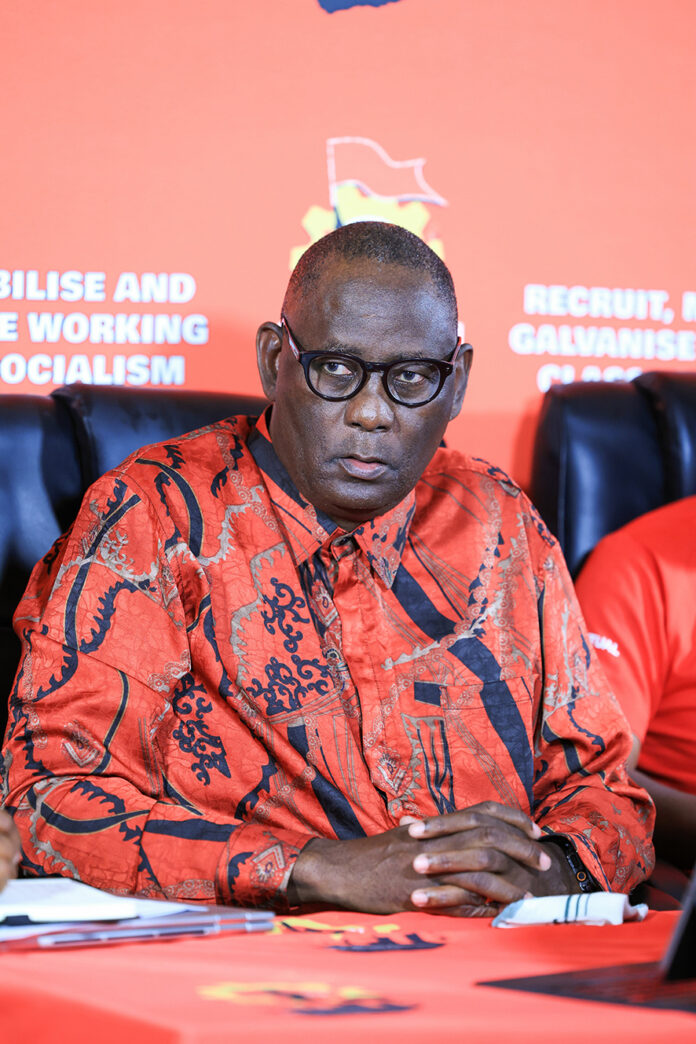
South African workers are facing a quiet rollback of hard-won labour gains – longer hours, weaker protections, and a labour movement losing its grip, veteran trade union chief Zwelinzima Vavi has warned.
Speaking to Sunday World podcast ahead of Workers’ Day on Friday, the long-serving general secretary of the South African Federation of Trade Unions said decades of victories – the 40-hour workweek, improved conditions – are now under pressure, especially for the most vulnerable.
“We are seeing regression, even in the formal sector,” he said.
“It is worse for workers who are not organised. In agriculture, retail, transport and security, working hours are increasing again and protections are weakening.”
The situation is most severe among workers in precarious employment – outsourcing and labour brokering – where labour standards are poorly enforced.
“When workers are not organised, employers do as they wish. That is what we are seeing now.”
He admitted the labour movement had failed to adapt to the economy’s shift toward informal and insecure work.
A changed workforce, a cautious movement
Vavi said the workforce has changed dramatically since the early years of democracy. Public sector workers now form a large chunk of union membership – and that has changed labour activism.
“Public sector workers face different pressures – debt, housing, financial commitments – and that affects their willingness to take risks like strikes. It has made sections of the movement more cautious.”
At the same time, workers in more difficult conditions – particularly industries hit by casualisation – have become more militant, exposing divisions inside the working class.
Unions lost their edge
Trade unions were strongest in the years after 1994, Vavi said, representing a large share of workers and shaping labour policy.
“Over time, unions moved away from worker control and militancy. Organisers became overwhelmed, and the movement lost its effectiveness.”
He also pointed to a growing disconnect between union leaders and ordinary workers.
“When leaders no longer experience what workers go through – the daily struggle, the transport, the long hours – that disconnect grows, and militancy is diluted.”
Still, something to celebrate
Despite the bleak assessment, Vavi said that the labour movement had made important contributions – fighting corruption and pushing for access to antiretroviral treatment during the HIV/AIDS crisis.
There’s a lot to celebrate, but also a lot to fix
As Workers’ Day is marked, he said the focus must return to rebuilding worker organisation and protecting those most at risk.
“The real test now is whether we can rebuild a movement that truly represents workers again,” he said.
South African workers are facing a quiet rollback of hard-won labour gains – longer hours, weaker protections, and a labour movement losing its grip, Vavi warned.
Visit SW YouTube Channel for our video content
- South African workers are experiencing a rollback of labour gains such as longer working hours, weaker protections, and declining union influence, especially among vulnerable and precarious workers in sectors like agriculture, retail, transport, and security.
- The labour movement has struggled to adapt to shifts toward informal, insecure, and outsourced work, leading to poor enforcement of labour standards and increased employer control.
- Public sector workers now dominate union membership, bringing more cautious activism due to financial pressures, while workers in casualised industries have become more militant, creating divisions within the workforce.
- Trade unions have lost effectiveness over time due to decreased militancy, overwhelmed organisers, and a growing disconnect between union leaders and the everyday realities of workers.
- Despite challenges, the labour movement has notable achievements, including fighting corruption and improving HIV/AIDS treatment access, and now faces the urgent task of rebuilding strong worker organization ahead of Workers’ Day.


