
The Gauteng provincial government has placed education and healthcare at the centre of its spending plans, allocating the largest share of its budget to these sectors to improve learning outcomes and strengthen public health services.
In the 2026/27 financial year, the Gauteng Department of Education (GDE) will receive R70.9-billion, with spending expected to increase to R221.8-billion over the medium-term expenditure framework (MTEF).
Gauteng MEC for Finance and Economic Development, Lebogang Maile, said the funding is aimed at improving learning outcomes from early childhood development through to matric, while also promoting safer and more inclusive schools.
According to the Estimates of Capital Expenditure, the GDE has set aside R8-billion for its infrastructure portfolio over the 2026 MTEF period.
The province continues to experience strong population growth, which has increased pressure on education infrastructure and the maintenance of existing facilities.
As part of the infrastructure programme, R8-billion has been allocated over the MTEF for the department’s infrastructure portfolio.
As such, R1.2-billion is expected to be spent in the 2026/27 financial year on new infrastructure assets, while a further R1.2-billion will be directed towards existing infrastructure.
Maintenance and repairs are projected at R485-million, with R208-million allocated for refurbishment and rehabilitation and R598-million set aside for upgrades and additions.
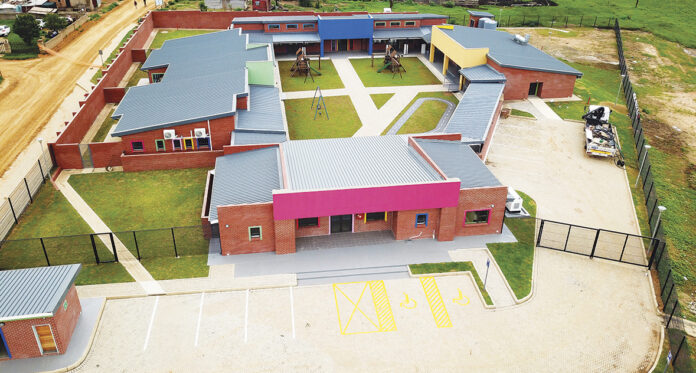
Over 60 schools will undergo construction and refurbishment, including Braamfischerville Primary School, Pennyville Primary School and Soshanguve South Secondary School, which are part of the new brick and mortar project. Schools with mobile classrooms will also be replaced with brick and mortar, including Sizuzile Primary School and Lufhereng Secondary School, among others.
Gauteng’s outlook for the 2026 MTEF indicates that infrastructure investment will prioritise densely populated areas, where demand for schooling has grown faster than anticipated.
The programme will focus on expanding and upgrading facilities by constructing new classrooms, installing fencing for security, and building additional ablution facilities to accommodate growing learner numbers.
“Projects spanning across various corridors have the largest allocation and mostly include programmes such as maintenance and the provision of mobile classrooms. The second highest allocation is toward the Eastern corridor with an allocation of R472-million in the 2026/27 financial year.
“The Western and Southern corridors have the lowest allocation for the 2026 MTEF of R232-million and R119-million respectively. A budget of R378-million has been allocated to the Northern corridor, and a budget of R386-million has been allocated to the Central corridor in the 2026/27 financial year,” reads the estimates of capital expenditure.
The Gauteng Department of Health will receive R70.3-billion in 2026/27, increasing to R218.6-billion over the MTEF. The allocation is intended to strengthen the public health system, expand access to services and improve the quality of care across the province.
“The funding will support maternal and child health, the Ideal Clinic and Ideal Hospital programmes, improved emergency medical response times, the integration of mental health services at community level, digital health systems and electronic records, as well as stronger HIV and TB interventions,” said Maile.
The department expects to spend about R5.8-billion on health infrastructure over the next three years as it seeks to maintain hospitals and clinics, complete key projects and expand capacity to meet rising demand for public healthcare.
The infrastructure programme aims to ensure that health facilities are properly developed and maintained to support service delivery and allow citizens to access quality healthcare.
Over the MTEF, the infrastructure budget is expected to decline slightly from R2.1-billion to R1.9-billion between the first two years before increasing to R1.9-billion in the third year.
Of the total R5.8-billion, R596.9-million has been allocated for the construction of new infrastructure, and a further R176-million will go towards upgrading and additions to existing facilities, while R340.1-million is set aside for rehabilitation and refurbishment of projects.
Maintenance of health infrastructure will get the largest share of funding over the next three years. In the 2026/27 financial year, R1.9-billion is allocated for infrastructure spending.
The programme is funded through a combination of the national Health Revitalisation Facility Grant and the provincial equitable share. Over the MTEF, about R3.6-billion will come from the revitalisation grant, while R2.4-billion will be funded from provincial resources.
Focus areas for the 2026/27 financial year include refurbishing and rehabilitating existing health facilities to address maintenance backlogs and completing major capital projects.
These include the Johannesburg Forensic Laboratory, the Khutsong South Clinic, and the Randfontein Community Health Centre.


