


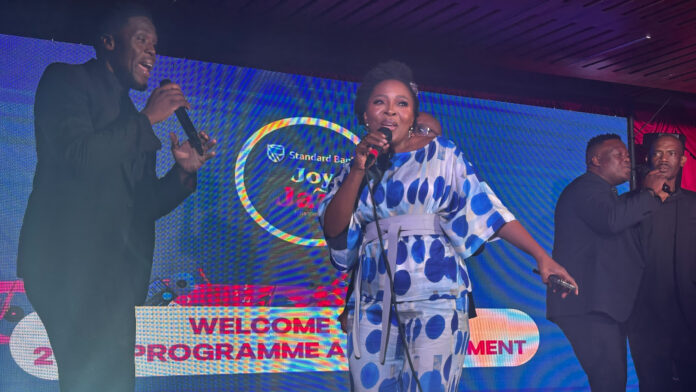
The Standard Bank Joy of Jazz Festival returns to Johannesburg this September with a programme that goes beyond music, positioning the long-running event as both a cultural landmark and an economic driver.
Now in its 27th year, the festival will take place at the Sandton International Convention Centre from 25 to 26 September, bringing together global stars and local heavyweights in what organisers describe as a deeply reflective edition.
What started as a modest gathering of fewer than 2 000 attendees in 2 000 has grown into one of the continent’s most significant live music events, drawing more than 25 000 people annually. But this year, the focus is not just on scale, it is on meaning.
Festival producer Mantwa Chinoamadi says the 2026 edition is intentionally curated to honour South Africa’s jazz legacy while pushing the genre forward. The timing is deliberate, aligning with two major historical milestones: the 50th anniversary of the 1976 Soweto Uprising and 70 years since the 1956 Women’s March.
That context shapes a programme that blends tribute, storytelling and innovation.
On the international front, audiences can expect performances from Grammy-winning Beninese icon Angélique Kidjo and genre-bending American saxophonist Kamasi Washington, both making their festival debut.
Local acts at the core
Local acts, however, remain at the core. Thandiswa Mazwai is set to deliver what is likely to be one of the most anticipated performances of the weekend, a tribute to jazz legend Hugh Masekela. Khaya Mahlangu will honour Kippie Moeketsi, while collaborations such as Themba Mkhize and Afrika Mkhize’s Reflections of Mzansi Big Band aim to celebrate South African jazz in its collective form.
The festival’s structure across multiple stages ensures a layered experience.
The Dinaledi Stage will host large-scale performances, including Ibrahim Maalouf, McCoy Mrubata and Judith Sephuma, alongside orchestral showcases like Dumza Maswana’s Umngqunqgo Orchestral Experience.
The Diphala Stage shifts the spotlight to women in jazz, not as supporting acts but as leaders. A standout concept, “4 Bass Lines”, brings together four female bassists in a bold statement about representation and creative control in the genre.
On the Conga Stage, the energy lifts with rhythm-driven sets rooted in African traditions. Artists such as Madala Kunene, Sibusile Xaba and Ndabo Zulu are expected to deliver performances that blur the line between jazz and indigenous sound.
Meanwhile, the Mbira Stage leans into soul, poetry and contemporary expression. Groups like Floetry and artists such as Nomfusi and Manana bring a younger, genre-fluid audience into the fold, proving that jazz is far from static.
Beyond the music, the numbers tell a bigger story.
The festival has historically generated over R34.5-million in direct spending and contributed around R86-million to the Gauteng economy, while supporting more than 1,200 jobs. Initiatives like the Jazzy Joburg Market continue to create opportunities for small businesses, reinforcing the festival’s role as more than just entertainment.
It is this broader impact that keeps the event relevant.
In a country where the creative sector continues to fight for recognition and investment, Joy of Jazz stands as proof that culture is not a luxury, it is an industry.
And if this year’s programme delivers on its promise, it will do what the festival has managed for nearly three decades: bring people together, honour the past and make a strong case for the future of African jazz.
- The 27th Standard Bank Joy of Jazz Festival will be held from 25-26 September at Johannesburg's Sandton International Convention Centre, focusing on cultural significance and economic impact beyond music.
- The 2026 edition honors South Africa’s jazz legacy, aligning with the 50th anniversary of the 1976 Soweto Uprising and 70 years since the 1956 Women’s March, blending tribute and innovation.
- International stars like Angélique Kidjo and Kamasi Washington will debut, while local acts such as Thandiswa Mazwai and Khaya Mahlangu will pay tribute to jazz legends Hugh Masekela and Kippie Moeketsi.
- The festival features multiple stages highlighting diverse themes, including women-led jazz performances, African rhythm-driven sets, and contemporary soul and poetry, engaging varied audiences.
- Economically, the festival has generated over R34.5 million in direct spending, contributed about R86 million to the Gauteng economy, supported over 1,200 jobs, and fosters small business opportunities through initiatives like Jazzy Joburg Market.


