


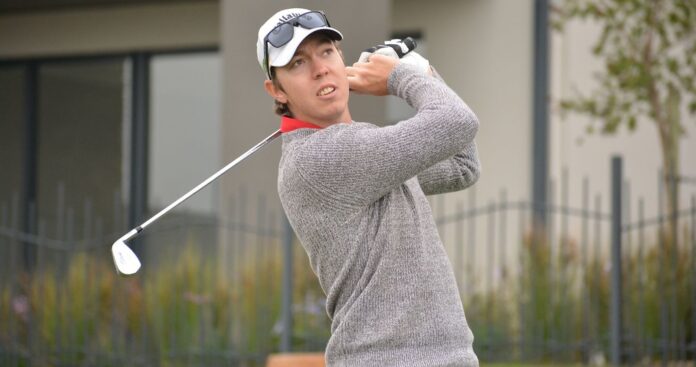
It was great watching South Africa’s Aldrich Potgieter leading the US PGA for the opening two rounds. He couldn’t keep it going unfortunately, but at only 21, he certainly has a future in the game.
Another South African, Garrick Higgo, learned a serious lesson on the first day. He arrived 30 seconds late for his tee time and was immediately penalised by two strokes. So, before he even teed off, he was on +2. He then missed the cut on day two by a single shot. Directly after the tournament he fired his caddy. I suppose someone had to take the blame.
Aaron Rai won the tournament by three shots from John Rahm over the weekend. This is his first major and he is the first Englishman in over 100 years to win the US PGA.
Aaron is a very different golfer. He plays with two gloves, uses plastic tees, and is the only professional golfer I know who uses iron covers.
They say you should never judge a book by its cover, and this is particularly true in golf.
David Feherty, the golf commentator, once said, live on air, that Jim Furyk’s swing “looked like an octopus falling out of a tree”. Gary McCord said that it evokes the image of “a one-armed golfer using an axe to kill a snake in a telephone booth”. So not great then. Furyk holds the record for the lowest score in PGA Tour history, a round of 58 at the 2016 Travelers Championship. He also shot a round of 59 at the BMW Championships in 2013. He is a major winner, having won the 2003 US Open. He is also the captain of the US Ryder Cup team for 2027. Not bad for an octopus!
Everybody has their own unique swing
I have come to realise that everybody has their own unique swing, and it is nearly impossible to change. Tiger famously went through many “swing changes”, but still looked the same to me afterwards. I watch a lot of professional golf, and I can recognise a golfer by his, or her, swing, long before I can see their face.
So, no matter what your mates say, embrace your swing. It is yours and unique to you. Of course there are some basics to get right, like ball position, hip rotation, etc. A good coach can help you with these. But that guy on the range, telling you to stand up straighter, or move your weight forward, he doesn’t yet understand this fundamental truth. The only thing that matters is where the ball goes.
Every shot counts
Things are of course a bit different if you are a professional golfer. Every shot counts, so anything you can do to improve your chances of hitting a good shot, is embraced. My son, Luke Brown, a professional on the Sunshine Tour, had a look back at some of his recent close finishes. He had a run of fifth, fourth, nineth, third and fourth at the beginning of this year. He worked out that a single shot per round better, and he would have won all but one of those tournaments. That is both heartbreaking and encouraging. He is close, but no cigar.
At his level things are so tight that a small percent improvement can have huge benefits. In fact, in a round of 64, a single shot is a 1,5% improvement, but who’s counting.
They say that in any serious undertaking the last 20% improvement requires 80% of the effort. This concept reflects the Pareto Principle (or 80/20 rule), which illustrates that 80% of your results come from just 20% of your effort, while the remaining 20% of results demand 80% of your time. The principle highlights the exponential nature of diminishing returns in perfectionism and productivity.
So, the takeaway is this: to get better, you must practice, but with the swing you were born with, not the one your mates think you should have.
- South Africa’s Aldrich Potgieter led the US PGA for the first two rounds but couldn’t maintain his lead; at 21, he shows promise for the future.
- Garrick Higgo was penalized two strokes for arriving late to his tee time, missed the cut by one shot, and subsequently fired his caddy.
- Aaron Rai won the US PGA by three shots, becoming the first Englishman in over 100 years to win the tournament; he has unique golfing habits like playing with two gloves.
- Golfers have unique swings that are nearly impossible to change; embracing one’s natural swing is crucial, with basics taught by a good coach being important.
- Small improvements are critical at the professional level, with a one-shot improvement per round potentially turning close finishes into wins; this reflects the Pareto Principle of effort versus results.


