


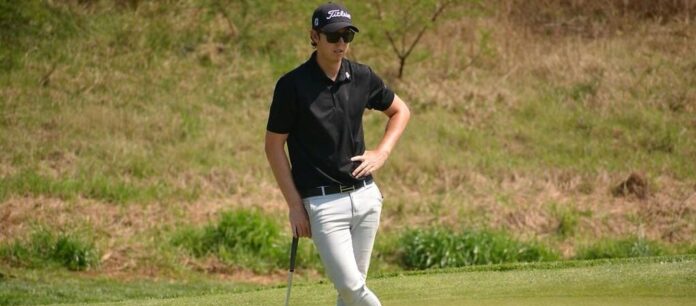
England’s Esme Hamilton claimed her maiden Ladies European Tour and Sunshine Ladies Tour title at the Investec South African Women’s Open at Royal Cape Golf Club on Sunday.
Hamilton finished at 15 under par for four rounds of golf in wind and rain. All four days were broadcast live on SuperSport.
It is very encouraging to see the increased interest in, and television coverage of, women’s sports. There is international coverage of women’s tennis, cricket, football, rugby, cycling, and golf, to name a few.
In golf, it is a fact that women cannot hit the ball as far as men. This changes the nature of the competition, from trying to blast the ball as far as possible to concentrating on the subtle arts of the short game. Maybe there is a lesson there for us amateurs.
The handicap system
Golf is one of the few sports where players of vastly different skill levels can play against each other competitively.
The ladies’ tees are further forward to compensate for their lack of distance. In Little Kids Golf, each age group starts from the fairway at a different distance from the green, commensurate with their driving distance.
This means everybody can play on the same par, making the game competitive. If you then add the handicap system into the equation, anyone can play against anyone and win.
As I moved into my 60s, my driving distance melted away. I was now having to hit long irons, or even fairway metals, into the par fours. My handicap collapsed, as did my enjoyment of the game.
A friend suggested that I was of an age where I could wear the old men’s tees. Ego dictated that I would continue to struggle off the men’s tees for another six months.
Finally, I relented and gave it a try. What a revelation! I was back to my old self, hitting a seven-iron into the par fours and even reaching some par fives in two.
Age does not matter
Every few months my son, Luke Brown, who is pro on the Sunshine Tour, and I try to play a competitive round of golf.
This had started to become a bit embarrassing for me, but once I moved forward to the old men’s tees, I was back.
He plays from the back tees, while I play from the front ones. He hits his drive an average of 320 metres, and I hit mine at 220.
Often our drives land next to each other on the fairway, suddenly making a game of things.
Of course, where I am hitting my seven-iron approach shot, he is hitting a pitching wedge, so not that even. This is where handicap comes in.
He plays off par, and I play off 18—he gives me a shot at a hole, on top of the distance off the tee.
Now we have very competitive games, often going to the last hole or even extra holes for sudden death.
There are very few sports where a 67-year-old father can play competitively against his professional athlete son and have a chance of winning.
In fact, there are few sports where a 67-year-old would be playing at all.
- Esme Hamilton won her first Ladies European Tour and Sunshine Ladies Tour title at the Investec South African Women’s Open, finishing 15 under par in challenging weather conditions.
- The article highlights the growing interest and TV coverage in women's sports globally, including tennis, cricket, football, rugby, cycling, and golf.
- Women's golf differs from men's in that women generally hit shorter drives, emphasizing skillful short game play rather than power driving.
- The golf handicap system and adjusted tee positions allow players of varying ages and skill levels, including older players, to compete fairly and enjoy the game.
- The author shares a personal story of competitive golf with his pro golfer son, demonstrating how the handicap system enables a 67-year-old amateur to compete closely with a professional athlete.


