


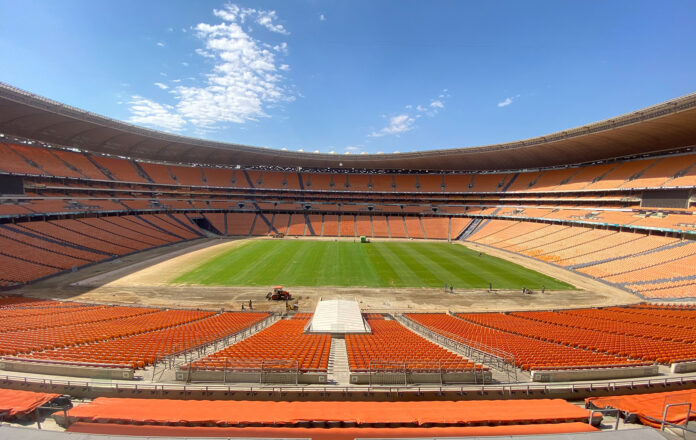
Stadium Management South Africa (SMSA) is rectifying and putting stringent measures in place to prevent fraudulent ticket holders and those without tickets from accessing their venues ahead of the coming and highly anticipated Soweto derby between Kaizer Chiefs and Orlando Pirates later this month.
The management company has spent a whopping R3.5-million in implementing a new ticketing technology called static mobile scanners. There will be three checkpoints to identify and block people with black market tickets and those who attempt to gain access deceitfully.
In one of last season’s derbies, there was chaos when more than 10 000 supporters gained free access to the venue, something that could have resulted in a stampede. This was after bootleg and counterfeit tickets were sold nonchalantly outside the venue.
As part of rectifying the process, there will be a visual inspection at the first checkpoint.
The second step will be a stop at the first static mobile scanner. If the scan gives a red light, the ticket holder will be taken to a verification process to validate the ticket. The last scan will take place at the traditional stadium turnstiles, which will open and give fans entry into the venue if the tickets are legitimate. If the ticket is fake, the turnstiles will not open, and those fans will also be taken back by security to be authenticated.
The new system was tested last week when Kaizer Chiefs played against Golden Arrows at the FNB Stadium. There were minor glitches, which left patrons frustrated.
The Betway Premiership match between Chiefs and Stellenbosch FC on February 24 will give the organisers an opportunity for another trial run and to perfect the system ahead of the country’s biggest sporting event between Amakhosi and the Buccaneers on February 28.
“What we wish to achieve is to stop fraudsters and chance-takers from coming to the stadium at all. The other derby was overcapacitated by more than 15 000. We did away with the system of till slips and tickets bought from garage stations and shop outlets. There’s no turning back on the era of digital ticketing because the world is evolving in that direction, and we believe we are on the right track,” said Bertie Grobbelaar, CEO of SMSA.
According to SMSA, the decision follows a detailed review of challenges experienced over time with traditional third-party ticketing models, particularly in relation to ticket fraud, counterfeit tickets, and access delays at high-volume events.
These challenges have often been compounded by infrastructure and connectivity limitations, directly affecting spectator experience and operational efficiency.
In response, SMSA elected to invest in this purpose-built ticketing and access-control ecosystem designed specifically for large stadium environments.
The platform was developed by a professionally appointed design team, drawing on SMSA’s extensive experience in managing access control across major sporting and live entertainment events.
“We now have fibre connectivity on all turnstiles. We also have a local server that is not dependent on cloud servers.
“We will also provide Wi-Fi hotspot connectivity and charging stations for those whose cellphone batteries are low.
“We will have functional devices, so we will be fully connected, and as time goes on, we will increase the number of scanners,” he added.
- Stadium Management South Africa (SMSA) is rectifying and putting stringent measures in place to prevent fraudulent ticket holders and those without tickets from accessing their venues ahead of the coming and highly anticipated Soweto derby between Kaizer Chiefs and Orlando Pirates later this month.
- The management company has spent a whopping R3.5-million in implementing a new ticketing technology called static mobile scanners.
- There will be three checkpoints to identify and block people with black market tickets and those who attempt to gain access deceitfully.
- In one of last season’s derbies, there was chaos when more than 10 000 supporters gained free access to the venue, something that could have resulted in a stampede.
- This was after bootleg and counterfeit tickets were sold nonchalantly outside the venue.


