


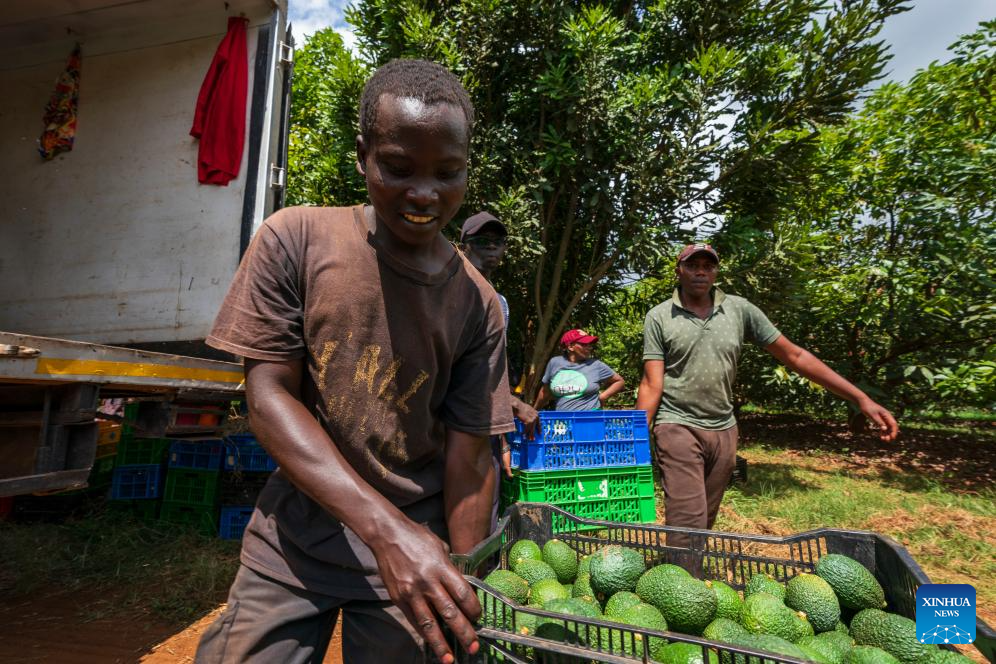
In the expansive packhouse of Vertical Agro Group, on the outskirts of Kenya’s resort town of Naivasha, dozens of workers in protective gear on Thursday meticulously sorted a variety of fresh vegetables for brief storage in cold rooms and later onwards shipment to overseas markets.
The packhouse is domiciled within an export processing zone directly linked to the Naivasha Inland Container Depot (ICD), a Chinese-built dry port for handling bulk cargo that is part of the logistical artery for the Mombasa-Nairobi-Naivasha Standard Gauge Railway (SGR).
Amid a beehive of activity at the packhouse, Hasit Shah, chief executive officer of Vertical Agro Group, led a group of senior government officials, foreign diplomats, industry executives and scholars, who were on a mission to learn how China’s zero-tariff policy and infrastructure modernisation have unlocked new markets for fresh produce companies in Kenya.
In August 2022, following the phytosanitary protocol agreed between Kenya and China, Sunripe, which is part of Vertical Agro Group, became one of the first Kenyan companies to ship fresh avocados to the Chinese market, Shah told guests.
“China is the newest and the fastest-growing of the five overseas markets, namely the United Kingdom, Europe, the Middle East, Asia and the United States,” he said.
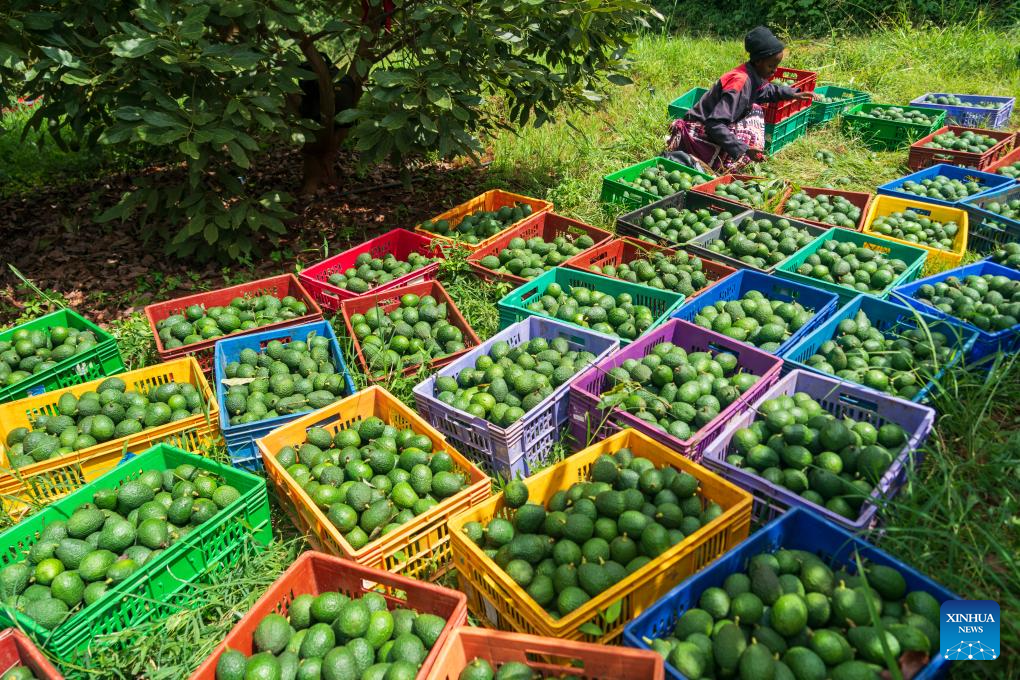
For six decades, Vertical Agro Group has operated two packhouses in Naivasha, sourcing fresh produce such as avocados, broccoli, French beans and spinach from nearby contracted farmers, Shah said.
The produce is picked, sorted, stored in cold rooms, packed to clients’ specifications and transported to the dry port, where SGR wagons cover nearly 600 kilometres to deliver it to the port of Mombasa for onwards shipment abroad, he noted.
A modern railway corridor has been a game changer for players in the fruit and vegetable value chains, reducing transit time, freight costs, emissions and the risk of damage to the produce, Shah said.
He hailed the Naivasha dry port, which measures 45,000 square meters with capacity to handle 2 million tonnes of cargo annually and serves Uganda, South Sudan, Rwanda, Burundi and the Democratic Republic of the Congo, for easing the transportation of fresh produce.
The planned extension of the SGR from Naivasha to Kisumu and on to Malaba, on the Ugandan border, will enable Kenyan horticulture firms to penetrate the regional market, Shah said.
When China’s zero-tariff policy, covering 53 African countries, came into force on May 1, Shah was among the Kenyan avocado exporters who welcomed the move, saying it will encourage local firms to add value to the highly nutritious fruit.
Kenya is the third-largest avocado supplier to China after Peru and Chile. In 2025, the country earned 175 million U.S. dollars from total avocado exports, with exports to China valued at 6.6 million dollars, said Paul Kipronoh Ronoh, principal secretary in the State Department for Agriculture.
“Other products having great potential for exports to China under the zero-tariff policy include flowers and macadamia nuts,” Ronoh said at a seminar on jointly advancing China’s proposed global development and governance initiatives, held after the tour of the Vertical Agro Group packhouses.
Ronoh noted that Naivasha is one of Kenya’s major horticulture farming hubs, with local exporters using both the SGR and the inland depot seamlessly, translating into lower logistical costs, enhanced market connectivity and a reduced carbon footprint.
Guo Haiyan, Chinese ambassador to Kenya, said the Mombasa-Nairobi-Naivasha SGR, a flagship project under the Belt and Road Initiative, has unlocked growth in the rural hinterland through enhanced connectivity.
Guo said China’s zero-tariff policy has expanded the market in China for Kenyan avocados, Ugandan coffee, Rwandan chilli and Congolese poria.
Official statistics indicate that China imported 3,762,776 kilograms of avocados from Kenya worth 43,157,326 yuan (about 6.1 million dollars) in May-August 2026, up 63.22 percent year on year in value, compared with a 59.65 percent increase in the same period of 2025.
For roasted coffee, China imported 1,707,818 kilograms from Kenya worth 98,314,108 yuan (about 13.8 million dollars) over the four months, up 139.66 percent year on year, against a 97.33 percent rise a year earlier.
Philip Mainga, managing director of Kenya Railways Corporation, said Chinese-built transport and logistics infrastructure, including the SGR and the Naivasha dry port, has encouraged investors to set up agro-processing factories to add value to fresh produce destined for overseas markets.
“Because of the SGR and inland container depot, investors have set up export processing zones to add value to farm produce, boosting our export competitiveness, growth and regional integration,” Mainga said.
- Vertical Agro Group in Naivasha sorts and ships fresh vegetables to overseas markets using infrastructure linked to the Naivasha Inland Container Depot and the Mombasa-Nairobi-Naivasha Standard Gauge Railway (SGR).
- Sunripe, part of Vertical Agro Group, started exporting fresh avocados to China in August 2022 after Kenya and China agreed on a phytosanitary protocol.
- China's zero-tariff policy, effective May 1, 2026, has expanded the market for Kenyan produce like avocados, flowers, and macadamia nuts in China and other African countries.
- Kenya is the third-largest supplier of avocados to China and earned $175 million from avocado exports in 2025, with $6.6 million of that value from exports to China.
- The SGR and the Naivasha dry port have significantly reduced logistics costs and transit times, encouraging investment in agro-processing factories and boosting export competitiveness.
In the expansive packhouse of Vertical Agro Group, on the outskirts of Kenya's resort town of Naivasha, dozens of workers in protective gear on Thursday meticulously sorted a variety of fresh vegetables for brief storage in cold rooms and later onwards shipment to overseas markets.
The packhouse is domiciled within an export processing zone directly linked to the Naivasha Inland Container Depot (ICD), a Chinese-built dry port for handling bulk cargo that is part of the logistical artery for the Mombasa-Nairobi-Naivasha Standard Gauge Railway (SGR).
Amid a beehive of activity at the packhouse, Hasit Shah, chief executive officer of Vertical Agro Group, led a group of senior government officials, foreign diplomats, industry executives and scholars, who were on a mission to learn how China's zero-tariff policy and infrastructure modernisation have unlocked new markets for fresh produce companies in Kenya.
In August 2022, following the phytosanitary protocol agreed between Kenya and China, Sunripe, which is part of Vertical Agro Group, became one of the first Kenyan companies to ship fresh avocados to the Chinese market, Shah told guests.
"China is the newest and the fastest-growing of the five overseas markets, namely the United Kingdom, Europe, the Middle East, Asia and the United States," he said.
For six decades, Vertical Agro Group has operated two packhouses in Naivasha, sourcing fresh produce such as avocados, broccoli, French beans and spinach from nearby contracted farmers, Shah said.
The produce is picked, sorted, stored in cold rooms, packed to clients' specifications and transported to the dry port, where SGR wagons cover nearly 600 kilometres to deliver it to the port of Mombasa for onwards shipment abroad, he noted.
A modern railway corridor has been a game changer for players in the fruit and vegetable value chains, reducing transit time, freight costs, emissions and the risk of damage to the produce, Shah said.
He hailed the Naivasha dry port, which measures 45,000 square meters with capacity to handle 2 million tonnes of cargo annually and serves Uganda, South Sudan, Rwanda, Burundi and the Democratic Republic of the Congo, for easing the transportation of fresh produce.
The planned extension of the SGR from Naivasha to Kisumu and on to Malaba, on the Ugandan border, will enable Kenyan horticulture firms to penetrate the regional market, Shah said.
When China's zero-tariff policy, covering 53 African countries, came into force on May 1, Shah was among the Kenyan avocado exporters who welcomed the move, saying it will encourage local firms to add value to the highly nutritious fruit.
Kenya is the third-largest avocado supplier to China after Peru and Chile. In 2025, the country earned 175 million U.S. dollars from total avocado exports, with exports to China valued at 6.6 million dollars, said Paul Kipronoh Ronoh, principal secretary in the State Department for Agriculture.
"Other products having great potential for exports to China under the zero-tariff policy include flowers and macadamia nuts," Ronoh said at a seminar on jointly advancing China's proposed global development and governance initiatives, held after the tour of the Vertical Agro Group packhouses.
Ronoh noted that Naivasha is one of Kenya's major horticulture farming hubs, with local exporters using both the SGR and the inland depot seamlessly, translating into lower logistical costs, enhanced market connectivity and a reduced carbon footprint.
Guo Haiyan, Chinese ambassador to Kenya, said the Mombasa-Nairobi-Naivasha SGR, a flagship project under the Belt and Road Initiative, has unlocked growth in the rural hinterland through enhanced connectivity.
Guo said China's zero-tariff policy has expanded the market in China for Kenyan avocados, Ugandan coffee, Rwandan chilli and Congolese poria.
Official statistics indicate that China imported 3,762,776 kilograms of avocados from Kenya worth 43,157,326 yuan (about 6.1 million dollars) in May-August 2026, up 63.22 percent year on year in value, compared with a 59.65 percent increase in the same period of 2025.
For roasted coffee, China imported 1,707,818 kilograms from Kenya worth 98,314,108 yuan (about 13.8 million dollars) over the four months, up 139.66 percent year on year, against a 97.33 percent rise a year earlier.
Philip Mainga, managing director of Kenya Railways Corporation, said Chinese-built transport and logistics infrastructure, including the SGR and the Naivasha dry port, has encouraged investors to set up agro-processing factories to add value to fresh produce destined for overseas markets.
"Because of the SGR and inland container depot, investors have set up export processing zones to add value to farm produce, boosting our export competitiveness, growth and regional integration," Mainga said.


