


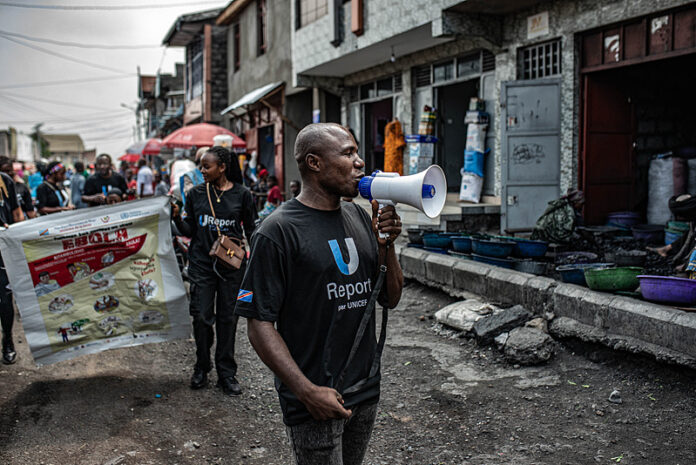
The United States Centres for Disease Control and Prevention (CDC) has elevated its response to the Ebola outbreak in the Democratic Republic of the Congo (DRC) and Uganda to its highest internal emergency level, citing the rapid spread and increasing complexity of the epidemic.
The decision comes as more than 1 200 confirmed Ebola cases, including over 320 deaths, have been reported across the two countries since May, with health authorities warning that the number of infections is probably significantly higher. International health experts say available evidence suggests the virus might have been spreading undetected for several months before authorities identified the outbreak.
“Elevating the response level reflects the urgency, scale and complexity of the outbreak and allows CDC to bring additional resources to support the coordination and operational needs of our response,” Satish Pillai, the CDC Ebola response incident manager, said.
“We are very concerned about the trajectory of cases, which are rising rapidly, as well as the continued geographic spread,” Pillai said, while emphasising that the outbreak posed no direct risk to the US.
CDC’s highest emergency response
The CDC’s Level 1 activation is the agency’s highest emergency response category and signals that the Ebola outbreak has become a priority. Pillai said the designation would enable the agency to rapidly mobilise additional personnel and resources.
The agency has about 100 staff deployed domestically and internationally in support of the Ebola response, including teams operating in the DRC and Uganda.
The last time the CDC activated a Level 1 response for Ebola was during the 2014-2016 West Africa outbreak, which infected more than 28 000 people and claimed more than 11 000 lives.
The escalation follows a request by the Trump administration for an additional $1.4 billion (R24bn) in funding from Congress to support the Ebola response. It also comes after the CDC extended travel restrictions affecting non-US citizens and lawful permanent residents who have recently travelled to the DRC, Uganda or South Sudan. The restrictions are set to remain in place until July 21.
However, global health experts, including officials at the World Health Organisation (WHO), have repeatedly cautioned that travel restrictions have limited effectiveness in containing infectious disease outbreaks. While such measures might delay the international spread of a virus, they rarely prevent transmission and can contribute to stigma and discrimination.
Several infectious disease specialists and veterans of previous Ebola responses have criticised the US administration’s approach, arguing that greater emphasis should be placed on supporting outbreak control efforts in affected countries rather than focusing primarily on preventing the virus from reaching US borders.
Africa CDC pushes regional preparedness
As international concern grows, the Africa Centres for Disease Control and Prevention (Africa CDC) has convened a three-day emergency meeting aimed at strengthening regional preparedness and coordination.
The meeting brings together officials from the DRC, neighbouring Uganda, and 11 other African Union member states considered at high risk of cross-border transmission, alongside representatives from the WHO and other technical partners.
Participating countries are expected to assess their preparedness capacities, exchange lessons learnt from response efforts and enhance cross-border surveillance and coordination mechanisms.
“Africa CDC is working with member states and partners to move from plans to operational readiness at borders, in communities, in health facilities and inside emergency operations centers,” Tolbert Nyenswah, a senior Africa CDC official, said.
- The US CDC has raised its Ebola outbreak response to its highest emergency level due to rapid spread and complexity in the DRC and Uganda, with over 1,200 confirmed cases and 320 deaths since May.
- The CDC’s Level 1 activation allows rapid mobilization of additional personnel and resources; about 100 CDC staff are currently deployed to support response efforts.
- The escalation follows a US government request for $1.4 billion in additional Ebola funding and the extension of travel restrictions for individuals recently in the affected countries until July 21.
- Global experts, including WHO officials, warn that travel restrictions have limited effectiveness and stress focusing on supporting outbreak control in affected countries over border protection.
- Africa CDC held an emergency meeting with neighboring countries and partners to boost regional preparedness, improve cross-border surveillance, and enhance coordination against Ebola spread.


