


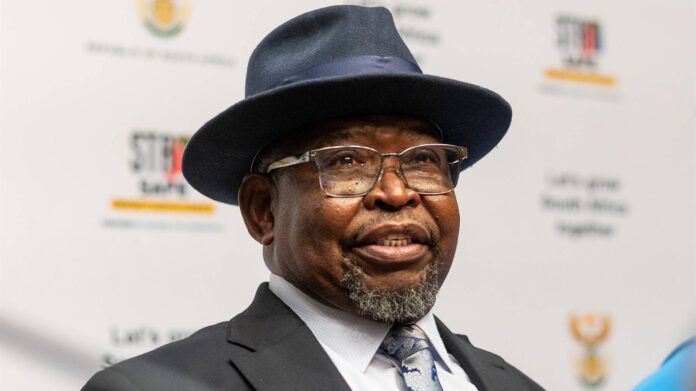
Cosatu Gauteng chairperson Amos Monyela has accused finance minister Enoch Godongwana of acting in bad faith in his criticism of the City of Johannesburg’s wage agreement with municipal workers.
Monyela argues that the government intervened too late in a dispute that has already been resolved.
Monyela said workers should not be made to bear the burden of the city’s financial difficulties, insisting that the agreement reached between the South African Municipal Workers’ Union (Samwu) and the City of Johannesburg was both valid and a product of a long negotiation process.
The dispute centres on a wage parity agreement concluded in November 2025, which commits the City of Johannesburg to salary adjustments of about R10.3-billion over two years.
Organised labour argues the issue dates back to the mid-1990s, when disparities in municipal pay structures first emerged.
“It is so unfortunate that we have a minister who can utter such words without having a history of what would have happened as far as the wages of municipal workers in the city of Johannesburg. So we vehemently disagree with the minister,” he said.
His comments come after a sharply worded letter dated April 23 from Godongwana to Johannesburg mayor Dada Morero, raising serious concerns about the metro’s financial stability and compliance with the Municipal Finance Management Act.
In the letter, Godongwana warned that the city’s financial position had deteriorated significantly, with its 2025/2026 adjustments budget, approved on March 20, 2026, assessed by the National Treasury as unfunded.
He highlighted risks including weak revenue collection, overstated income projections, and rising expenditure pressures.
By the end of January 2026, the city had already recorded about R3.9-billion in overspending.
The minister also pointed to a deepening liquidity crisis, noting that the city’s outstanding debt to creditors had grown from R17-billion in 2022/2023 to R25.2-billion in 2024/2025, while cash reserves stood at only R3.9-billion.
Wage deal not sustainable
Godongwana argued that the municipality had entered into a wage agreement it may not be able to sustain and instructed the mayor to outline corrective measures.
Monyela, however, said the intervention came at the wrong time and did not acknowledge the legitimacy of the agreement.
“The collective agreement is legitimate,” he said. “The only issue is how it is funded, not whether it should exist.”
He proposed that instead of reversing the deal, the city could implement a phased payment structure to ease financial pressure while still honouring commitments to workers.
Adding further weight to labour’s position, Samwu issued a statement on Wednesday rejecting what it called “treasury interference” in collective bargaining.
Samwu said the agreement remains binding and warned that only a court of law can set it aside.
The union also accused National Treasury of aligning itself with political attempts by the DA to overturn gains achieved through negotiations, saying workers were justified in questioning the motives behind the intervention.
Coastu Gauteng said it would continue engaging with both the city and labour structures while monitoring national-level discussions.
“We want honest engagement, but we will not stand aside when workers’ gains are under threat,” Monyela said.
- Cosatu Gauteng chairperson Amos Monyela has accused finance minister Enoch Godongwana of acting in bad faith in his criticism of the City of Johannesburg’s wage agreement with municipal workers.
- Monyela argues that the government intervened too late in a dispute that has already been resolved.
- Monyela said workers should not be made to bear the burden of the city’s financial difficulties, insisting that the agreement reached between the South African Municipal Workers’ Union (Samwu) and the City of Johannesburg was both valid and a product of a long negotiation process.
- The dispute centres on a wage parity agreement concluded in November 2025, which commits the City of Johannesburg to salary adjustments of about R10.3-billion over two years.
- Organised labour argues the issue dates back to the mid-1990s, when disparities in municipal pay structures first emerged.


