


It seems the European leaders have entered a new phase of their proxy war in Ukraine against their arch enemy, Russia. I will call the new phase “the art of drones”. Sun Tzu could not have imagined the use of drones in conventional war but the truth is that conventional warfare is out the window.
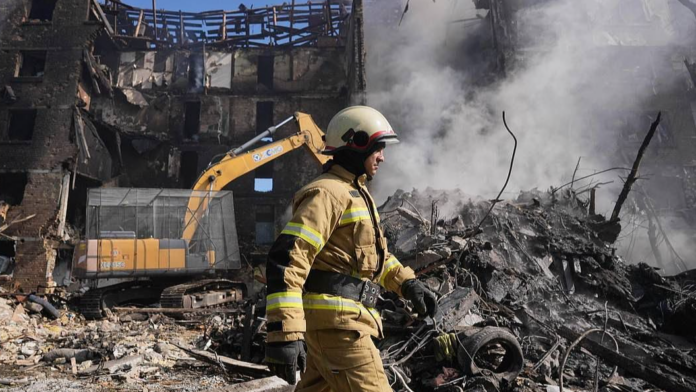
The effective use of the first-person view drones by the Ukrainian armed forces, in which they target Russian energy infrastructure, is beginning to unnerve the Russian high command. As a result, we have seen more intense missile and drone attacks being carried out by the Russians and, of late, also targeting the Ukrainian capital, Kiev.
In recent days, Russia also deployed its much-vaunted missile, the Oresnik. A supersonic missile that is virtually unstoppable and can inflict enormous damage.
More attacks to follow
The message from Russia is unmistakable: we don’t take kindly to this new escalation. Russia has indicated that there will be more attacks to follow and, in fact, has called on foreign representatives in Kyiv to vacate, or else.
All this happened because Ukrainian leader Volodymyr Zelensky’s forces bombed a student dormitory, killing 21 young people and injuring many others.
While it is indeed Ukrainians firing and guiding the drones, they get manufactured in European countries such as the UK, France and Germany. In other words, they not only manufacture these bigger and better drones to be used against Russians; they are also the decision-makers of the new strategy.
At some point, they think the frog-in-the-boiling-pot strategy will work against Russia. But Russia is acutely aware of the strategy and has managed to foil all attempts at slow escalation.
First, the European allies gave Zelensky tanks; these were destroyed. Second, they gave him long-range missiles, which did not work either. Third, in came the jets and these were blown up. They attempted to have an incursion into the Kursk region and threatened the nuclear power plant there; this too came to nought. Now it’s drones. The question we must ask is: How will Russia respond to the new threat?
Russian frog will pop soon
The water has been steadily warming and perhaps, according to Nato and EU military leaders, it will soon boil and the Russian frog will pop.
Alas, I suspect the frog will soon decide that the symptom called Ukraine is strategically unimportant and it is the decision-makers that must be targeted in order to halt the new strategy.
As such, I suspect that soon Russia will launch a coordinated missile attack on one or more European strategic decision- making centres. Then Europeans will burn instead of the frog.
The time of such infantile decision-making must come to an end. Acceptance of defeat on the battlefield is necessary. It’s time to realise that diplomacy will end the war and not prolonged fighting, especially not drones.
Sun Tzu is often thought of as a master of warfare but the ultimate goal he lays out in The Art of War isn’t endless fighting — it’s forcing conflict to an end on your own terms, preferably before it even starts. His core principles focus on avoiding prolonged combat, minimising destruction and achieving the nation’s political objectives as efficiently as possible.
But Nato and the EU seem to know better: since it’s not their territories suffering massive destruction and it’s not their citizens dying in this prolonged war, they soldier on. Until the last Ukrainian is left. But soon, because of the decision-makers, the war will arrive at their doorsteps.
Then it’s going to get ugly.
- Dr Van Heerden is a senior research fellow at the Centre for African Diplomacy and Leadership at UJ
Visit SW YouTube Channel for our video content
- Ukrainian armed forces are effectively using first-person view drones, manufactured in European countries such as the UK, France, and Germany, to target Russian energy infrastructure.
- Russia has intensified missile and drone attacks recently, including targeting the Ukrainian capital, Kiev, and has deployed the supersonic missile Oresnik.
- Russia has warned of more attacks and called on foreign representatives in Kyiv to vacate after Ukrainian forces bombed a student dormitory, killing 21 young people.
- European allies have previously supplied Ukraine with tanks, long-range missiles, and jets, all of which failed in operations against Russia, who also foiled a threat at the Kursk nuclear power plant.
- The author warns that Russia may respond by targeting European strategic decision-making centers, potentially escalating the war to impact European nations directly.


