


South Africans are hearing a great deal lately about us finally being in “the age of accountability”. The phrase appears constantly in headlines, political commentary and social media outrage.
It suggests a country finally waking up to consequences – a society no longer willing to tolerate incompetence, corruption and institutional decay.
However, the phrase unintentionally reveals the problem. An “age” suggests something historical, slow-moving and retrospective. But modern governance failures unfold in real time. In too many cases the accountability age arrives years or decades after the impact has been felt.
After the child drowned in the pit latrine.
After the hospital fails.
After children die in scholar transport accidents.
After billions disappear.
After professionals emigrate.
After outbreaks spread.
After infrastructure reaches the point of public humiliation.
As a society with a free press and a vibrant social media, we often know what is going wrong, but as a rule we’re much too late to prevent this from happening.
None of this should be mis-understood as criticism of whistleblowers, activists or investigative journalists. Quite the opposite.
South Africa owes an enormous debt to the individuals and organisations willing to expose dysfunction when institutions fail to respond. They perform an essential democratic function.
South Africans seem to be addicted to watching satirical viral videos exposing municipal failure (swimming in potholes, rowing in water leaks and fishing in public swimming pools) – followed by sudden emergency responses. But those failures did not emerge overnight.
Trigger for institutional action
The problem is not that the actors exist. It is that they have increasingly become the primary trigger for institutional action – and usually only after the damage is done.
When systems respond only after external pressure escalates, accountability becomes reactive, episodic and crisis-driven. Institutions begin managing reputational risk rather than operational performance.
That is neither fair to citizens nor sustainable for democracy.
Whistleblowers and investigative journalists should help strengthen accountability. They should not be forced to substitute for it.
Health systems too complex
The distinction matters because modern healthcare systems are much too complex, interconnected and fragile to depend on delayed reactions.
Healthcare systems do not fail in isolation; they are dependent on functional educational systems, transport systems, electricity supply, water systems and public safety systems. These are systems that deteriorate slowly, visibly and predictably – until one day the failure becomes impossible to ignore and we sit with hospitals that have neither water nor electricity.
It puzzles me that we are repeatedly shocked by disasters we were watching unfold in real time. The past few weeks have provided a perfect illustration of the problem.
Warning signs precede catastrophe
Global headlines became consumed with a rare Hantavirus outbreak linked to three deaths associated with international cruise travel.
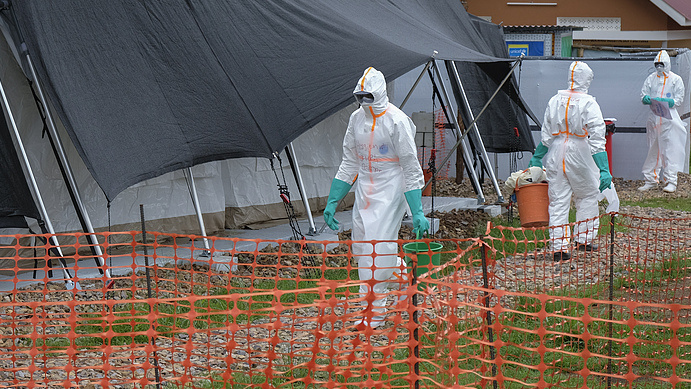
A far more serious Ebola outbreak has been spreading in Central and East Africa, with the World Health Organisation declaring it a Public Health Emergency of International Concern. Yet public attention has largely followed media amplification rather than public health risk.
The reality is that the warning signs are almost always visible long before catastrophe arrives.
An Ebola outbreak of this kind has long been considered likely. The collapse of donor funding to African health systems made containment predictably harder. Delayed detection was foreseeable.
Shift to real-time accountability
Given that we live in the Age of Artificial Intelligence, it is time to say goodbye to the age of accountability and embrace something much more radical – real-time accountability.
This means systems capable of identifying deterioration early and responding continuously – before collapse occurs.
Medicine has operated this way for decades. Intensive care units rely on continuous monitoring, early warning systems and rapid intervention before collapse occurs. Modern public health governance and accountability should function similarly. Not through commissions five years later, enquiries after avoidable deaths or audit reports after the money is gone.
Hierarchy and authority
Part of the challenge might also lie in something surprisingly subtle: who institutions are designed to be accountable to.
Walk into many government buildings and one of the first things you will often see is portraits of political leaders – ministers, deputy ministers, MECs, mayors or senior political office bearers.
The symbolism matters because institutions eventually orientate themselves around what is made visible and important.
Behavioural science has repeatedly demonstrated that environments saturated with symbols of hierarchy and authority tend to encourage compliance, caution and upward deference rather than initiative, adaptability and operational problem-solving. People become more focused on avoiding political risk than resolving practical failures quickly.
Modern systems fail operationally long before they fail politically. A recent visit to China made the contrast strikingly visible.
In museums, transport facilities and public spaces, detailed organisational displays identified the individuals responsible for practical delivery.
The photos and names were of who manages each floor, who oversees maintenance and who supervises cleaning, backed up by a dedicated counter for handling visitor complaints. Telephone numbers were publicly displayed in both Mandarin and English. Complaint desks were visibly staffed.
In one city, even the police officer responsible for a particular neighbourhood block was publicly identified, together with clear channels citizens could use if standards were not being maintained.
The message was unmistakable: someone specific is operationally responsible for this environment right now and if you are concerned, there is an immediately available system for raising the concern.
If this sounds radical, it is because the scale and speed of modern societal risk demand radical rethinking. The goal is not surveillance. The goal is societal proactive resilience.
Societies should not need leaked documents, public humiliation or social media outrage to discover that hospitals have no water, ambulances are failing, outbreaks are spreading or infrastructure is collapsing.
The warning signs should already be visible. The corrective action should already be under way. That is what accountability means. Visible and transparent real-time accountability will lead to accountability being embedded into the daily functioning of society itself.
And if achieving that requires us to fundamentally rethink how we, as a society, measure performance from our public and private institutions, how we expect such institutions to communicate with citizens and how operational responsibility is monitored in the AI age, then that is precisely the conversation South Africa needs to have.
- Dr Wolvaardt is the founder of the Foundation for Professional Development and has recently stepped down as managing director.
- South Africa's "age of accountability" often reacts to failures too late, with consequences unfolding before institutions take action, leading to reactive and crisis-driven responses.
- Whistleblowers and investigative journalists play a vital role exposing dysfunction, but accountability should be proactive and embedded within institutions, not dependent on external pressure.
- Complex, interconnected systems, especially healthcare, require continuous, real-time monitoring and intervention to prevent collapse, rather than delayed investigations post-disaster.
- Institutional design focused on political hierarchy fosters caution and deference instead of prompt problem-solving; visible operational responsibility and accessible complaint systems encourage accountability.
- South Africa must embrace real-time accountability using AI and rethink performance measurement, communication, and responsibility to build proactive societal resilience and prevent recurring failures.


