


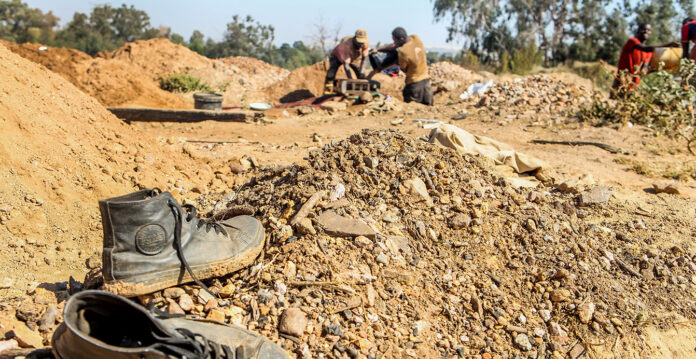
Miners in Congo’s Copperbelt could save about $1-billion annually by replacing diesel generation with imported electricity under a planned transmission project aimed at easing power shortages, commodities company Trafigura’s Congo head told Reuters.
Chronic power shortages in Democratic Republic of Congo, the world’s largest cobalt producer and second-largest copper producer, and neighbouring Zambia, Africa’s second-largest copper producer, have constrained mine expansion, processing and investment.
Congo has also become a focal point in competition among the United States, Europe and China for critical minerals needed for the green energy transition.
$300m transmission project
Britain-backed investor Gridworks Development Partners and Singapore-based Trafigura are backing the $300 million project that will connect Congo’s Copperbelt to the Southern African Power Pool, the companies said in a joint statement. The SAPP is a regional electricity market that links national grids across southern Africa and allows countries to trade power across borders.
Read more: DR Congo government, M23 agree on roadmap for peace talks
Gridworks will serve as lead equity investor and majority shareholder in the Kalumbila-Kolwezi Interconnector Project (KKIP), alongside Congo’s state investment fund FIS-RDC, Congolese power trader EnPower and Trafigura, the statement said.
The partners have agreed to finance, build and operate a 200-km transmission line between Kalumbila in Zambia and Kolwezi in Congo, enabling imports of up to 550 MW of electricity into a mining region facing a power deficit of more than 1 GW. Total thermal capacity is expected to reach 700 MW, with scope to expand beyond 1 GW, it added.
Final development stage
The project has secured the required concessions, licences and authorisations and is in its final development stage, the partners said. No launch date was provided.
Read more: WHO says Ebola outbreak in Uganda is over, as cases rise in Congo
“You cannot significantly expand copper and cobalt production, refining, or local beneficiation without reliable power,” Herve Otschudi, Trafigura’s Congo head, said.
Otschudi said industry studies indicate miners could save about $1-billion annually by replacing diesel generation with imported electricity due to the high cost of the fuel.
Lower energy costs for miners
He said the project’s economics were compelling, as it aligned the interests of governments, miners and power producers.
Trafigura said power from the project would be available to all mining companies in the region.
Otschudi said the project complements the trader’s investments in the Lobito Corridor and logistics infrastructure in Congo’s Katanga region, helping improve efficiency across the copper-cobalt supply chain. “It’s like closing the loop with the electricity,” he said.
- Miners in Congo’s Copperbelt could save about $1-billion annually by replacing diesel generation with imported electricity under a planned transmission project aimed at easing power shortages, commodities company Trafigura’s Congo head told Reuters.
- Chronic power shortages in Democratic Republic of Congo, the world’s largest cobalt producer and second-largest copper producer, and neighbouring Zambia, Africa’s second-largest copper producer, have constrained mine expansion, processing and investment.
- Congo has also become a focal point in competition among the United States, Europe and China for critical minerals needed for the green energy transition.
- $300m transmission project Britain-backed investor Gridworks Development Partners and Singapore-based Trafigura are backing the $300 million project that will connect Congo’s Copperbelt to the Southern African Power Pool, the companies said in a joint statement.
- The SAPP is a regional electricity market that links national grids across southern Africa and allows countries to trade power across borders.


