


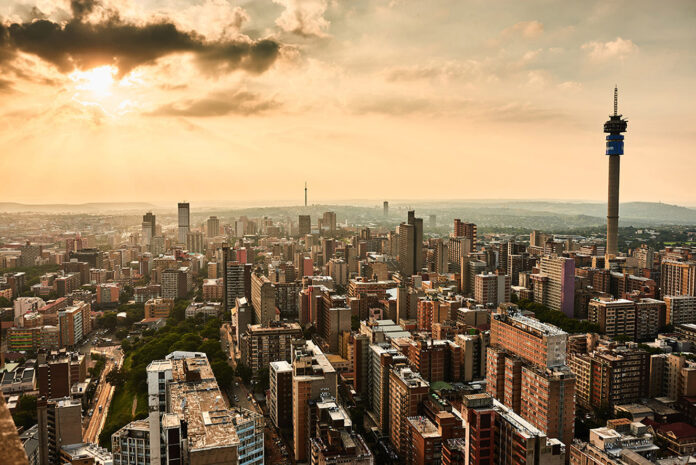
Can the growing crisis around Johannesburg’s finances and revenue management finally become the moment that forces South Africa’s leadership to confront the true economic cost of institutional failure? Because it should.
Johannesburg is not simply another municipality; it is the economic engine of South Africa, the country’s financial capital and one of the most important commercial cities on the African continent.
When Johannesburg struggles, South Africa feels it. And when serious allegations of financial mismanagement, governance breakdown and revenue system failures emerge within such a critical economic hub, it cannot simply become another passing headline in a country increasingly desensitised to crisis.
At some point, national, provincial and local leadership must collectively stand up and say, “Enough. Enough deterioration. Enough financial leakage. Enough institutional decay.”
Because the real cost to South Africa is not only the billions allegedly lost through corruption, waste, mismanagement and governance failure. The real cost is the economic growth those billions could have created. That is the tragedy.
Economists understand that through the multiplier effect, a single R1-billion investment into infrastructure, logistics, manufacturing support, energy, or business development can ultimately generate several billion rand in broader economic activity while supporting thousands of jobs.
Now multiply that over years. The true loss is therefore not only financial. It is developmental. It is the factories never built. The rail systems never modernised. The electricity infrastructure never expanded. The businesses never funded. The jobs never created, and, ultimately, the economic momentum that never materialised.
This is where the Johannesburg crisis becomes so significant. The city should be attracting investment, driving growth and positioning itself as the financial gateway to Africa. Instead, confidence is repeatedly shaken by governance instability and financial uncertainty. And confidence matters in economics. Investment follows confidence. Growth follows investment. Employment follows growth. That is how economies expand.
No economy can sustainably grow while institutional instability and financial mismanagement dominate the investment environment. At the same time, South Africa now faces mounting external economic pressure.
Middle East tensions continue driving volatility in oil markets. Fuel costs remain elevated. The rand remains vulnerable. Inflationary pressure continues building beneath the surface. This is precisely the moment when South Africa should be operating from a position of institutional strength and economic resilience.
Instead, the country is attempting to navigate growing global instability while simultaneously fighting internal governance failures of its own making. And that combination is dangerous because South Africa desperately needs growth.
Growth that expands businesses.
Growth that creates employment.
Growth that attracts investment.
Growth that restores confidence.
Growth that strengthens municipalities instead of weakening them.
An economy cannot redistribute wealth it never creates. And right now, South Africa is haemorrhaging economic potential. This is not about politics. It is about economics. A country cannot continue losing productive public resources while expecting strong growth, stable investment inflows, expanding employment and rising living standards.
At some point, the leakage becomes economically destructive.
South Africa is not a country without potential. It has sophisticated financial markets, entrepreneurial talent, globally competitive sectors and natural resources. But potential alone does not build prosperity. Execution does. Governance does. Institutional credibility does.
And perhaps that is why the Johannesburg situation matters so much. Because maybe this is finally the moment where leadership across all spheres of government recognises that the economic cost of continued deterioration has simply become too large to tolerate any longer.
South Africans are resilient. Businesses continue operating under immense pressure. Citizens continue paying taxes, building companies, creating jobs and carrying the economy forward despite enormous challenges. But resilience cannot become an excuse for continued failure. At some point, the system itself must improve because a prosperous, growing economy benefits every South African. It creates opportunity. It reduces unemployment. It strengthens the fiscus. It improves stability. It restores confidence.
And South Africa still has the capacity to build that future. But only if the country decisively confronts the institutional and financial failures that continue bleeding growth year after year. The real danger is not only the money already lost. It is the prosperous economy South Africa continues losing alongside it.
- Van Doesburgh is head of economics, and a regular commentator on SA’s economic landscape, focusing on financial markets, policy and business strategy. vandoesburghm@cput.ac.za
- Johannesburg, as South Africa’s key economic hub, is facing severe financial mismanagement and governance breakdown, threatening national economic stability.
- The city’s institutional failures lead to billions lost in potential investments that could have driven growth, jobs, infrastructure, and broader economic development.
- Ongoing governance issues erode investor confidence, which is critical for attracting investment, stimulating growth, and creating employment in Johannesburg and beyond.
- South Africa is currently vulnerable to global economic pressures, making institutional weaknesses particularly dangerous for sustaining growth and economic resilience.
- The crisis highlights the urgent need for national, provincial, and local leaders to address institutional decay to prevent further economic losses and restore confidence essential for future prosperity.


