


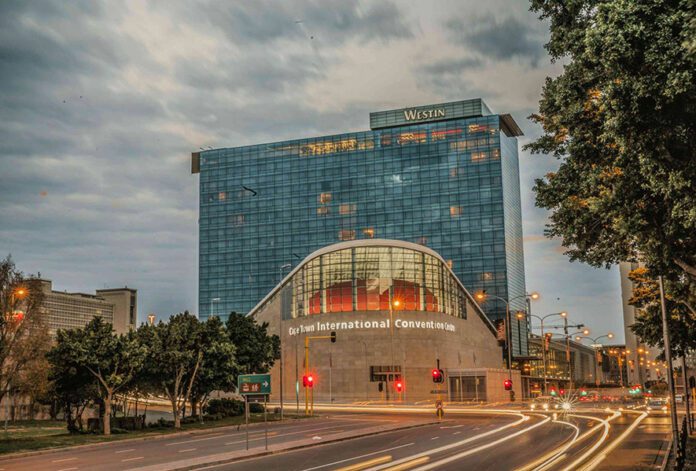
The Cape Town International Convention Centre (CTICC) would be better positioned to grow its market share and attract more international events if ownership were transferred to a commercially agile company, says the City of Cape Town.
It says the proceeds from the proposed sale of its majority stake in CTICC will be used to fund service delivery.
The city’s shareholding in the CTICC is 72.7%. The Western Cape government holds 22.2% and Sunwest International 5.1%.
Mayoral committee member for finance Siseko Mbandezi said the proposed sale would not alter the CTICC’s importance in the city’s economic ecosystem.
“The land would remain in the ownership of the city and the facility would remain a conference venue. The proceeds will be invested in service delivery.”
Strategic asset
However, the city’s rationale for the sale has drawn the ire of opposition parties, who have rejected the proposal to sell its majority shareholding for R885-million. Their argument is that the city is selling off a strategic asset that has contributed billions to the local economy.
“Time and again, we have witnessed a pattern where public infrastructure and strategic assets are viewed primarily through the lens of financial transactions rather than their broader social and economic value to residents,” ANC Cape Town caucus leader Ndithini Tyhido said.
When the sale proposal was initially advanced, the city embarked on a 30-day public participation process – from September 5 to October 6, 2025 – inviting the public and stakeholders to comment.
The outcome was tabled before the council in December 2025. The council subsequently made an in-principle decision through Resolution CM15/12/25 to proceed with the potential sale.
Tyhido said the ANC caucus believed that the CTICC had consistently demonstrated its value to the people of Cape Town.
“Selling the city’s stake now would amount to sacrificing a strategic public asset for a one-off financial gain, while forfeiting future benefits and influence over an institution that remains critical to the city’s economic development agenda,” he said.
“At a time when Cape Town faces mounting service delivery challenges, growing inequality, housing backlogs and infrastructure needs in poorer communities, the city should be focused on leveraging strategic assets like the CTICC to drive inclusive economic growth rather than relinquishing ownership.”
Disclosure and transparency
GOOD party caucus leader Suzette Little said there should be full disclosure of the specialist reports, independent market valuations, future revenue projections, liabilities, transaction structures and any discussions that might have taken place with prospective purchasers.
“Cape Town cannot continue demanding more from households while quietly disposing of assets that help generate the very revenue it claims to need,” Little said
Mbandezi said a commercial attorney had been appointed to provide guidance on the implementation of a transparent and competitive process for engaging potential investors.
“The City of Cape Town has supported the growth of this asset over the years. To date, this asset has created or sustained more than 169 000 jobs, contributed R58 billion to the Western Cape’s GDP and added R66.9 billion to South Africa’s GDP.”
Visit SW YouTube Channel for our video content
- The City of Cape Town proposes selling its 72.7% majority stake in the Cape Town International Convention Centre (CTICC) for R885 million, aiming to use the proceeds to fund service delivery improvements.
- The city believes CTICC would better grow its market share and attract international events if owned by a commercially agile company, while the land would remain city-owned.
- Opposition parties, especially the ANC, criticize the sale, arguing CTICC is a strategic public asset that contributes significantly to the local economy and its sale forfeits future benefits and influence.
- A 30-day public participation process was conducted from September to October 2025, and the council gave an in-principle approval to proceed with the sale in December 2025.
- GOOD party calls for full transparency, demanding disclosure of valuations, future revenue projections, liabilities, and purchaser discussions, while the city says it will follow a transparent, competitive process for investors.


