


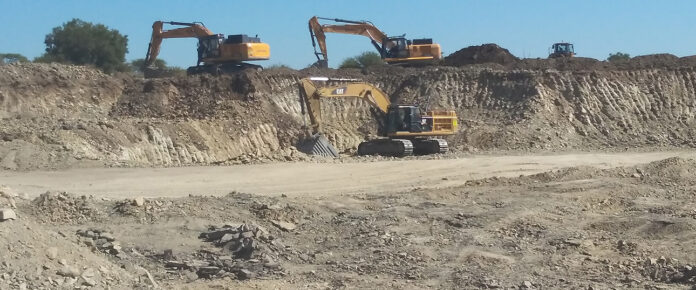
The traditional community that gave rise to former Bophuthatswana president Lucas Mangope has welcomed a major North Gauteng High Court, Pretoria, victory restoring control of Marico Chrome Mine to its legal corporate structures.
However, emerging reactions from the community suggest the judgment might also reopen long-standing tension around accountability, mining benefits and traditional governance.
In a judgment delivered by Judge A Millar, the high court found that court-appointed receivers Theodore Wilhelm van den Heever, Kgashane Christopher Monyela and Olckers Chopologe Koikanyang unlawfully remained in control of Marico Chrome Corporation after the company’s provisional liquidation was discharged on September 22, 2023.
The court ordered the receivers to relinquish control of the company, hand over records and assets and provide a full written account of their management of Marico Chrome’s affairs since September 2023.
The Bahurutse-Boo-Monyane Traditional Community, which holds a 15% stake in the company and is linked to the mining rights associated with the operation, celebrated the ruling as a breakthrough.
Bahurutse-Boo-Monyane traditional leader Kwena Mangope told Sunday World the judgment represented the beginning of hoped-for development for communities living around the mine.
“We welcome the judgment as the court has concluded its work. We want to see positive changes for our people. Much-needed development must happen across our land.”
However, uncertainty remains over who will ultimately take charge of the mine after the receivers were removed.
Mangope said it was too early to make definitive pronouncements. “We really cannot comment on that now because there are negotiations that must still take place.”
The community, based around Motswedi in the Marico region near Zeerust, occupies a significant place in South African political history.
Marico Chrome, one of the long-standing mines located close to the villages of Mmasebudule and Maroelakop is at the centre of the conflict.
The Bushveld Complex, a geological formation that supports South Africa’s major chrome industry, provides the mine with its mineral wealth.
For decades, however, communities around Mmasebudule, Maroelakop and Motswedi have raised concerns about royalties, jobs, local economic participation and whether residents are benefiting from the mineral wealth.
The court ruling has, however, also revealed apparent communication gaps in traditional structures.
Kwena Mangope’s brother, Piki Mangope, told Sunday World he was unaware of the court application and had not received a report about it through traditional council structures.
“I was not a party to the matter. I cannot comment on something that I do not know. I’m a member of the traditional community but I’m not aware of that court case,” he said.
The judgment also drew a cautious response from author and public servant Oupa Segalwe, who wrote the historical book Lucas Mangope: A Life.
Segalwe said the legal victory would ultimately be judged on whether it changed the lives of the people living in the area.
“For as long as the legal wrangling does not serve to improve the sorry socioeconomic status of the impoverished communities of Motswedi and Mmasebudule, it is worthless,” Segalwe told Sunday World. “Underdevelopment, joblessness and alcohol abuse are among the demons haunting the two communities.”
He said mining communities elsewhere in South Africa often benefited from infrastructure, youth programmes and employment opportunities tied to nearby operations.
“Coupled with that are employment opportunities from the same mines and bursaries for local youth.
“The same cannot be said of Motswedi and Mmasebudule, despite the millions of rand in royalties that are due to the two communities.
“It’s not clear where the money goes or who pockets it to the detriment of these communities. This has been the case since the pre-democratic order. Accountability is long overdue.”
Court papers show that Marico Chrome was placed under provisional liquidation in 2016 before creditors later approved a scheme of arrangement dealing with about R74.7 million in claims.
One of the more startling revelations in the judgment was the community’s allegation that the receivers earned about R68.6m in cumulative fees after the liquidation order had been discharged.
Millar acknowledged the seriousness of the concerns.
“Considering that this amount is almost the same amount of the concurrent creditors’ claims that were compromised in the scheme of arrangement, it is not unreasonable that the applicants are concerned,” the judge said.
- The North Gauteng High Court ruled that court-appointed receivers unlawfully controlled Marico Chrome Mine post-liquidation, ordering them to hand over control and provide a management account.
- The Bahurutse-Boo-Monyane Traditional Community, holding 15% stake and linked to mining rights, welcomed the judgment as a step toward local development and improved community benefits.
- Longstanding community concerns persist over transparency, royalties, local jobs, and accountability in mining operations around Motswedi, Mmasebudule, and Maroelakop.
- Internal communication issues emerged within the traditional leadership, with some leaders unaware of the court case and the community's next steps remaining uncertain.
- Critics emphasize that the legal victory is meaningful only if it leads to socioeconomic improvements, highlighting ongoing issues like poverty, joblessness, and unclear management of mining royalties.


