


H.E. Mohammad Ali Rashed Lootah
Africa is entering a new era of economic growth. Across the continent, businesses are scaling faster, innovating more boldly and increasingly looking beyond their domestic markets for opportunities. From manufacturers to fintech innovators, African companies are becoming more ambitious in their pursuit of regional and international growth.
The momentum is being driven by powerful structural trends. Africa is home to some of the world’s fastest-growing cities, a rapidly expanding consumer base, increasing digital adoption and a new generation of entrepreneurs building businesses with regional and global aspirations.
The African Continental Free Trade Area (AfCFTA) is expected to accelerate the transformation. By creating the world’s largest free trade area by number of participating countries, AfCFTA has the potential to strengthen intra-African trade, improve regional value chains, and create opportunities for African businesses to scale across borders.
Yet, as companies expand, they also need access to international markets, investment, logistics networks and strategic partnerships that can support growth beyond the continent.
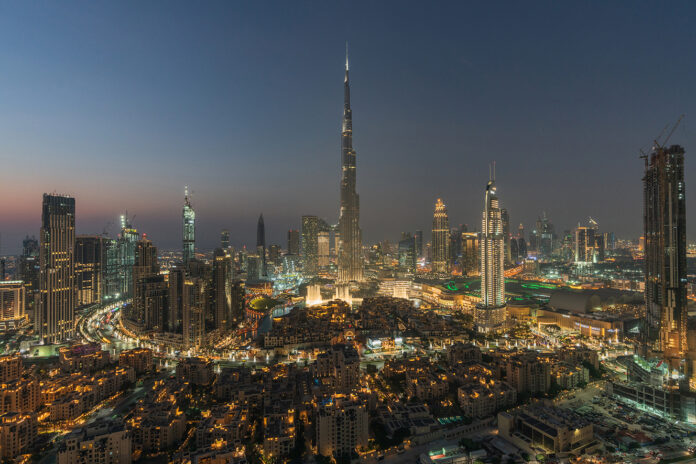
This is where global business hubs such as Dubai can play an important role.
Dubai offers more than access to a single market. It provides a platform that connects businesses to customers, investors, suppliers and partners across the Middle East, Asia and Europe.
As trade routes continue to evolve, the connections are becoming increasingly valuable for companies looking to diversify export markets and strengthen their global competitiveness.
The strength of the relationship between Dubai and Africa is evident. In 2025, non-oil trade between Dubai and Africa exceeded $146 billion, representing year-on-year growth of 51%. Over the past decade, Dubai’s non-oil trade with Africa has grown by 325%, reflecting deeper commercial ties and growing business activity between the two regions.
Business confidence is also reflected in the growing presence of African companies in Dubai. In 2025, the number of African companies registered as active members of the Dubai Chamber of Commerce reached 30 409, an increase of 14.3% compared to the previous year.
For many African companies, the challenge is no longer identifying opportunity but having the access to infrastructure, capital, networks and market intelligence required to convert opportunity into sustainable growth.
Whether supporting an agribusiness exporter entering new markets, a technology company seeking international investors or a manufacturer looking to strengthen its supply chain, access to the right ecosystem can accelerate expansion.
Dubai’s value proposition lies in its ability to bring the elements together. Its logistics infrastructure, global connectivity, specialised business zones, financial ecosystem and international networks enable companies to establish regional and global operations efficiently.
For African businesses, this can help reduce barriers to international expansion while creating new pathways for trade and investment.
The relationship between Dubai and Africa is increasingly becoming a two-way growth story. As African economies continue to industrialise and diversify, Dubai companies are looking to the continent as a source of long-term investment opportunities, innovation, talent and market growth.
Dubai Chambers is committed to supporting this growing economic relationship. Through the Dubai International Chamber, we operate seven representative offices across Africa. Our objective is to transform commercial interest into practical outcomes that support investment, trade and business growth.
The commitment was reflected in recent trade missions to Ghana, Ethiopia and South Africa, where 45 Dubai companies participated in 1 460 bilateral business meetings with potential partners across the continent.
Business forums held alongside the missions attracted more than 1 700 participants, including government officials, investors and business leaders. The engagements are important because sustainable economic partnerships are built through direct business connections, market knowledge and long-term collaboration.
As Africa’s economic integration gathers pace and businesses increasingly seek opportunities beyond traditional markets, partnerships that improve market access, facilitate investment and strengthen trade connectivity will become more important than before.
The next generation of globally competitive businesses will increasingly emerge from Africa. Their success will depend not only on ambition and innovation but also on access to the international networks that enable growth at scale.
By strengthening economic ties, Dubai and Africa have an opportunity to build a partnership that supports business growth, creates jobs and contributes to long-term prosperity across both regions.
- Rashed Lootah is president and CEO of Dubai Chambers
- Africa is experiencing rapid economic growth driven by urbanization, a growing consumer base, digital adoption, and entrepreneurial ambition, supported by initiatives like the African Continental Free Trade Area (AfCFTA).
- The AfCFTA aims to enhance intra-African trade, regional value chains, and cross-border business expansion, requiring access to international markets and partnerships.
- Dubai serves as a critical global business hub, offering connectivity, logistics, financial ecosystems, and networks that facilitate African companies' international growth beyond the continent.
- Trade between Dubai and Africa is booming, with non-oil trade exceeding $146 billion in 2025, a 51% year-on-year increase, and over 30,000 African companies registered with the Dubai Chamber, reflecting deepening commercial ties.
- Dubai Chambers actively supports Africa-Dubai economic collaboration through trade missions, business forums, and representative offices, promoting sustainable business partnerships, investment, and shared prosperity.


