


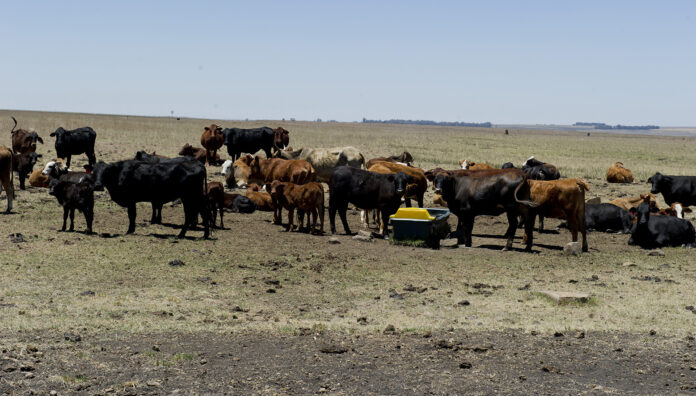
A potentially significant El Niño is gathering strength, raising the prospect of hotter and drier conditions across much of southern Africa in the months ahead.
For South Africa, this is not simply a seasonal weather concern. It is an early warning of pressures that could extend from farms and food prices to water systems, energy supply chains and broader economic activity.
More than a weather story
That is why economists, insurers, agricultural producers and policymakers are paying attention.
If El Niño develops as forecast, it could become an important test of South Africa’s economic resilience, exposing vulnerabilities that may be less visible during periods of abundant rainfall.
The precise impacts remain uncertain. El Niño does not produce the same rainfall patterns in every season or every part of the country.
Yet uncertainty about outcomes does not eliminate the underlying risk. If anything, it highlights the importance of understanding how exposed the economy remains to climate-related shocks.
Beyond the farm gate
Too often, discussions about El Niño focus primarily on agriculture.
That is understandable. South Africa’s historical experience has shown that severe El Niño events can reduce crop yields, particularly in key maize-producing regions, with implications for food prices and rural livelihoods.
But the bigger question is not what happens on farms alone. It is what happens across the economy when climate shocks interact with existing infrastructure, governance and resource constraints.
Lessons from Europe
Recent developments in Europe offer a useful reminder.
Severe drought conditions and unusually low river levels have disrupted freight transport, increased logistics costs and created challenges for industries that depend on reliable water supplies. In some areas, power generation has also been affected where facilities rely on large volumes of water for cooling.
What makes these examples noteworthy is not simply the scale of the disruption, but where it is occurring.
Climate vulnerability is often discussed as a developing-country challenge.
Yet recent events demonstrate that even advanced economies can face significant economic consequences when environmental conditions place pressure on critical infrastructure systems.
South Africa should take note.
Economic consequences could be widespread
A severe drought would affect far more than agricultural output.
It would test the resilience of water infrastructure already under pressure in many municipalities. It could place additional strain on sectors such as mining, manufacturing and tourism, all of which depend directly or indirectly on reliable access to water and energy.
It could also contribute to higher food prices, affecting households and businesses across the economy.
Fiscal pressures may follow
There are also potential implications for the public finances.
Drought conditions can increase pressure on governments and municipalities through emergency interventions, infrastructure spending requirements and weaker economic activity.
Climate shocks do not only affect individual sectors. They can create ripple effects that ultimately influence fiscal resources and public service delivery.
Drought as a stress test
This is why drought should be viewed as more than a weather event.
In many respects, it functions as a stress test.
Periods of plentiful rainfall can mask weaknesses in infrastructure maintenance, operational performance and long-term planning.
Drier conditions do not necessarily create those weaknesses. They expose them.
Municipal water losses, ageing infrastructure and inadequate contingency planning may receive limited attention when water is abundant. During a drought, however, those vulnerabilities become difficult to ignore.
The key question for South Africa
The real question, therefore, is not whether this summer will be wetter or drier than normal.
It is whether South Africa can absorb another climate shock without significant economic disruption.
Have we strengthened water infrastructure sufficiently since previous drought cycles?
Have businesses adequately assessed climate-related risks across their operations and supply chains?
Are municipalities better positioned to manage water scarcity than they were a decade ago?
And have we invested enough in resilience while conditions were favourable?
These questions matter because climate resilience is increasingly becoming an economic and competitiveness issue.
Investors, businesses and governments are paying closer attention to whether countries can maintain infrastructure performance, protect economic activity and respond effectively to disruption.
Climate shocks are economic shocks
Climate shocks are often described as environmental events.
Increasingly, they are economic events as well.
If El Niño develops as forecast, South Africa will not simply be tested by the weather. It will be tested by the resilience of its infrastructure, institutions and businesses.
What economists will be watching
The severity of the economic impact may ultimately depend less on the climate itself and more on how prepared we are to deal with it.
That is the issue economists will be watching closely.
Schaefer is senior economist at Deloitte Africa
- A potentially significant El Niño is forming, raising concerns of hotter and drier conditions in southern Africa, especially South Africa.
- El Niño's effects could extend beyond agriculture to impact food prices, water systems, energy supply chains, and the broader economy.
- Severe drought could strain South Africa’s water infrastructure, mining, manufacturing, tourism, and public finances.
- The drought functions as a stress test, exposing vulnerabilities in infrastructure and planning that are often hidden during wet periods.
- Economists will focus on South Africa’s preparedness and resilience to climate shocks rather than just the climate event itself.


