


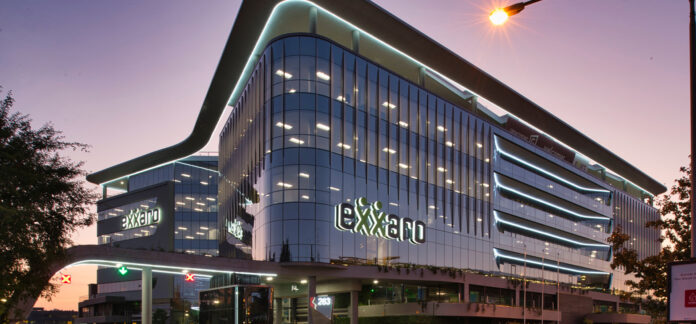
Diversified miner Exxaro has opened the door to a possible disposal of its 24.4% stake in Black Mountain Mining.
On Thursday, Exxaro announced that group headline earnings per share, a key profit measure, fell 20% to R13.77 due to weaker contributions from Black Mountain and Sishen Iron Ore Company (SIOC) where it holds a minority stake alongside Kumba Iron Ore.
Black Mountain’s profits dropped in the first half of 2026, reporting only R1-million in earnings, to R289-million, in the comparative period last year.
The decrease was driven by the delays in the improvement of its sole asset, the Gamsberg zinc project near Aggeneys in the Northern Cape.
This resulted in a 14% cut in dividends during the report period, bringing the declared dividend down to 700 cents per share compared to 843 cents per share in the comparative period.
Ben Magara, the Exxaro chief executive, said Black Mountain was a non-core asset and the shareholding could be sold if a suitable partner was found.
“Black Mountain, in our strategy, is non-core, which means if we found a buyer today at the right price, we would sell.
“However, they have very clear expansion plans. They have the Gamsberg phase project, which they are currently expanding, and are running the processing line.
“That is going slower than we would have liked and it hurts the marginal profit that they made,” he said.
Magara also attributed the decline in profit to external cost pressures, with the rand strengthening by around 11%, and diesel prices increasing by 21%.
Two-thirds of Exxaro’s revenue is derived from coal sales to Eskom and the dollar-denominated export market, mainly to Asia. This makes earnings vulnerable to rail logistics and currency movements.
Magara said SIOC, in which Exxaro had a 25% stake, might have also been impacted by higher diesel costs and a lower rand but there was no plan to exit the investment.
He added that it had a notable impact on the bottom line.
Magara said iron ore remained profitable and continued to generate good revenue for Exxaro.
He also noted the improvement in iron ore prices as a reason for remaining positive about the investment.
“It is still profitable – the mining we get there as dividend is past 100% to our shareholders and we know, we have seen iron ore prices are better than what we had in the first half, so I have no doubt that long-term, this is a fantastic asset. It is still core to our business,” he said.
Magara said there was a strong interest in iron ore but Exxaro had an expansion strategy based on versatility. Its recently acquired manganese business was included in the past four months of its results for the reporting period.
Exxaro has bought a controlling stake in Tshipi é Ntle Manganese Mining and expects the asset to contribute more to revenue and earnings.
The group has been building its position in the Northern Cape manganese industry through Tshipi, its manganese marketing interests, and plans to acquire full ownership of Mokala, another manganese producer.
The group also holds a 9% interest in the Hotazel manganese assets owned by South32.
“We want to invest in a copper project. We tried to buy a running mine but they are just too expensive.
“Given our exploration expertise in that regard, we are looking for advanced exploration projects that we can then acquire and use to take up the value curve.
“It is not a priority right now. The priority is to consolidate what we have in manganese.
“But we still have aspirations that we may find in advanced exploration projects in copper, which may suit our investment criteria in the crit ical minerals as we go.”
Exxaro has earmarked R4-billion of the R6.4-billion in its cash reserves to acquire the remaining interests held by Ntsimpintle and ultimately, own 100% of the mine.
Magara said the Mokala transaction was expected to close by February 2027, subject to the completion of the formal and legal agreements.
The expansion would give Exxaro a significantly larger footprint in manganese and deepen its exposure to a commodity it sees as strategically important.
Mish-Al Emeran, the Abax Investments portfolio manager, said a potential disposal of Exxaro’s stake in Black Mountain Mining could improve the miner’s earnings.
“The more relevant investment consideration is the strategic benefit of removing a lower-ROC asset that adds volatility to group earnings and increases portfolio complexity.
“An exit could therefore improve the quality of Exxaro’s earnings mix, simplify management focus and allow capital to be directed toward higher return opportunities, even if the disposal itself does not crystallise significant value,” Emeran said.
- Exxaro's group headline earnings per share fell 20% to R13.77, mainly due to weaker contributions from Black Mountain and Sishen Iron Ore Company (SIOC).
- Black Mountain Mining's profits dropped to R1-million in the first half of 2026 from R289-million the previous year, caused by delays in the Gamsberg zinc project's improvements.
- Exxaro’s CEO, Ben Magara, stated Black Mountain is a non-core asset that may be sold if a suitable buyer is found, while SIOC remains a profitable core investment with no exit plans.
- Exxaro is expanding its manganese business, including acquiring a controlling stake in Tshipi é Ntle Manganese Mining and plans to fully own the Mokala mine by February 2027.
- Exxaro is exploring potential investments in advanced copper exploration projects but prioritizes consolidating its manganese assets and has allocated R4-billion of cash reserves toward acquiring full interest in the Mokala mine.


