


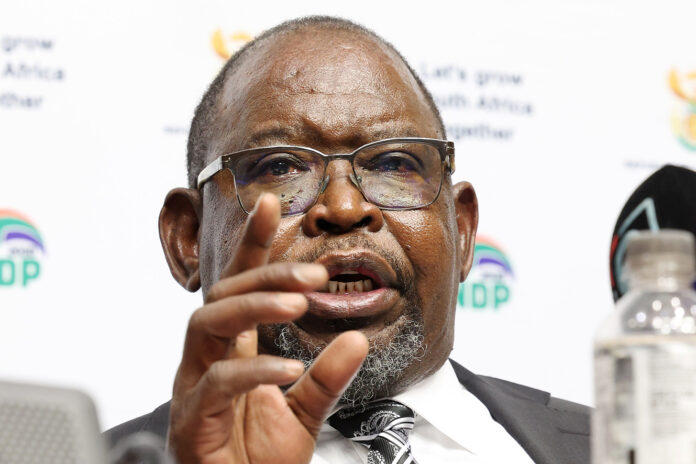
Finance Minister Enoch Godongwana has described the fight against broad-based black economic empowerment (B-BBEE) as racist.
Speaking at the Nedbank Top Empowerment Conference at Sandton Convention Centre, Godongwana said those fighting against this policy, which is designed to redress the economic inequalities of the apartheid era, show remnants of racism.
He said keeping the B-BBEE on track was important even during a time he said was unfashionable to promote the policy.
The Constitutional Court is yet to deliver judgment on an application brought by trade union Solidarity challenging the B-BBEE procurement framework.
The union argues that state regulations, which reserve 30% of procurement for black-owned enterprises and require businesses to source 40% of their inputs from black-owned suppliers, exclude qualified businesses and increase taxpayer costs.
Collective work and coordination important
“It’s going to be important that we have some collective work and coordination between the different economic situations—business, government and everybody who is involved in this sector.
“The World Bank president who was here a couple of weeks ago has put a challenge on me. He said he is putting $50-million on the table. That day, if I did the conversions right, it was about R800-million. He then left me to run around for small and medium enterprises (SMEs),” said Godongwana.
He highlighted that the situation still needs to be improved. Empowerment cannot only be limited to financial transactions but it must also be considered as a way of granting people equal opportunities.
Godongwana noted that skills are also changing and young people are better equipped to adapt to the skills required in digital transformation.
Misrepresentation, fronting undermine transformation
Yolandi Venter, Association of B-BBEE Professionals and B4i Economic Empowerment Division CEO, said misrepresentation and fronting has undermined transformation, It also affects scorecards, and creates risks for corporates.
She said there is a stronger need to professionalise the B-BBEE industry for sustainable economic transformation.
“Pofessionalisation is no longer optional, it is essential. Professionalisation creates accountability, it establishes minimum compliance standards, it promotes ethical conduct, and it introduces disciplinary mechanisms where there are breaches.
“It provides insurance to businesses that the individuals advising or verifying them possess the necessary knowledge, experience and professional oversight required to operate it this highly specialised field,” said Venter.
She emphasised that treating compliance as a tick-box exercise puts risk to the character of the business.
Read More: Measure B-BBEE outcomes to ensure inclusive economic growth
- Finance Minister Enoch Godongwana has described the fight against broad-based black economic empowerment (B-BBEE) as racist.
- Speaking at the Nedbank Top Empowerment Conference at Sandton Convention Centre, Godongwana said those fighting against this policy, which is designed to redress the economic inequalities of the apartheid era, show remnants of racism.
- He said keeping the B-BBEE on track was important even during a time he said was unfashionable to promote the policy.
- The Constitutional Court is yet to deliver judgment on an application brought by trade union Solidarity challenging the B-BBEE procurement framework.
- The union argues that state regulations, which reserve 30% of procurement for black-owned enterprises and require businesses to source 40% of their inputs from black-owned suppliers, exclude qualified businesses and increase taxpayer costs.


