As companies place greater value on staff, the conversation around work is shifting fast.
It’s not just about where employees sit anymore; it’s about how they work together, when they’re most productive, and with whom.
Flexible and hybrid working models have moved from being a pandemic experiment to a strategic tool for attracting and retaining top talent.
By 2026, advances in technology, data-driven workplace design, and artificial intelligence (AI) will push this evolution even further, reshaping careers, productivity, and employee well-being.
According to International Workplace Group (IWG), the world’s largest flexible workspace platform and home to brands such as Regus and Spaces, the focus in the coming year will shift decisively from location to outcomes.
Profitability, productivity, and people’s well-being will take centre stage as businesses rethink how work fits into everyday life.
By 2026, AI will be a standard “co-pilot” in the workplace.
From admin and scheduling to information retrieval, routine tasks will increasingly be handled by intelligent systems, freeing employees to focus on creativity, complex problem-solving, and building relationships.
Interestingly, this shift is being driven across generations. IWG research shows that 62% of Gen Z employees are already coaching older colleagues on how to use AI tools more effectively.
Multi-location work encouraged
Directors and senior leaders say this collaboration has boosted productivity and unlocked new business opportunities.
Employers are now expected to use AI and workplace analytics to create personalised hybrid plans for staff, from ideal workdays to preferred co-working locations.
Rather than forcing employees back to a single headquarters, companies are embracing multi-location work.
Staff are increasingly empowered to work from offices closer to home, whether that’s a suburban hub, a small town, or a flexible workspace nearby.
The message is clear: convenience drives productivity. Career progression is also being rewritten.
Micro-certifications, short, focused skills-based courses, are gaining ground over traditional degrees and annual reviews.
Employers are funding on-demand learning platforms, creating agile, future-ready talent pools where skills, not titles, define value.
While quiet quitting made headlines, a more subtle issue is emerging: “quiet cracking”. Employees may still be performing, but mentally and emotionally they are burned out.
With more than half of workers saying they disengage when they feel undervalued or micromanaged, companies are turning to flexible work and well-being-focused tools to keep teams motivated.
Expect a rise in “well-tech”, from stress-tracking wearables to AI-powered mental health nudges.
In uncertain economic times, businesses are rethinking leadership too.
Fractional C-suite executives—experienced leaders working part-time or on contract—are becoming more common, offering expertise without the cost of full-time appointments.
Hybrid work is revitalising the concept of 15-minute cities, providing convenient access to work, living, and leisure.
Day offices becoming popular
In 2026, these communities will increasingly be built from the ground up.
As work becomes more local, employees are reconnecting with their communities, and companies are encouraging volunteering and local partnerships as part of the workweek.
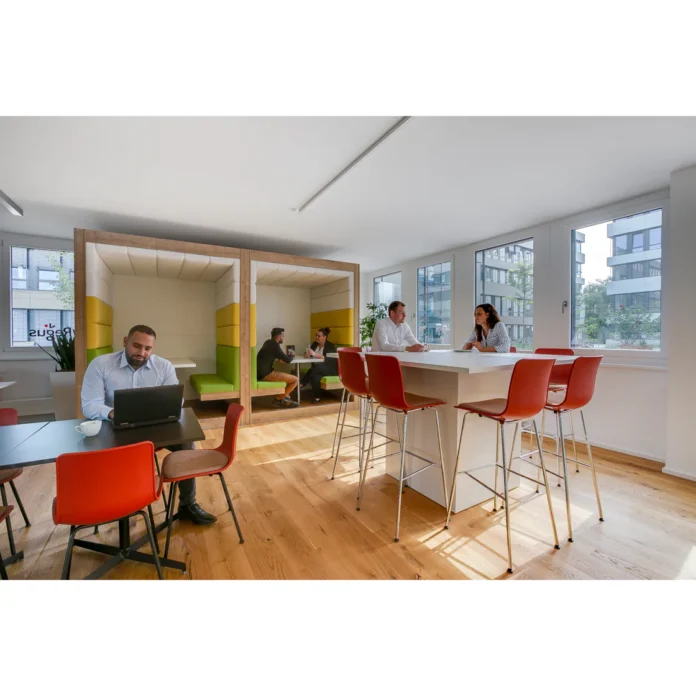
The office of the future will feel less corporate and more like a boutique hotel.
Concierge-style services, curated food, and well-being-focused design are transforming workspaces into lifestyle destinations.
Day offices, which provide professional space as needed, are also becoming increasingly popular.
IWG founder and CEO Mark Dixon says technology and flexibility are fundamentally changing the geography of work.
“The centre of gravity is moving towards local communities,” he says. “Advances in cloud technology and video conferencing mean people no longer need to travel long distances every day. This shift is enabling a more productive, engaged, and future-ready workforce,” Dixon says.
In 2026, work will be closer to home, smarter by design, and more human than ever before.
- As companies place greater value on staff, the conversation around work is shifting fast.
- It’s not just about where employees sit anymore; it’s about how they work together, when they’re most productive, and with whom.
- Flexible and hybrid working models have moved from being a pandemic experiment to a strategic tool for attracting and retaining top talent.
- By 2026, advances in technology, data-driven workplace design, and artificial intelligence (AI) will push this evolution even further, reshaping careers, productivity, and employee well-being.
- According to International Workplace Group (IWG), the world’s largest flexible workspace platform and home to brands such as Regus and Spaces, the focus in the coming year will shift decisively from location to outcomes.