


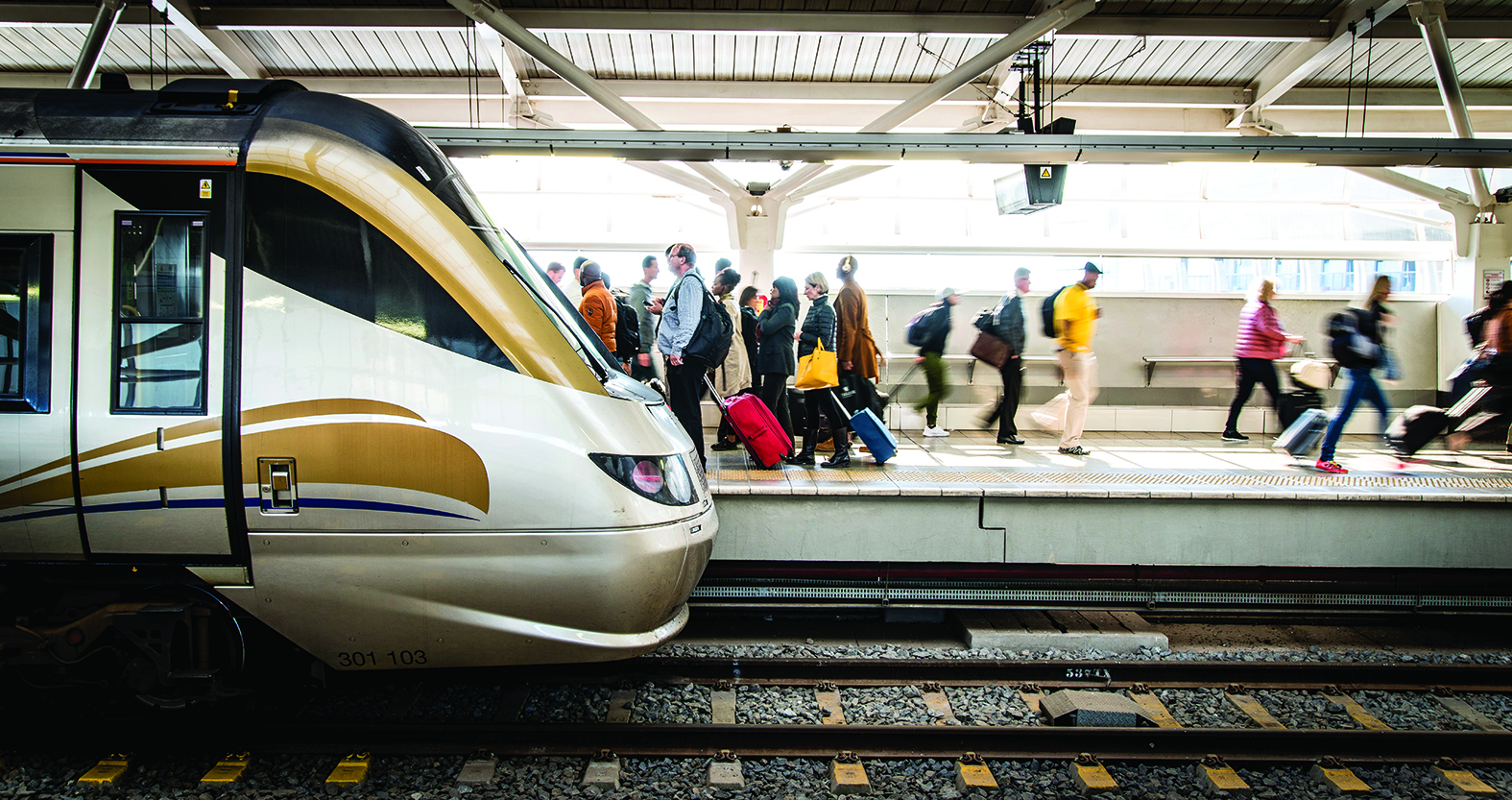
New Gautrain operator Sihamba Sonke Mobility (SSM) has outlined an ambitious programme of upgrades for the country’s flagship rapid rail network, promising new trains, expanded bus services, longer operating hours and improved digital services under a new 15-year concession agreement.
The consortium, which was recently selected to operate and maintain the Gautrain system, said its immediate focus would be ensuring operational continuity while laying the groundwork for long-term improvements aimed at growing passenger numbers and modernising the network.
SSM replaces Bombela Concession Company, which operated Gauteng for almost 16 years.
“Our first priority is continuity and stability. The first year is about operational excellence, understanding the system deeply and laying the foundation for sustainable long-term improvement,” Mpho Mutloane, the investment principal at African Infrastructure Investment Managers, said.
Mutloane’s company has a dedicated joint venture with Motseng Investment Holdings, which acts as a core financial and equity partner post-2026 Gautrain concession.
Mutloane said the consortium won the bid on the strength of its combination of South African infrastructure investment expertise, operational capabilities and technical credentials, supported by international best practices in rail operations.
While he declined to disclose the value of investment SSM committed to operating, maintaining and refurbishing the Gautrain over the concession period, he said commuters could expect significant upgrades across the network.
Planned improvements include the introduction of eight new trains, refurbishment of the existing fleet, station upgrades, increased train frequencies, particularly during weekday off-peak periods, and extended operating hours.
The operator also plans to improve passenger information systems, expand wi-fi availability, strengthen security infrastructure and introduce enhanced digital services.
A key element of the strategy is the gradual introduction of account-based ticketing and a mobility-as-a-service platform designed to better integrate Gautrain with other transport modes.
The feeder-bus network is also set for expansion, with SSM identifying improved integration and additional routes as critical to attracting more passengers and extending the system’s reach into underserved communities.
The concessionaire said that recovering and expanding ridership would be central to future success, particularly after passenger volumes were hit by the Covid-19 pandemic.
“The market has changed,” Mutloane said. “The traditional Monday-to-Friday commuter is no longer the only customer we need to serve.”
Instead, SSM planned to target a broader customer base that included leisure travellers, students and other non-traditional rail users.
The company also saw opportunities to boost usage through digital integration, improved passenger information and mobility services that made journeys easier to plan and complete.
Importantly for commuters, SSM said the new concession would not trigger fare increases.
Gautrain fares remain the responsibility of the Gautrain Management Agency (GMA), which determines pricing.
Albi Modise, the GMA senior executive manager for communication and marketing, also emphasised affordability as an important part of the operator’s strategy.
Modise pointed to the Gautrain’s KlevaMova programme, introduced in 2024, which offers qualifying passengers a 50% discount on train fares.
The programme is available to households earning R350 000 or less annually, as well as scholars, pensioners and Sassa disability grant recipients.
Mutloane said the discount product accounted for about 11% of all Gautrain passenger trips.
Modise said the concession agreement placed ridership and revenue risk largely under the Gauteng provincial government.
He said that meant that if passenger growth and revenue targets were not achieved, the province, rather than the concessionaire, would bear the financial consequences.
SSM would be measured against a range of performance indicators linked to the availability of the rail system and supporting services.
Modise said success should ultimately be judged on whether Gautrain became a more integral part of the province’s broader transport ecosystem.
“The effectiveness of public transport must be measured across the entire journey,” he said, noting that commuters’ experiences began long before arriving at a station and end only when they reached their final destinations.
Looking ahead to 2041, Mutloane said the SSM’s vision of success was to hand back a modernised rail system with substantially higher ridership that delivered measurable benefits to Gauteng residents and supported economic growth across the province.
- Sihamba Sonke Mobility (SSM) has taken over the Gautrain operation with a 15-year concession and plans upgrades including new trains, longer hours, bus service expansion, and digital improvements.
- SSM replaces Bombela Concession Company and aims first for operational continuity and foundational improvements to grow ridership.
- Planned upgrades include eight new trains, fleet refurbishment, station upgrades, increased train frequency, extended operating hours, improved information systems, enhanced security, and new digital services.
- The Gautrain fare system remains under the Gautrain Management Agency, with no planned fare increases, and includes a discount program for low-income households and qualifying groups.
- The Gauteng provincial government assumes the ridership and revenue risk under the concession, with SSM’s performance measured by system availability and integration into the broader transport network.


