



Grain SA has raised concerns about the Johannesburg Stock Exchange’s (JSE) decision to change the way soybean location differentials are calculated, claiming the move could result in an estimated R696-million difference across the agricultural value chain.
The producer organisation has applied for an interdict challenging the JSE’s decision to discontinue the Multiple Reference Point (MRP) model and return to a Single Reference Point (SRP) methodology. The JSE has indicated that it will oppose the application.
Location differentials account for the cost of transporting grain from delivery points to a designated reference point and can influence the price farmers receive in the physical market.
According to Grain SA’s calculations, the average transport deduction under the MRP model is about R113 a ton, compared with approximately R333 a ton under the single-reference-point system. This represents a difference of roughly R220 a ton.
Applied across the relevant soybean volumes and silo locations, Grain SA estimates the difference at R696-million. The figure is based on the organisation’s analysis and has not been independently verified.
READ: Grain SA pushes for urgent financing relief and new export markets at NAMPO 2026
Grain SA CEO Dr Tobias Doyer said the higher differential could reduce farmers’ income and introduce additional costs into the broader food value chain.
“Farmers are being asked to accept a system that, on our calculations, adds significant costs to the value chain,” Doyer said.
The MRP model considers several supply and processing locations when calculating transport costs. By contrast, the SRP methodology calculates differentials from one central reference point, even where soybeans are sold to a processor located closer to the production area.
Grain SA maintains that the MRP approach more accurately reflects the movement of soybeans between producers and processors. It also argues that the JSE’s decision was not supported by sufficient quantitative evidence.
READ: State intervention propels South Africa to a record soybean crop
The JSE said its decision followed an extensive review and careful consideration of its responsibilities as a licensed exchange.
“The review concluded that a single reference point methodology provides the most appropriate framework to support a transparent, efficient and robust derivatives market,” the JSE said.
The exchange acknowledged that its decision would affect various agricultural market participants but said changes to location differentials were made within its mandate to maintain fair and effective derivatives markets.
Grain SA staged a peaceful protest at the JSE’s Johannesburg offices on August 13 and submitted a memorandum outlining its concerns.
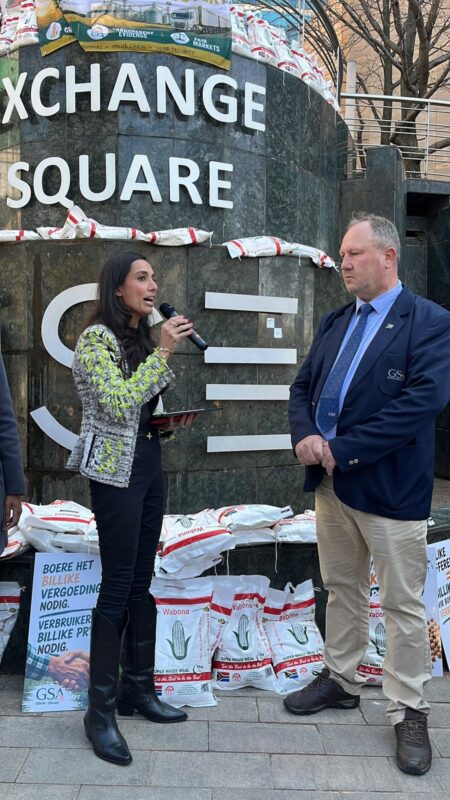
The JSE said it was considering the issues raised and would respond formally. It added that it remained committed to stakeholder engagement and markets serving the agricultural sector and wider economy.
- Grain SA is challenging the Johannesburg Stock Exchange's (JSE) decision to switch from the Multiple Reference Point (MRP) model to a Single Reference Point (SRP) methodology for calculating soybean location differentials.
- Grain SA estimates that the change could lead to a R696-million difference across the agricultural value chain, with transport deductions increasing from about R113 a ton under MRP to approximately R333 a ton under SRP.
- Grain SA argues that the MRP model more accurately reflects transportation costs between producers and processors, while the JSE contends that the SRP method offers a more transparent and efficient derivatives market framework.
- The JSE plans to oppose Grain SA's interdict application and stated that its decision was made following an extensive review of market responsibilities.
- Grain SA protested peacefully at the JSE offices on August 13 and submitted a memorandum, which the JSE is currently reviewing before providing a formal response.


