


It is rarely one event that changes an economy. It is the accumulation of many smaller shocks arriving at the same time. That is precisely where South Africa finds itself today.
Only a few weeks ago, global markets were celebrating what appeared to be the beginning
of greater stability in the Middle East. Crude oil prices retreated, inflation fears eased and investors cautiously looked ahead to a more predictable global economy.
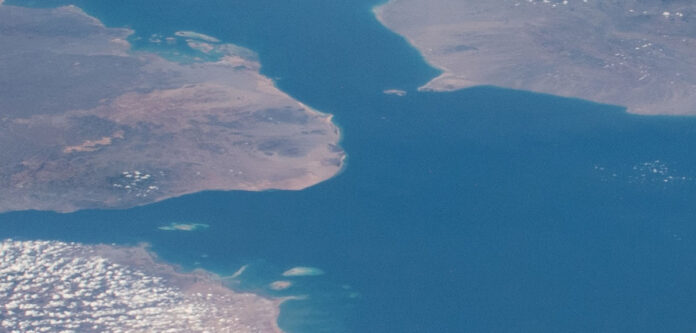
That optimism has proved short-lived. Military action has intensified once again, and crude oil futures have climbed steadily throughout the past week as markets reassess geopolitical risk. At the same time, attention is turning to another strategic maritime chokepoint – the Bab el-Mandeb Strait between Yemen and the Horn of Africa. Most South Africans have probably never heard of the Bab el-Mandeb Strait.
Yet it is one of the world’s most strategically important shipping routes. An estimated 10% to 15% of global seaborne trade passes through this narrow waterway. It is the gateway linking Asia with Europe through the Suez Canal. Any sustained disruption would force vessels to divert thousands of kilometres around the Cape of Good Hope, increasing shipping costs, delaying deliveries and placing further upward pressure on global inflation.
At first glance, that may appear to create an opportunity for South Africa. More ships sailing around the Cape should, in theory, benefit our ports and logistics sector.
Unfortunately, theory and reality are often very different.
Years of underinvestment, operational inefficiencies and infrastructure constraints at our ports, freight rail network and logistics system mean South Africa is simply not positioned to capture the full economic benefit of such a shift. Instead of becoming a major beneficiary, we risk watching those opportunities sail past us while still paying the price through higher fuel costs, rising inflation and weaker global growth.
Markets understand this immediately. They do not wait for shipping lanes to close. They price risk. That is why oil futures move long before physical shortages occur.
For South Africa, the timing could hardly be worse. Businesses and households are already absorbing another significant increase in electricity tariffs.
Energy and fuel costs are rising. Borrowing costs remain elevated. Economic growth remains weak. Unemployment remains painfully high.
This week, the Reserve Bank’s monetary policy committee meets against this increasingly uncertain backdrop. Should higher oil prices begin feeding into inflation expectations, policymakers will once again face a difficult balancing act. They must preserve inflation credibility while avoiding further damage to the economy.
The real risk for South Africa is that another external supply shock collides with an economy already struggling to grow.
Higher interest rates cannot produce a single barrel of oil. They cannot reopen international shipping lanes. They cannot reduce global freight costs. They cannot lower international energy prices. What they can do is make borrowing more expensive for businesses looking to invest and households already under financial pressure.
South Africa cannot control events in the Middle East. We cannot determine the global oil price. But we can influence how investors perceive the country through sound policy, credible institutions and sustained economic reform.
The greatest danger facing South Africa is not one external shock. It is the cumulative effect of many. Businesses can absorb higher costs. Consumers can adjust to temporary setbacks. Investors constantly price uncertainty. What becomes difficult is when external shocks are layered onto domestic structural weaknesses. Eventually, confidence begins to give way.
That is why economic growth is no longer simply a policy objective. It has become an economic necessity.
Countries with stronger growth possess better economic shock absorbers.
South Africa’s economic shock absorbers have been worn thin by years of weak growth, deteriorating infrastructure and declining competitiveness.
They can, and must, be rebuilt. That means accelerating infrastructure investment. Modernising our ports and freight rail. Ensuring reliable electricity. Creating policy certainty. Unlocking private investment. Expanding manufacturing. Supporting exporters.
South Africa cannot choose the shocks that confront the global economy. But we can choose how prepared our economy is when they arrive.
• Van Doesburgh is head of economics at CPUT and a commentator on SA’s economic landscape, focusing on financial markets, policy, and business strategy. vandoesburghm@cput.ac.za
- South Africa faces multiple simultaneous external shocks, including rising oil prices due to renewed Middle East conflict and risks around the Bab el-Mandeb Strait, a vital global shipping route.
- Disruptions in this maritime chokepoint could increase global shipping costs and inflation, but South Africa is unlikely to benefit due to underinvestment and inefficiencies in its ports and logistics systems.
- The country is already struggling with rising energy, fuel, and borrowing costs, weak growth, and high unemployment, complicating the Reserve Bank's challenge of managing inflation and economic stability.
- Higher oil prices and inflation pressures highlight South Africa’s vulnerability due to weak economic shock absorbers caused by long-term structural issues like poor infrastructure and low competitiveness.
- To strengthen resilience, South Africa must prioritize infrastructure investment, modernization, policy certainty, private investment, manufacturing expansion, and export support to rebuild economic stability and growth.


