


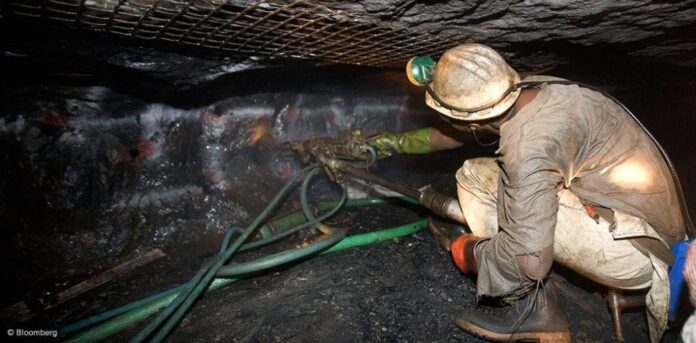
The National Union of Mineworkers (NUM) has issued a strong condemnation of Petra Diamonds’ decision to place its Finch Diamond Mine in Kimberley under business rescue while issuing a Section 189A notice at its Cullinan Diamond Mine — a move that threatens the livelihoods of close to 1 800 workers.
The union says the business rescue process at Finch has plunged about 689 workers into uncertainty, while the Section 189A notice at Cullinan places a further 1 090 jobs at risk.
The combined impact, the NUM says, could have devastating consequences for workers, their families and the broader mining communities that rely on these operations for economic stability.
The NUM has rejected what it describes as a growing trend by mining companies to shift the burden of financial and operational challenges onto workers.
The union argues that employees have consistently contributed to the sustainability and profitability of the company through their dedication, productivity and sacrifice.
NUM chief negotiator for Petra Diamonds and National Health and Safety Secretary, comrade Masibulele Naki, criticised the company’s approach, stressing that labour should not be treated as a disposable cost.
“It is unacceptable for companies to continuously point fingers at labour costs whenever they face operational or financial challenges,” Naki said.
“Workers are not a liability on a balance sheet; they are the creators of value and wealth in the mining industry. Without workers, there is no production, and there is no profit.”
Naki further raised concerns about what he described as an increasing tendency in the mining sector to resort to retrenchments and business rescue measures prematurely, rather than using them as a last resort.
“The narrative that labour is the highest cost must be challenged,” he added. “Executive remuneration, management decisions, declining investment strategies, market fluctuations and operational inefficiencies all play a role in shaping a company’s financial position. Workers should not be expected to pay for problems they did not create.”
Market pressures acknowledged
While expressing its opposition to the company’s actions, the NUM acknowledged that the global diamond industry is facing significant headwinds. These include weaker consumer demand, declining rough diamond prices, increased competition from laboratory-grown diamonds and broader economic uncertainties.
However, the union said the factors should be addressed transparently and should not be used to justify placing disproportionate pressure on workers.
Exchange-rate volatility, particularly the fluctuations of the South African rand against the US dollar, has also been identified as a key factor influencing revenue and operating costs.
The NUM said such macroeconomic conditions were beyond the control of workers and must be carefully considered before any decision to cut jobs was taken.
“Retrenchments cannot become a business strategy,” Naki warned. “Every job lost represents a family pushed closer to poverty, a child whose future becomes uncertain and a community that suffers economic decline. The social cost of retrenchments far outweighs any short-term financial relief claimed by employers.”
Call for urgent government intervention
In response to the unfolding crisis, the union has called for urgent intervention by the South African government, arguing that the mining industry remains a critical pillar of the national economy and should not be left entirely to market forces.
The NUM has urged the minister of mineral and petroleum resources, the chief inspector of mines, the minister of electricity and energy, the minister of trade, industry and competition and national treasury to convene a multi-stakeholder engagement aimed at protecting jobs and stabilising operations at the affected mines.
“Government cannot be a spectator while nearly 1800 workers and their families face an uncertain future,” Naki said. “Every effort must be made to preserve jobs, sustain production and protect communities that depend on mining.”
The union also outlined several areas where it believes government oversight and intervention are critical. These include ensuring compliance with labour and mining legislation, strengthening regulatory monitoring of business rescue and retrenchment processes and addressing structural challenges such as high energy costs.
Safeguarding workers’ rights
The NUM has reaffirmed its commitment to participating fully in all consultation processes related to both the Finch business rescue proceedings and the Section 189A consultations at Cullinan. The union said it would use all available legal and organisational mechanisms to defend workers’ rights and prevent unnecessary job losses.
“The NUM will not stand by while thousands of workers face uncertainty,” Naki said. “We will fight to ensure that workers’ voices are heard and that sustainable solutions are found.”
The union has also pledged solidarity with affected workers and their families, emphasising the need for solutions that balance the long-term viability of mining operations with the protection of jobs and communities.
- The National Union of Mineworkers (NUM) condemns Petra Diamonds' business rescue at Finch Mine and Section 189A notice at Cullinan Mine, threatening nearly 1,800 jobs.
- NUM criticizes mining companies for shifting financial burdens onto workers and warns against premature retrenchments and business rescue processes.
- The union acknowledges global diamond market challenges but insists these should not justify disproportionate job cuts impacting workers and communities.
- NUM calls for urgent South African government intervention to protect jobs, stabilize mining operations, and address structural industry issues like high energy costs.
- The union pledges to actively participate in consultations, defend workers' rights, and seek sustainable solutions balancing mining viability with job preservation.
Advertisement


